Salmon Shark
The salmon shark (Lamna ditropis) is a species of mackerel shark found throughout the North Pacific Ocean. Named for its primary diet of Pacific salmon, this…
What is a salmon shark?
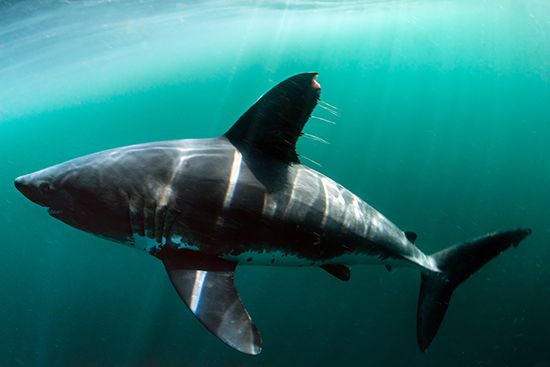
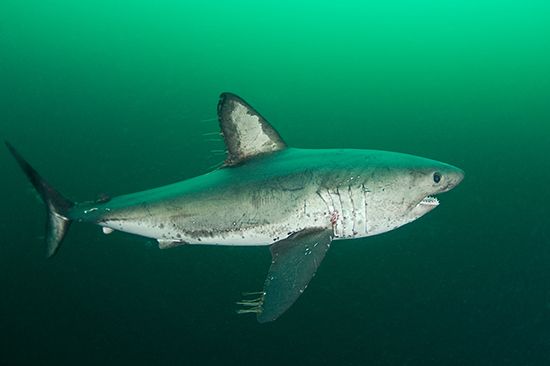
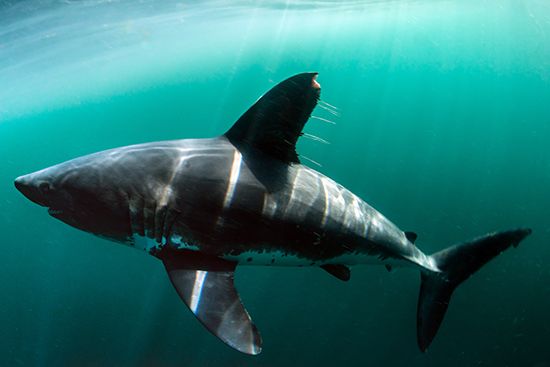
The salmon shark (Lamna ditropis) is a species of mackerel shark found throughout the North Pacific Ocean. Named for its primary diet of Pacific salmon, this swift and powerful predator is a partial endotherm. It utilizes a specialized circulatory system with countercurrent heat exchangers to maintain a body temperature higher than the surrounding water, allowing it to hunt efficiently in cool subarctic and temperate environments.12
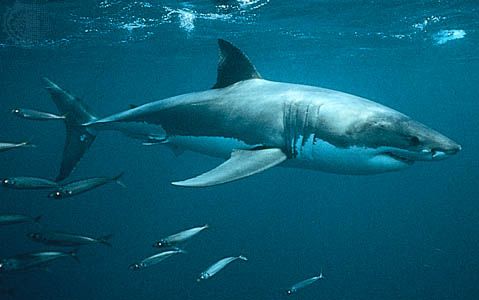
Adults typically reach 2 to 2.4 meters in length, though some exceed 3 meters. They are ovoviviparous, and their young engage in uterine cannibalism during development. While they are related to more dangerous species like the white shark, they do not have a reputation for attacking humans. The IUCN currently classifies the salmon shark as a species of least concern, though they are frequently caught as bycatch in commercial fisheries.12
Where does the salmon shark live?
The salmon shark (Lamna ditropis) has a geographic range that spans the entirety of the North Pacific Ocean. Its distribution includes the following areas:
- Coastal Waters: They are found near the coasts of Japan, North Korea, and South Korea.
- Northern Regions: Their range extends from the Sea of Okhotsk to the Bering Sea.
- Eastern Pacific: They are found southward from the Gulf of Alaska to Baja California in Mexico.1
In addition to these coastal regions, salmon sharks inhabit the open ocean, ranging from the surface down to depths of 1,864 meters (approximately 6,100 feet).1
What does the salmon shark eat?
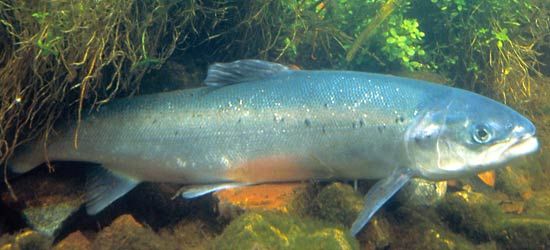
The salmon shark (Lamna ditropis) is a voracious predator that derives its common name from its primary diet of Pacific salmon. As a swift and powerful hunter, it feeds on a variety of other fishes as well, including:
These sharks are known to hunt either individually or in schools, sometimes targeting the catches of commercial fishermen and damaging nets in the process.12
How does the salmon shark hunt for food?
The salmon shark (Lamna ditropis) is a swift and powerful predator that hunts either individually or in schools of several individuals. Its ability to hunt efficiently in cooler subarctic and temperate waters is largely due to its specialized circulatory system, which functions as a partial endotherm.1
By utilizing structures called countercurrent exchangers near the gills, the shark creates a thermal barrier that prevents body heat from escaping into the surrounding environment. This allows the shark to maintain a body temperature significantly higher than the water around it, providing the speed and strength necessary to pursue prey effectively.1
Equipped with large, bladelike teeth, the salmon shark is a voracious feeder that targets Pacific salmon, herring, lancet fish, and mackerel. In some instances, they have been observed hunting near commercial fishing operations, where they may target the catches of fishermen and damage nets in the process.12
Sources
- salmon shark — Encyclopædia Britannica
- mackerel shark — Encyclopædia Britannica
- Marine ecosystem - Migrations of marine organisms — Encyclopædia Britannica
Published on · 2 min read