Samphire
Samphire refers to a group of unrelated succulent, salt-tolerant plants (halophytes) that thrive in coastal environments like marshes, mudflats, and rocky…
What is Samphire?
Samphire refers to a group of unrelated succulent, salt-tolerant plants (halophytes) that thrive in coastal environments like marshes, mudflats, and rocky cliffs. These plants are grouped together due to their shared ability to isolate excess salt in their tissues and their historical culinary use.12
The two most prominent types are:
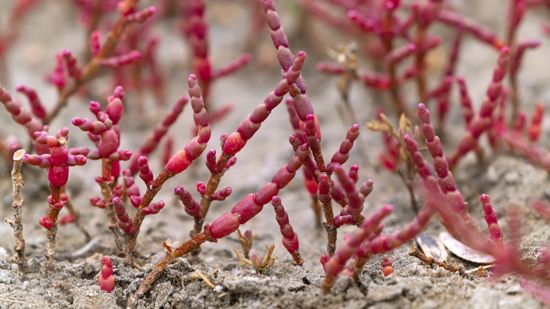
- Marsh samphire (Salicornia europaea): A succulent, jointed plant common in modern cooking. Historically known as glasswort, it was once burned to produce soda ash for glassmaking.2
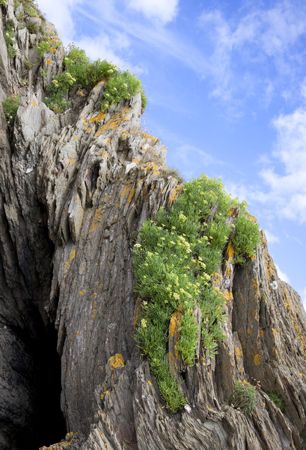
- Rock samphire (Crithmum maritimum): Often considered the “true” samphire, this aromatic plant grows on cliffs. It has a long history of being pickled and was famously mentioned in William Shakespeare’s King Lear.2
The name derives from the French herbe de Saint Pierre (St. Peter’s herb), honoring the patron saint of fisherfolk. Beyond culinary uses, these plants are valued for their high mineral content and potential applications in biodiesel production and soil remediation.2
How do halophytes like samphire survive in such salty environments?
Halophytes like samphire survive in high-salinity environments through specialized physiological adaptations that manage salt intake and prevent dehydration. In most plants, high soil salinity causes water to flow out of the roots via osmosis, leading to dehydration; however, halophytes have evolved mechanisms to thrive despite these conditions.3
Key survival strategies include:
- Salt Sequestration: Samphire plants isolate and store excess salt in specialized structures called vacuoles located within the cells of their roots, stems, and leaves. By sequestering salt in these internal compartments, the plant prevents the ions from interfering with essential metabolic processes in the cytoplasm.45
- Salt Excretion: Some halophytic plants utilize specialized salt glands capable of actively excreting concentrated salt solutions, effectively purging the plant of excess minerals.6
- Osmotic Adjustment: By accumulating salts and other solutes, these plants can maintain a lower internal water potential than the surrounding saline soil, which allows them to continue absorbing water rather than losing it to the environment.3
These adaptations allow samphire to flourish in harsh coastal habitats like salt marshes and mudflats where other vegetation would struggle to survive.47
What other historical uses did samphire have besides glassmaking?
Beyond its historical role in glassmaking, samphire has been utilized for a variety of purposes:
- Culinary Consumption: Various species have long been consumed for their salty flavor and crunchy texture. The tender tips of marsh samphire are commonly eaten in salads, fish dishes, or pickled, while rock samphire—often considered the “true” samphire—has historically been pickled in vinegar. Some species, such as T. lepidosperma, are consumed raw, sautéed, or blanched.3
- Salt Alternatives: Certain Salicornia species are used to produce healthier alternatives to common table salt, such as the “green salt” or “vegetable salt” marketed under the brand name Saloni.3
- Industrial and Agricultural Applications: Samphire is used in the production of biodiesel, oil, and animal feed. Additionally, these plants are employed in soil remediation to help soak up and remove excess salt from salt-damaged lands.3
- Ecological Support: Several species, such as those in the Tecticornia genus, are valued for their role in hosting coastal biodiversity, and the flowers of the golden samphire serve as important food sources for insects.3
Why are some plants called succulents?
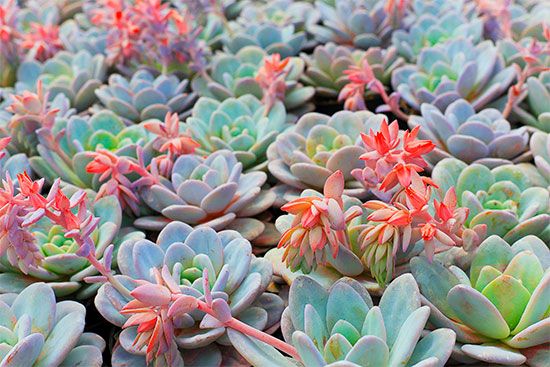
Plants are called succulents because they possess thick, fleshy tissues specifically adapted for water storage, allowing them to survive in arid or semiarid environments. This characteristic is not limited to a single plant family but is found in more than 60 different families, representing a classic example of convergent evolution, where unrelated plants independently develop similar traits to cope with environmental challenges.101112
Depending on the species, water is stored in different parts of the plant:
- Stem succulents: These plants, such as cacti and certain Euphorbia species, store water in their thick, fleshy stems, often having reduced or absent leaves to minimize water loss.1011
- Leaf succulents: Plants like agaves, Aloe, and Crassula store water primarily in their leaves.1011
To further conserve water, many succulents utilize a specialized form of photosynthesis called crassulacean acid metabolism (CAM). Unlike most plants, succulents keep their stomata closed during the hot day and open them at night to collect carbon dioxide, significantly reducing water loss through transpiration.1013
Sources
- Samphire: Top Questions — Encyclopædia Britannica
- samphire — Merriam-Webster
- Samphire — Encyclopædia Britannica
- Salt marsh — Encyclopædia Britannica
- salt gland — Merriam-Webster
- salinity — Encyclopædia Britannica
- vacuole: Top Questions — Encyclopædia Britannica
- sodium - Biological properties — Encyclopædia Britannica
- estuary - Salt wedge estuaries — Encyclopædia Britannica
- Succulent — Encyclopædia Britannica
- houseplant - Succulents — Encyclopædia Britannica
- Plant - Specific variations in photosynthesis — Encyclopædia Britannica
- analogy — Encyclopædia Britannica
Published on · 3 min read