Seedeater
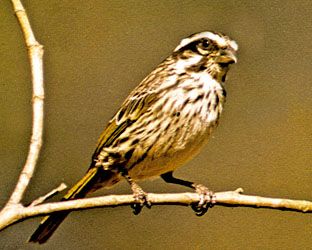
The term "seedeater" refers broadly to various songbirds that feed primarily on seeds, including finches, sparrows, and buntings, which are found globally.
Where are seedeater birds typically found in the wild?
The term “seedeater” refers broadly to various songbirds that feed primarily on seeds, including finches, sparrows, and buntings, which are found globally.1
When referring specifically to the genus Sporophila, these birds are common in the warmer regions of the New World, where they frequently flock to feed on grass seeds. Additionally, in eastern and southern Africa, certain species within the family Fringillidae—specifically those in the genus Serinus—are also commonly referred to as seedeaters. These birds are often associated with the Thraupidae family in some modern classifications.1
How many species of seedeater birds exist, and what are some notable examples?
The term “seedeater” is applied broadly to many songbirds that rely on seeds for their diet, including groups like sparrows, buntings, finches, and weavers. Because this is a general descriptive term rather than a single taxonomic classification, it is impossible to provide a specific total species count for all birds that eat seeds.12
However, the name “seedeater” is specifically used for approximately 30 species within the genus Sporophila (family Emberizidae or Thraupidae). Notable examples include:1
- Variable seedeater (S. aurita): A widespread species in the New World known for the significant individual and geographic variation in the male’s black-and-white or black-and-brown plumage.1
- Yellow-rumped seedeater (S. atrogularis): Also known as the black-throated canary, this species is found in eastern and southern Africa and belongs to the family Fringillidae.1
Beyond these, there are several hundred species of finches that share the characteristic conical bill used for crushing seeds, including well-known birds like the cardinal, goldfinch, and crossbill.3
How do seedeater birds differ from other finch species?
The term “seedeater” is often used as a broad, descriptive label for any songbird that relies on seeds as its primary food source, a category that encompasses many finches, sparrows, buntings, and weavers. Because “seedeater” is a general term rather than a strict taxonomic classification, it does not represent a distinct group separate from finches; rather, it describes a functional habit shared by many species across different families.12
However, the name is also used as a specific common name for approximately 30 species within the genus Sporophila. These birds differ from the broader group of finches in the following ways:1
- Taxonomic Classification: While many finches belong to the family Fringillidae, the genus Sporophila is typically placed in the family Emberizidae or Thraupidae.12
- Behavioral Patterns: Sporophila seedeaters are noted for their tendency to flock specifically to feed on grass seeds and their habit of roosting close together at night.1
- Geographic Range: These specific seedeaters are primarily found in the warmer regions of the New World, whereas the broader category of finches is distributed globally, including throughout temperate areas of the Northern Hemisphere.12
What are the typical breeding habits and nesting behaviors of seedeater birds?
Because “seedeater” is a broad term encompassing various songbirds—including finches, sparrows, buntings, and weavers—their breeding and nesting habits are as diverse as the species themselves. There is no single behavioral standard for all birds that consume seeds, as these groups exhibit a wide range of reproductive strategies.1
General patterns observed among these birds include:
- Nesting Diversity: Most birds in this category construct nests to house their eggs and young. These structures vary significantly, ranging from simple cup-shaped or domed nests made of twigs, leaves, mud, and feathers to the elaborate, woven, retort-shaped nests created by weavers.5
- Parental Care: Biparental care—where both the male and female contribute to raising the young—is relatively common among birds, including many seed-eating species. This often involves shared duties such as nest defense, incubation, and feeding the nestlings.6
- Social Dynamics: While some species are solitary nesters, others may exhibit social behaviors. For instance, some seedeaters in the genus Sporophila are known to flock together to feed, and their nesting and roosting behaviors can be influenced by these social tendencies.1
- Offspring Competition: Within the nest, competition for resources is common. Nestlings often use signals like begging or displaying colorful gapes to induce parents to deliver food, with the most vigorous or well-positioned chicks often receiving the most attention.6
Sources
- Seedeater — Encyclopædia Britannica
- Finch — Encyclopædia Britannica
- seedeater — Merriam-Webster
- Passeriform - Bill — Encyclopædia Britannica
- Animal social behavior - Social interactions involving the costs and benefits of parental care — Encyclopædia Britannica
- Nest — Encyclopædia Britannica
- Reproductive behaviour - Caring for offspring — Encyclopædia Britannica
Published on · 3 min read