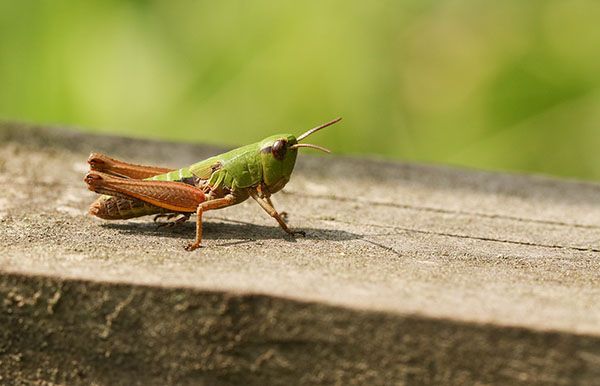
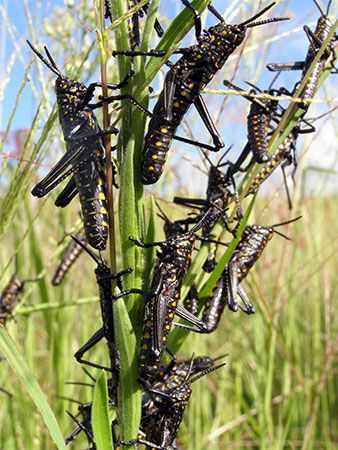
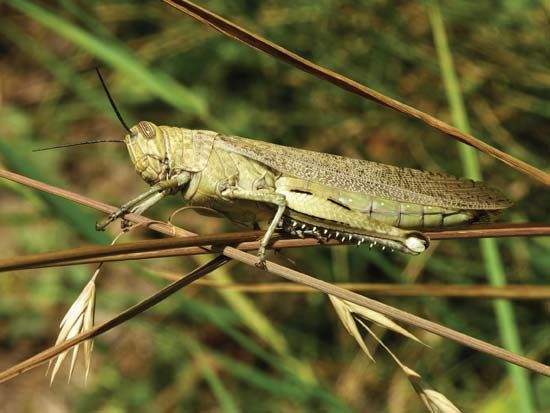
Short-horned Grasshopper
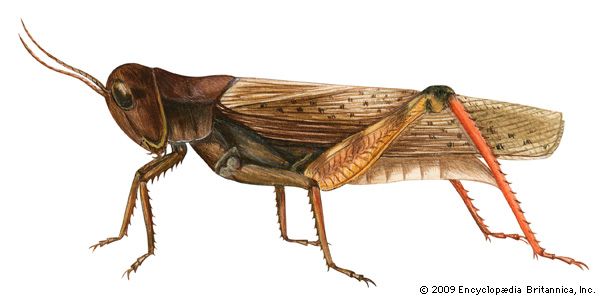
Short-horned grasshoppers (family Acrididae) have evolved diverse adaptations to thrive in varied environments, ranging from grasslands and deserts to…
What adaptations help short-horned grasshoppers survive in various environments?
Short-horned grasshoppers (family Acrididae) have evolved diverse adaptations to thrive in varied environments, ranging from grasslands and deserts to high-altitude mountains.12
Physical and Behavioral Adaptations
- Camouflage: Many species possess body colors—typically green, brown, or straw-colored—that mimic their surroundings to avoid predators. Some species can even change color based on light or temperature; for instance, the Australian alpine grasshopper (Kosciuscola tristis) shifts from bright blue to black as temperatures drop to regulate its body heat.123
- Locomotion: Their hind legs are specialized for jumping, featuring enlarged femurs and powerful muscles. In semi-aquatic environments, some species have adapted their legs for swimming.124
- Burrowing and Self-Burial: To escape harsh weather or predators, some desert-dwelling species practice “self-burial,” maneuvering their bodies into the sand until they are completely covered. Others use specialized, strong legs to burrow into the soil for shelter and egg-laying.24
- Specialized Habitats: Some species are highly specialized, such as those in the subfamily Pauliniidae that live on floating vegetation and swim to lay eggs on aquatic plants. At high altitudes, some grasshoppers have evolved reduced or nonfunctional wings to survive extreme conditions.2
How do short-horned grasshoppers defend themselves against predators?
Short-horned grasshoppers employ several sophisticated defense mechanisms to protect themselves from predators:
- Chemical Defense: Many species possess glands that produce irritating fluids. When handled, they often regurgitate a brown, molasses-like fluid from their alimentary canal. This response is triggered by pressure on the thorax or femurs. Some species may also exude fluids through spiracles or special glands located on their body or leg joints, sometimes accompanied by hissing sounds or the blowing of bubbles.5
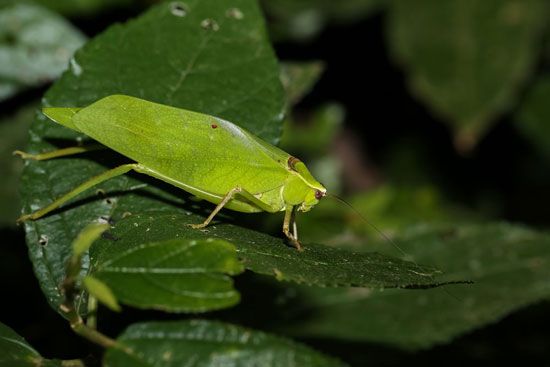
- Camouflage: Grasshoppers frequently use body colors that mimic their habitat, such as rocky or sandy backgrounds, to remain concealed. Some species can change color to match their environment, while others resemble leaves—sometimes even mimicking leaves affected by plant diseases.342
- Evasive Behavior: Many species rely on their powerful hind legs to leap away from danger. Others, particularly those in desert environments, utilize “self-burial,” where they maneuver their bodies to submerge themselves in sand for protection. Slender species living among grasses may cling lengthwise to stems and remain motionless or sidle behind them to avoid detection.42
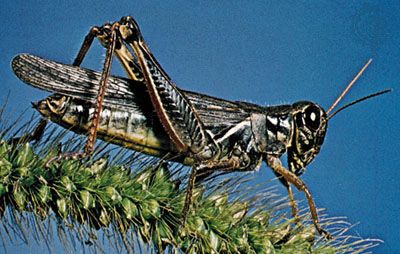
How do short-horned grasshoppers differ from long-horned grasshoppers?
Short-horned grasshoppers and long-horned grasshoppers belong to different suborders within the order Orthoptera, resulting in several distinct anatomical and behavioral differences:
Feature
Short-horned Grasshoppers
Long-horned Grasshoppers
Suborder
Caelifera
Ensifera
Antennae
Short and heavy; fewer than 30 segments
Hairlike and long; often longer than the body; 30+ segments
Hearing Organs
Located on the first abdominal segment
Located on the front tibiae (legs)
Ovipositor
Short, four-valved, adapted for digging
Long, sword-shaped, or bladelike
Sound Production
Rubbing hind legs against wings or wing-to-wing
Rubbing front wing covers together
While short-horned grasshoppers (family Acrididae) are primarily herbivorous and include migratory locusts, long-horned grasshoppers (family Tettigoniidae) include species like katydids and are often found in trees or shrubs.16
What is the typical life cycle of a short-horned grasshopper?
Short-horned grasshoppers (family Acrididae) undergo a process known as hemimetabolous metamorphosis, which consists of three distinct stages: egg, nymph, and adult10.
The Life Cycle Stages
- Egg: A female short-horned grasshopper typically deposits about 100 eggs into the soil. These eggs are fertilized by sperm stored in the female’s spermatheca following mating, during which the male transfers a spermatophore to the female.1011
- Nymph: After a rest period, the eggs hatch. The newly emerged insects are called nymphs, which are essentially miniature, wingless replicas of the adults. Because they lack fully developed reproductive organs and wings, they must pass through a series of molts to grow. Grasshoppers typically go through 4 to 9 nymphal stages (instars), most commonly 5 to 7, before reaching maturity.10121
- Adult: Following the final molt, the grasshopper emerges as a fully developed adult with functional wings and reproductive organs. In temperate regions, these insects may produce one or several broods annually.121310
Sources
- short-horned grasshopper — Encyclopædia Britannica
- grasshopper — Encyclopædia Britannica
- Orthoptera - Camouflage — Encyclopædia Britannica
- Orthoptera - Movement — Encyclopædia Britannica
- Orthoptera - Defense — Encyclopædia Britannica
- long-horned grasshopper — Encyclopædia Britannica
- Orthoptera - Annotated classification — Encyclopædia Britannica
- Orthoptera - Sound production and hearing — Encyclopædia Britannica
- sound reception - Organs of sound reception in invertebrates — Encyclopædia Britannica
- Orthoptera - General features — Encyclopædia Britannica
- Orthoptera - General features — Encyclopædia Britannica
- nymph — Encyclopædia Britannica
- insect - Types of metamorphosis — Encyclopædia Britannica
- heteropteran - Metamorphosis — Encyclopædia Britannica
- homopteran - Habitats — Encyclopædia Britannica
- Orthoptera - Hormones — Encyclopædia Britannica
Published on · 3 min read