Headstander
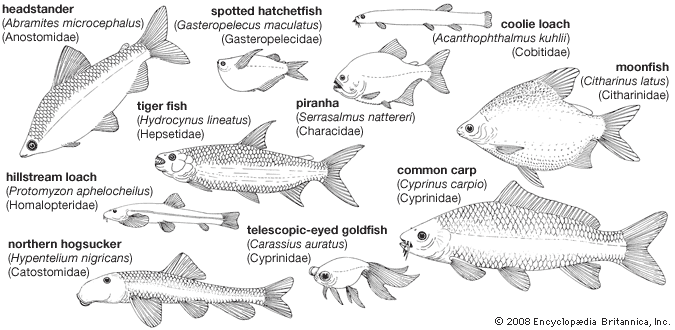
A headstander is any of several small fish belonging to the family Anostomidae, found in the freshwater habitats of South America. These fish typically reach…
What is headstander?
A headstander is any of several small fish belonging to the family Anostomidae, found in the freshwater habitats of South America. These fish typically reach a maximum length of about 20 cm (8 inches).1
The name “headstander” is derived from their unique swimming behavior; they move through the water at an angle with their heads pointed downward, a posture they often maintain while feeding off the bottom. While they are distinct for this slanted swimming position, some species are popular in the aquarium trade.12
What other fish species have unusual swimming postures?
Beyond the headstander, several other fish species exhibit unusual swimming postures as adaptations to their environments:
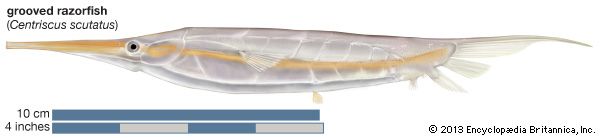
- Shrimpfish: These tropical marine fish typically swim in a vertical, head-down position. However, when they enter a cave or enclosed space, they shift their orientation to swim head-up toward the roof.2
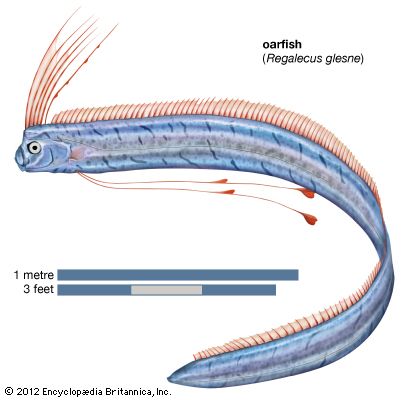
- Oarfish: These deep-water fish swim vertically to camouflage their flattened bodies from predators above. This orientation also helps them spot prey against the light filtering down from the surface and allows them to navigate currents more efficiently.4
- Upside-down catfishes: Found in Africa, these fish are capable of swimming in a normal position or inverted with their belly uppermost. This behavior is supported by the displacement of their swim bladder toward the underside.5
- Pencil fishes: Certain species within this group are known to assume a tail-standing position.5
How do fish use their swim bladders to control their position in the water?
Most bony fish utilize a swim bladder—a gas-filled organ located in the body cavity—to maintain their vertical position in the water column without sinking or floating upward.89
This organ functions as a hydrostatic or ballast system, allowing fish to control their buoyancy by regulating the volume of gas, typically oxygen, contained within it. The process works through two primary mechanisms:89
- Increasing Buoyancy: Special glands secrete gas into the bladder, which increases the fish’s overall buoyancy and allows it to rise in the water.9
- Decreasing Buoyancy: Gas is absorbed from the bladder into the bloodstream through a specialized organ, which reduces the volume of gas and allows the fish to sink.9
While many species use this gas-filled organ, some deep-sea fish have evolved to use oils instead, and others—particularly bottom-dwelling or cartilaginous fish like sharks, skates, and rays—lack a swim bladder entirely.89
We could dive deeper into the differences between physoclistic and physostomous fish or explore how this organ evolved from the respiratory structures of primitive fish.
What are some common characteristics of the Anostomidae family?
The Anostomidae family, commonly known as headstanders, is a group of freshwater fishes native to South America. They are characterized by several distinct physical and behavioral traits:110
- Physical Appearance: These fish possess an elongated snout and a small mouth, which may feature folded or fleshy lips or a specialized sucking disk. They are relatively small, reaching a maximum length of approximately 40 cm (16 inches).101
- Swimming Posture: The family is named for their unique habit of swimming at an angle with their heads pointed downward. This posture is an adaptation that assists them as they feed off the bottom.110
- Diet: Anostomids are primarily herbivorous.10
- Diversity: The family is quite diverse, comprising 12 genera and at least 137 species.10
- Human Interaction: Due to their interesting appearance and behavior, many species are kept as aquarium fish, and some also serve as food fish.110
Sources
- headstander — Encyclopædia Britannica
- ostariophysan - Swimming — Encyclopædia Britannica
- ostariophysan - Habitat and distribution — Encyclopædia Britannica
- shrimpfish — Encyclopædia Britannica
- fish - Locomotion — Encyclopædia Britannica
- Why do oarfish swim vertically? — Encyclopædia Britannica
- ostariophysan - Breeding — Encyclopædia Britannica
- swim bladder — Encyclopædia Britannica
- fish - The respiratory system — Encyclopædia Britannica
- ostariophysan - Annotated classification — Encyclopædia Britannica
- ostariophysan - Feeding habits — Encyclopædia Britannica
- gasterosteiform — Encyclopædia Britannica
- atheriniform - Annotated classification — Encyclopædia Britannica
- atheriniform - Natural history — Encyclopædia Britannica
Published on · 3 min read