Spruce Budworm
The spruce budworm (Choristoneura fumiferana) is the larva of a leaf-rolling moth and is recognized as one of the most destructive pests in North America. It…
What is spruce budworm?
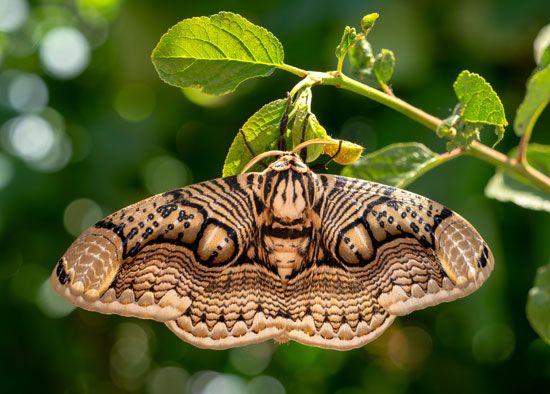
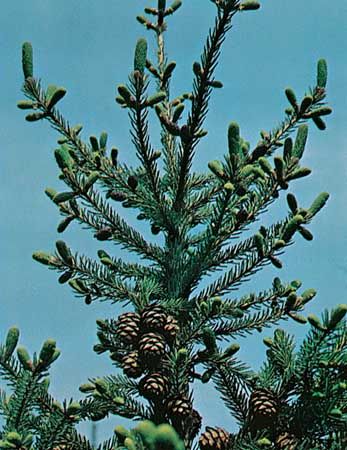
The spruce budworm (Choristoneura fumiferana) is the larva of a leaf-rolling moth and is recognized as one of the most destructive pests in North America. It primarily targets evergreen trees, such as spruce and balsam fir, by feeding on their needles and pollen.12
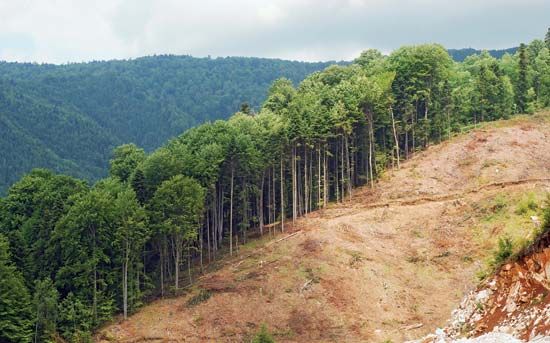
These insects are particularly notable for their ability to cause widespread deforestation. In the taiga, where natural predators and parasites are less complex, spruce budworm populations can surge rapidly, leading to outbreaks that severely injure or kill trees across vast areas. This activity results in significant economic losses for the lumber industry and causes extensive damage to natural landscapes. While outbreaks can be triggered by environmental stressors like unusual weather, they eventually subside due to factors such as the depletion of host plants or the trees’ production of defensive chemicals.31
How do foresters manage spruce budworm outbreaks?
Foresters manage spruce budworm outbreaks through a combination of long-term preventive strategies and direct, short-term interventions when populations reach epidemic levels. Because direct control is costly, it is typically reserved for situations where potential mortality or growth loss is extreme.4
Preventive Management
- Silvicultural Practices: Foresters promote forest health by thinning stands and selectively cutting susceptible trees. These practices stimulate vigorous growth and reduce the host material and breeding grounds available to pests.4
- Genetic Selection: Programs aim to breed and select tree varieties that demonstrate natural resistance to specific insects and diseases.4
- Stand Diversity: Because even-aged stands of uniform species are highly susceptible to rapid infestation, foresters work to maintain more complex, uneven-aged forests that support natural check-and-balance systems.4
Direct Control Measures
- Monitoring and Sanitation: Routine monitoring allows for the timely harvest of infested trees. Sanitation and salvage harvests, along with the removal of logging debris, help limit the spread of the population.4
- Chemical and Biological Methods: In extreme cases, foresters may use pheromone-baited traps to disrupt breeding or apply pesticides via aircraft. However, these are used sparingly due to potential impacts on non-target species and the environment.4
What are the different stages of a moth’s life cycle?
Moths undergo a process known as holometabolous (complete) metamorphosis, which consists of four distinct life stages:5
- Egg: The life cycle begins when a female lays eggs, typically on or near a suitable food plant. The number of eggs can range from fewer than a hundred to over a thousand, depending on the species. Development is often timed to coincide with favorable environmental conditions through a state of arrested development called diapause.67
- Larva: Often called a caterpillar, this is the primary nutritive stage of the life cycle. The larva is specialized for growth and development, possessing powerful mandibles to consume large amounts of plant material. As it grows, it must shed its cuticle through a series of molts.587
- Pupa: This is an inactive, nonfeeding stage during which the caterpillar undergoes a dramatic transformation. Inside a protective cocoon or within the soil, larval tissues are broken down and rebuilt into adult structures, such as wings.9510
- Adult: The final, reproductive stage emerges from the pupa. The adult’s primary roles are to mate and disperse the species. While some adults feed on nectar, others have reduced mouthparts and rely entirely on energy stored during the larval stage.115
How do trees naturally defend themselves against insects?
Trees employ a diverse array of defenses to protect themselves against herbivory from insects. These strategies are generally categorized into chemical, structural, and mutualistic defenses.12
Chemical and Structural Defenses
- Chemical Defenses: Trees produce various substances to deter or poison insects, such as alkaloids, aromatic terpenes, and sticky latex. Developing tissues, which are soft and nutrient-rich, often receive higher concentrations of these chemical defenses compared to mature tissues.12
- Structural Defenses: Mature tissues are frequently protected by physical barriers, including toughened leaves, spines, thorns, and trichomes (hairy projections). Some plants also incorporate crystalline substances like oxalic acids into their tissues to make them less palatable.12
Behavioral and Mutualistic Strategies
- Defensive Mutualism: Some trees form partnerships with other species for protection, such as ants that defend cecropia trees against caterpillars.12
- Growth and Timing: Trees may use “synchronous flushing” to produce many leaves at once, satiating herbivores. Others use defensive coloration or even mimicry, such as producing decoy butterfly eggs to discourage egg-laying by insects.12
Sources
- spruce budworm — Encyclopædia Britannica
- Taiga - Insects — Encyclopædia Britannica
- spruce budworm — Merriam-Webster
- forestry - Insect and disease control — Encyclopædia Britannica
- Lepidoptera - The adult — Encyclopædia Britannica
- pupa — Encyclopædia Britannica
- Metamorphosis — Encyclopædia Britannica
- Lepidoptera - The larva, or caterpillar — Encyclopædia Britannica
- Lepidoptera - Pupa , or chrysalis — Encyclopædia Britannica
- Lepidoptera - Egg — Encyclopædia Britannica
- insect - Egg — Encyclopædia Britannica
- Eating the rainforest — Encyclopædia Britannica
Published on · 3 min read