Straits of Florida
The Straits of Florida is a vital marine passage that connects the Gulf of Mexico to the Atlantic Ocean. Situated between the Florida Keys to the north and…
What is Straits of Florida?
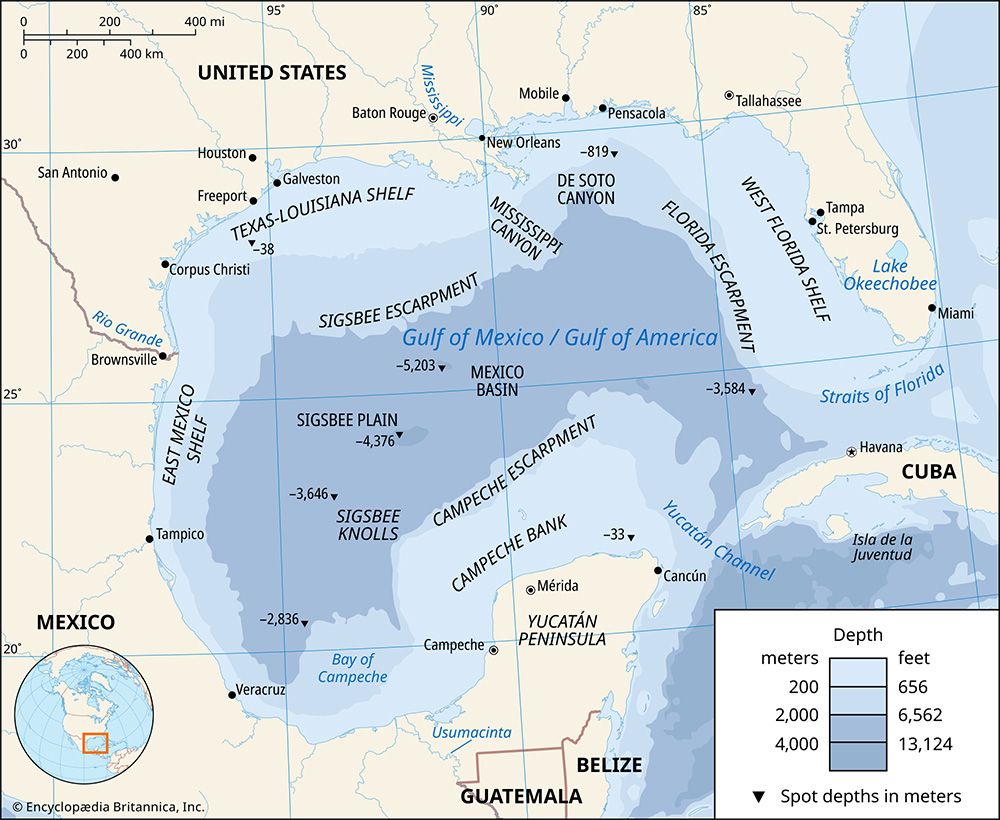
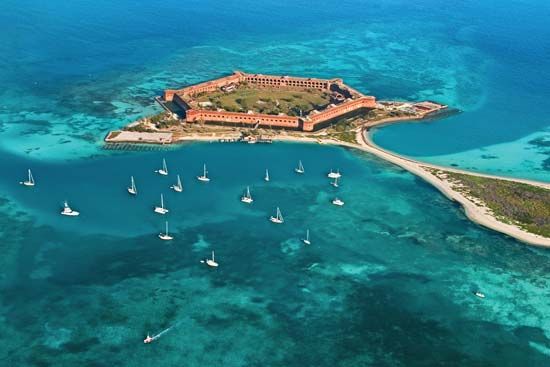
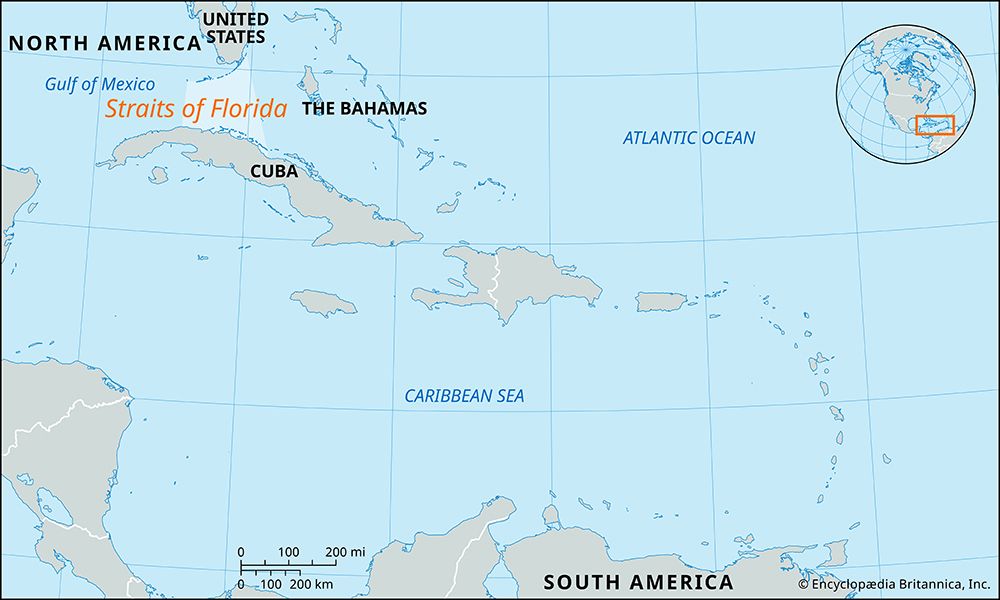
The Straits of Florida is a vital marine passage that connects the Gulf of Mexico to the Atlantic Ocean. Situated between the Florida Keys to the north and Cuba to the south, the channel reaches its narrowest point at approximately 93 miles (150 km) and extends eastward toward The Bahamas.12
The region is geographically significant as the site where the Florida Current—the foundational segment of the Gulf Stream—flows eastward out of the Gulf of Mexico. This current is characterized by its swift movement, with a mean surface velocity reaching 4 to 6 miles (6.5 to 9.5 km) per hour. Historically, the passage was first documented by the Spanish explorer Juan Ponce de León during his voyage in 1513.1
How does the Gulf Stream affect global climate?
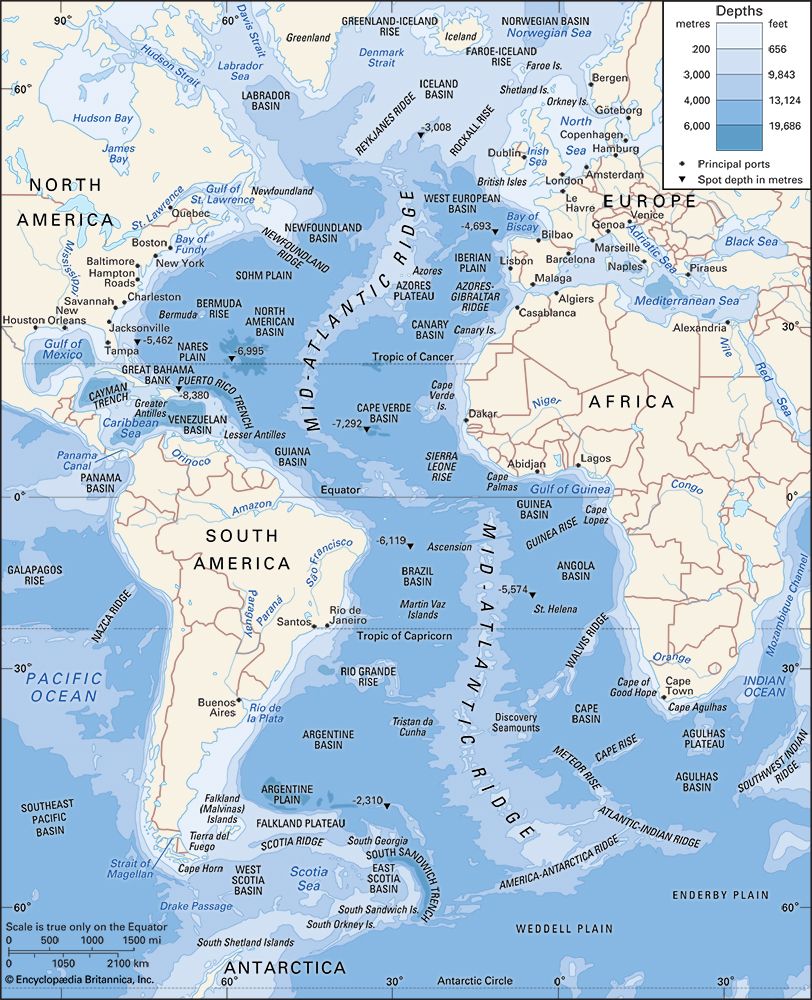
The Gulf Stream acts as a critical mechanism for global climate regulation by transporting vast amounts of heat from tropical regions toward the poles, particularly in the North Atlantic. As a key component of the Atlantic Meridional Overturning Circulation (AMOC), it helps distribute thermal energy that influences regional temperature and precipitation patterns.456
Warming Effects on Europe
The Gulf Stream’s most pronounced climatic impact is the moderation of temperatures in northwestern Europe. Prevailing westerly winds carry the warmth and moisture from the current deep into the continent, resulting in significantly milder winters than would otherwise be expected at such high latitudes. For example, regions like Norway and southwestern England experience temperatures far above the global average for their latitude, supporting diverse ecosystems and agriculture that would not be possible in a colder climate.6574
Climate Sensitivity and Risks
The current is sensitive to changes in water density, which is influenced by salinity and temperature. As global warming causes glaciers to melt, the influx of fresh water reduces surface salinity and density, potentially weakening the AMOC. Scientists warn that a significant slowdown or collapse of this circulation could lead to:6
- A dramatic cooling of Europe.6
- Relocation of rain belts, increasing drought frequency in parts of Africa.6
- Disruptions to the Indian monsoon.6
- Accelerated melting of Antarctic ice sheets.6
What role did the Straits of Florida play in early exploration?
The Straits of Florida served as a critical maritime corridor during the early era of European exploration in the Americas. Connecting the Gulf of Mexico to the Atlantic Ocean, this passage was first recorded by the Spanish explorer Juan Ponce de León in 1513.1
During his 1513 expedition, Ponce de León navigated through the Florida Keys and the surrounding straits while exploring the coast of what he believed to be an island. The region’s geography, defined by the swift Florida Current—the initial segment of the Gulf Stream—made it a significant navigational feature for subsequent Spanish voyages. By the mid-16th century, the strategic importance of these waters became clear; the Spanish crown viewed the area as a vital sea-lane connecting Havana, Cuba, to Spain, leading to intense efforts to secure the region against rival European powers.391
How do ocean currents like the Florida Current form?
Ocean currents like the Florida Current are formed through a complex interplay of wind, Earth’s rotation, and density variations.
Wind-Driven Circulation
The primary driver of surface currents is wind stress. As winds blow across the sea surface, they transfer momentum to the water through frictional forces. This movement is further influenced by the Ekman layer, where the Coriolis force causes the water to move at an angle to the wind—to the right in the Northern Hemisphere and to the left in the Southern Hemisphere.11212
The Role of Earth’s Rotation
The Coriolis effect deflects moving water, contributing to the formation of large-scale, rotating current systems. In the North Atlantic, this results in a clockwise-rotating circulation that feeds the Gulf Stream system. The Florida Current specifically forms as the Caribbean Current is forced through the narrow Straits of Florida, where its velocity increases significantly.111314
Density and Topography
Currents are also shaped by density differences, often driven by temperature and salinity. Dense water formed at high latitudes or in marginal seas can sink and flow along the continental slope as a density current, while surface currents like the Florida Current are steered by the topography of the ocean floor and the continental shelf.41513
Sources
- Straits of Florida — Encyclopædia Britannica
- Florida Current — Encyclopædia Britannica
- Florida, Straits of — Merriam-Webster
- Gulf Stream — Encyclopædia Britannica
- Climate - The Gulf Stream — Encyclopædia Britannica
- Climate - Circulation, currents, and ocean-atmosphere interaction — Encyclopædia Britannica
- Atlantic Meridional Overturning Circulation — Encyclopædia Britannica
- How Do Ocean Currents Affect the Biosphere? — Encyclopædia Britannica
- Juan Ponce de León — Encyclopædia Britannica
- Florida - Exploration and settlement — Encyclopædia Britannica
- ocean current - Coriolis effect — Encyclopædia Britannica
- ocean current - Frictional forces — Encyclopædia Britannica
- ocean current - Ekman layer — Encyclopædia Britannica
- density current - Density currents originating from marginal seas — Encyclopædia Britannica
- Caribbean Current — Encyclopædia Britannica
Published on · 3 min read