Strangler Fig
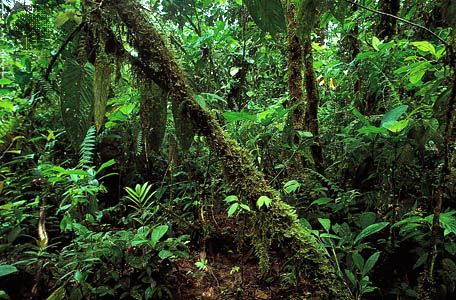
Strangler figs are commonly found in tropical forests throughout the world. These plants are particularly associated with tropical rainforest environments…
In which parts of the world are strangler figs commonly found?
Strangler figs are commonly found in tropical forests throughout the world. These plants are particularly associated with tropical rainforest environments, where they occupy a specific ecological niche as mechanically dependent plants.12
While they are widespread across tropical regions globally, specific examples include:
- The Americas: There are approximately 150 species of New World figs, most of which are stranglers. Additionally, the Ficus aurea is found in the southeastern United States.13
- General Distribution: Strangler figs are a diverse group within the genus Ficus, with various species distributed across both New World and Old World tropical habitats.1
What animals rely on strangler figs for food or shelter?
Strangler figs are considered keystone species in many tropical forests because they provide essential resources for a wide variety of animals, particularly during periods when other food sources are scarce.1
Food Sources
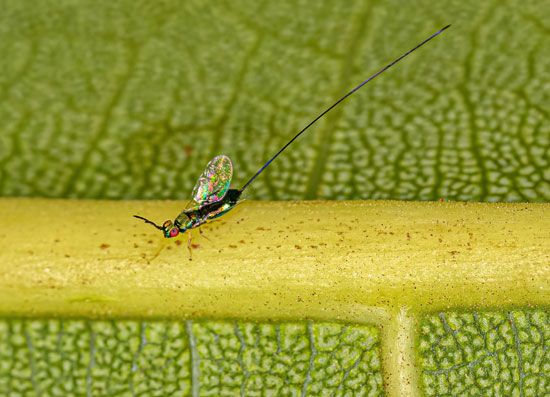
The fruit of the strangler fig is a critical food supply for numerous species. Because each fig tree is pollinated by a specific fig wasp, different trees in a forest may fruit at different times throughout the year. This ensures a steady, year-round supply of food for:
- Birds: Many avian species rely on these fruits, including the figbird, which feeds primarily on figs and other fruits.1456
- Mammals: A wide host of fruit-eating mammals depends on this consistent resource. Research indicates that areas lacking Ficus species often see lower population densities of these animals.45
- Seed Dispersers: Animals such as birds, bats, and monkeys play a vital role in the life cycle of the strangler fig by transporting and depositing their sticky seeds onto the branches of host trees.1
Shelter and Breeding
Beyond nutrition, the physical structure of the strangler fig offers important habitat benefits:
- Shelter and Breeding Sites: The hollow centers and complex spaces within mature strangler figs provide vital shelter and breeding grounds for various animals, including bats and birds.1
What are some common misconceptions about strangler figs?
Common misconceptions about strangler figs often stem from their dramatic growth patterns and the eventual death of their host trees. Here are some clarifications based on their biology:
- They are not parasitic: A frequent misunderstanding is that strangler figs derive nutrients from their host trees. In reality, they are fully photosynthetic plants. They use the host tree only for physical support, beginning their lives as epiphytes on high branches before sending roots down to the soil to access nutrients independently.1
- The relationship is not always purely destructive: While the term “strangler” implies a purely antagonistic relationship, there is evidence that the interaction can be somewhat mutualistic. Trees encased in the root latticework of a strangler fig have been shown to be more likely to survive tropical cyclones, suggesting the fig may provide structural reinforcement to the host.1
- They are not limited to a single genus: While many famous examples belong to the genus Ficus, the term “strangler” is applied broadly to various tropical plants with similar growth habits, including species in the genus Clusia and Schefflera, which may not always kill their hosts.1
What are the ecological benefits of strangler figs in their native habitats?
Strangler figs are vital components of tropical forest ecosystems, providing several key ecological benefits:
- Keystone Food Source: Many strangler figs are considered keystone species because they provide a consistent, year-round supply of fruit. This is particularly important for a wide variety of animals during times when other food sources are scarce.1
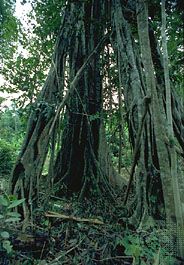
- Habitat and Shelter: The mature strangler fig, which often remains after its host tree has died and rotted away, features a trunk made of a gigantic cylinder of roots. These structures are full of large hollows and spaces that serve as essential shelter and breeding sites for bats, birds, and other wildlife.13
- Structural Support: While often viewed as competitors, there is evidence that the relationship between a strangler fig and its host can be mutualistic. Trees encased in the root latticework of a strangler fig are more likely to survive tropical cyclones, as the fig may provide additional structural reinforcement to the host.1
Sources
- Strangler fig — Encyclopædia Britannica
- strangler fig — Merriam-Webster
- Tropical rainforest - General structure of the rainforest — Encyclopædia Britannica
- Ficus — Encyclopædia Britannica
- fig wasp — Encyclopædia Britannica
- fig-bird — Merriam-Webster
Published on · 3 min read