Suicide Tree
The term "suicide tree" refers to two distinct species, leading to different historical and cultural associations.
How has the suicide tree been used historically in different cultures?
The term “suicide tree” refers to two distinct species, leading to different historical and cultural associations.
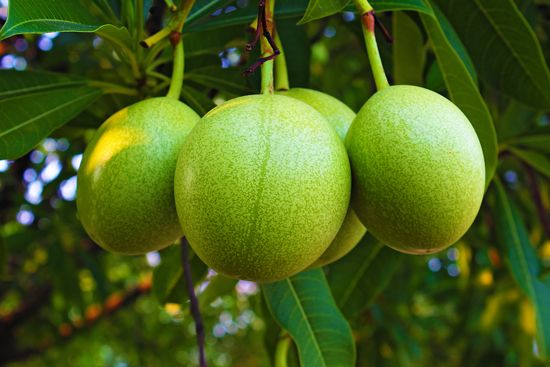
The Asian pong pong (Cerbera odollam) is a highly toxic plant found in India and Southeast Asia. It is frequently cultivated as an ornamental shade tree, but its seeds contain a potent cardiac glycoside called cerberin. Historically and currently, it is responsible for numerous intentional and accidental deaths in rural South Asia due to its swift lethality.1
Conversely, the Central American suicide tree (Tachigali versicolor) is a member of the pea family and is unrelated to the toxic Asian species. It is named for its biological life cycle, as it is a monocarpic plant that dies after a single reproductive event. Culturally, this tree is valued for its dense timber, and native peoples in the Amazon basin have historically used its bark to treat fungal skin infections.2
How is the suicide tree used in traditional medicine or cultural practices?
The term “suicide tree” refers to the tropical tree Tachigali versicolor, which is distinct from the toxic Asian plant Cerbera odollam that shares the same common name.
In terms of cultural and medicinal use, Tachigali versicolor is valued for its practical properties rather than mythological ones. Native peoples in the Amazon basin have historically utilized the bark of this tree to treat fungal skin infections. Additionally, because the tree possesses some of the densest and hardest wood found in Central American forests, it is locally significant as a source of timber.2
The name “suicide tree” is derived from its unique biological life cycle, known as monocarpy. Unlike most long-lived trees, this species flowers and fruits only once in its lifetime, after which the parent tree slowly dies and falls, creating a gap in the forest canopy that provides light and space for its offspring to grow.2
What are the unique characteristics and appearance of the suicide tree?
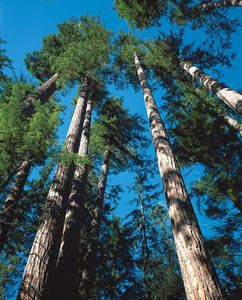
The suicide tree (Tachigali versicolor) is a large, buttressed tree native to old-growth forests ranging from Costa Rica to northern Colombia.2
Physical Characteristics
Reaching heights exceeding 30 meters (100 feet), the tree is visually distinct:
- Bark and Stems: Mature plants feature thin, reddish, rippling bark that resembles a tightly flexed muscle, while juvenile stems appear as tightly twisted ropes.2
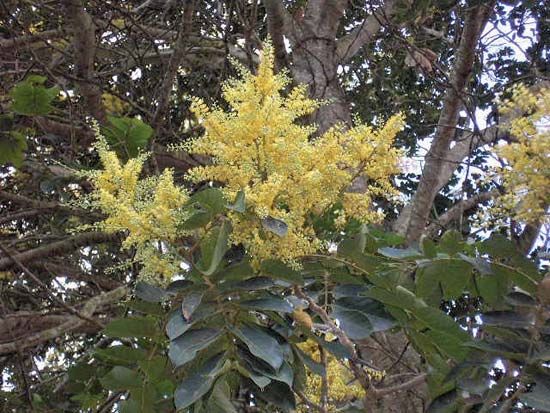
- Foliage and Flowers: Leaves measure 5 to 10 cm (2 to 4 inches). Pale yellow to light gold flowers bloom between March and June, growing in spikes approximately 12 cm (5 inches) long.2
- Seeds: The tree produces wind-dispersed seeds enclosed in elliptical wings 11–15 cm (4–6 inches) long.2
Unique Life Cycle
The tree is named for its monocarpy—a rare trait among long-lived tropical trees where the plant flowers and fruits only once. After this singular reproductive pulse, the parent tree slowly dies and falls, creating a canopy gap that provides essential light and space for its offspring.2
Where is the suicide tree primarily found and in what type of environment does it grow?
The suicide tree (Tachigali versicolor) is primarily found in the old-growth forests of Central and South America, with a geographic range extending from Costa Rica to northern Colombia.2
These trees thrive in tropical forest environments where they play a unique ecological role. Because they are monocarpic—meaning they flower and fruit only once in their lifetime—they are adapted to create their own clearings. Upon reaching the end of their reproductive cycle, the large, dense-wooded trees die and fall, creating significant gaps in the forest canopy. This process provides the necessary light and space for their offspring to germinate and grow, allowing the species to bypass the accumulation of local pathogens that often threaten seedlings in established forest areas.2
Sources
- How Deadly Is the Pong Pong Tree from The White Lotus? — Encyclopædia Britannica
- Suicide tree — Encyclopædia Britannica
- myth - Culture heroes — Encyclopædia Britannica
Published on · 3 min read