Swallowtail Butterfly
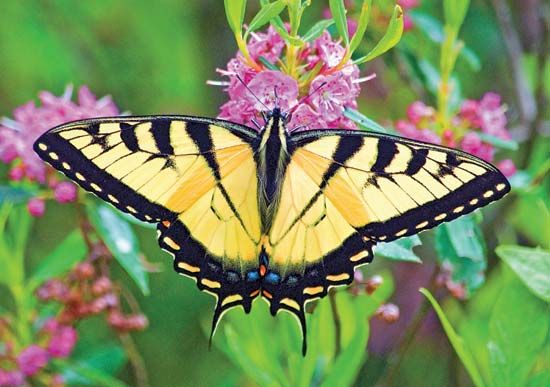
Swallowtail butterflies (family Papilionidae) are characterized by several distinct physical features:
What are the distinctive physical features of swallowtail butterflies?
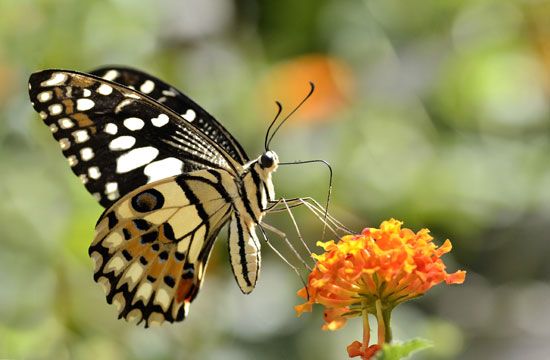
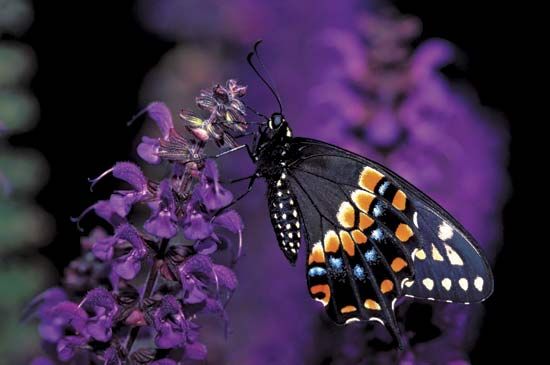
Swallowtail butterflies (family Papilionidae) are characterized by several distinct physical features:
- Wing Extensions: They are named for the characteristic tail-like extensions found on their hindwings, though it is important to note that many species are actually tailless.1
- Coloration: Their wings often feature vibrant markings in yellow, orange, red, green, or blue, set against an iridescent black, blue, or green background. These patterns can vary significantly between sexes and seasons.1
- Mimicry: Many swallowtails have evolved to mimic the coloration and patterns of other butterfly species that are protected by a bad taste, which helps them avoid predation.12
- Larval Features: The larvae are often brightly colored. Some possess black and yellow eyelike spots on the thorax that resemble a snake’s head, while others have patterns that mimic bird droppings.1
- Defense Organs: When disturbed, the larvae can discharge a foul-smelling, volatile substance from specialized, extrusible scent organs known as osmeteria.12
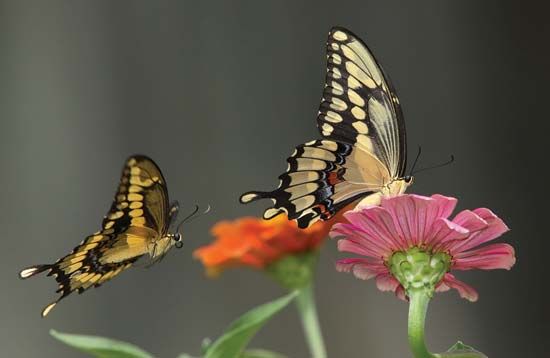
How many species of swallowtail butterflies exist, and where are they found?
Swallowtail butterflies (family Papilionidae) are found worldwide, inhabiting every region except for the Arctic.1
Regarding the number of species, the provided search results do not specify an exact count of how many species of swallowtail butterflies exist.
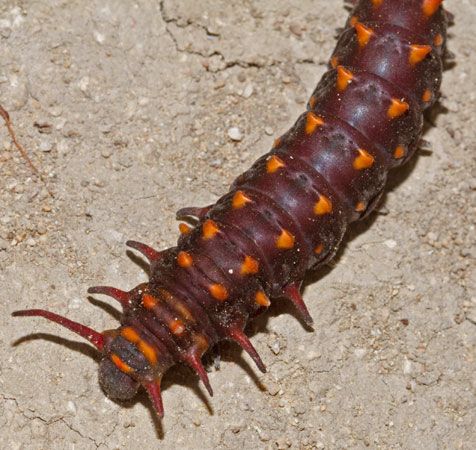
How do swallowtail butterflies defend themselves from predators?
Swallowtail butterflies (family Papilionidae) utilize a variety of sophisticated defense mechanisms to protect themselves from predators at different life stages:
- Chemical Defense: When disturbed, larvae discharge a foul-smelling, volatile substance from specialized, extrusible scent organs known as osmeteria.14
- Mimicry: Many adult swallowtails have evolved to mimic the coloration and patterns of other butterfly species that are known to be distasteful to predators. This strategy, known as mimicry, allows edible species to gain protection by resembling dangerous or inedible “models”. For example, the female tiger swallowtail often exhibits a black color form in regions where it coexists with the distasteful pipevine swallowtail.14
- Visual Deception: Larvae often employ deceptive appearances to avoid being eaten. Some possess black and yellow eyelike spots on their thorax that resemble a snake’s head, while others have color patterns that make them appear to be bird droppings.1
What is the origin of the name ‘swallowtail’ for these butterflies?
The name “swallowtail” is derived from the characteristic tail-like extensions found on the hindwings of many species in the family Papilionidae. These elongated processes resemble the deeply forked and tapering tail of a swallow, a type of bird.16
While this feature is a defining trait for which the group is named, it is important to note that many species within the family are actually tailless.1
Sources
- swallowtail butterfly — Encyclopædia Britannica
- list of butterflies and moths — Encyclopædia Britannica
- Fabaceae - Faboideae — Encyclopædia Britannica
- Lepidoptera - Protection against danger — Encyclopædia Britannica
- tiger swallowtail — Encyclopædia Britannica
- swallowtail — Merriam-Webster
Published on · 2 min read