Are Penguins Monogamous?
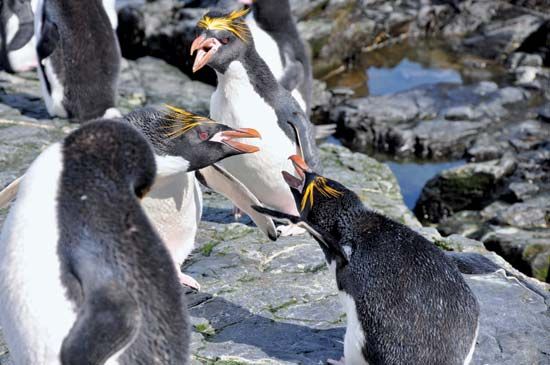
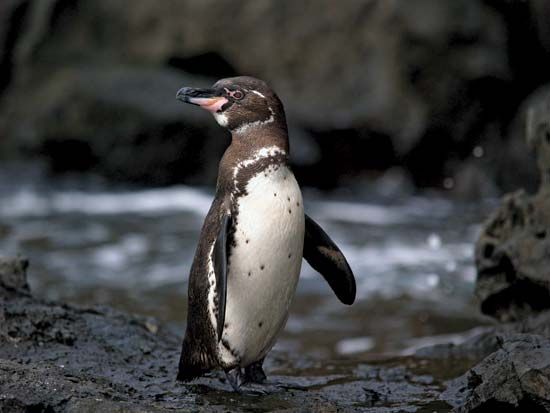
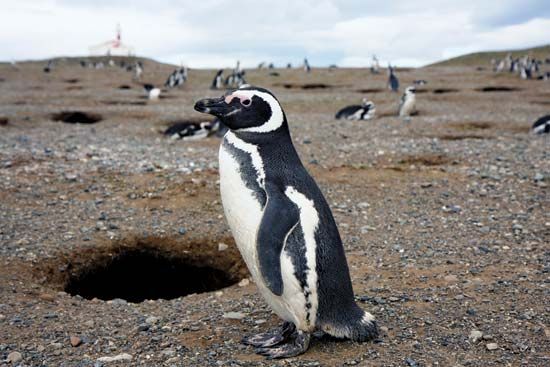
Penguins generally exhibit monogamous behavior, though the nature of these bonds varies by species. Many species, such as macaroni penguins, Galapagos…
Are penguins monogamous?
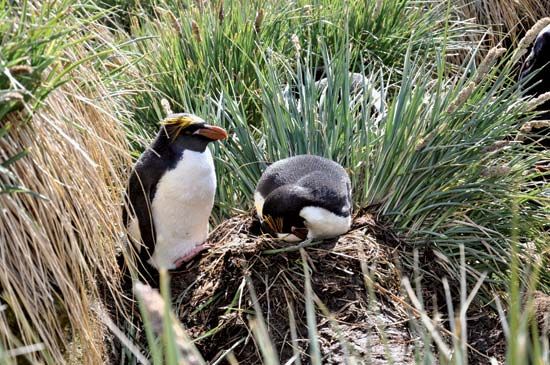
Penguins generally exhibit monogamous behavior, though the nature of these bonds varies by species. Many species, such as macaroni penguins, Galapagos penguins, and Magellanic penguins, form long-term pair bonds and share the responsibilities of incubating eggs and feeding chicks to ensure offspring survival.1
In contrast, emperor penguins are considered serially monogamous2. While they form an exclusive pair bond for a single breeding season, they rarely remain with the same partner in successive years. This behavior is likely an adaptation to the harsh Antarctic environment, where the need to reproduce efficiently outweighs the necessity of long-term fidelity. Regardless of the duration of the bond, the cooperation between parents remains a critical factor in the survival of their young.21
Environmental stressors, such as climate change and food shortages caused by events like El Niño, can further strain these monogamous relationships.1
How do emperor penguins recognize their mates in a crowded colony?
Emperor penguins rely on a specialized vocal system to identify their mates within the dense, noisy environment of a colony. Because these penguins do not build nests, they cannot rely on a fixed location to reunite with their partners.3
The Two-Voiced Call
Emperor penguins utilize their unique vocal anatomy, the syrinx, to produce a complex two-voiced call. By using both branches of the syrinx simultaneously, they generate two different frequencies that create a distinct beating amplitude pattern.3
This vocalization is highly effective for several reasons:
- Individual Recognition: The specific beating patterns carry enough unique information for penguins to distinguish their mates from thousands of others.3
- Background Noise: The pattern is easier to discern than a single-voiced call amidst the cacophony of a crowded colony.3
- Obstacle Penetration: The sound travels more effectively through the densely packed crowds of birds.3
Research indicates that visual cues alone are insufficient for recognition, as emperor penguins struggle to identify one another when they are unable to vocalize.3
What is the difference between serial monogamy and lifelong pair bonding?
The distinction between serial monogamy and lifelong pair bonding lies in the stability and duration of the mating association.
Lifelong Pair Bonding
Lifelong pair bonding, often referred to as “mating for life,” describes a stable, long-term association between a single male and female that persists throughout their lives. These pairs typically live together and cooperate to raise their young, sharing responsibilities such as nest defense, incubation, and feeding. Examples of species that form these enduring bonds include gray wolves, gibbons, swans, and bald eagles.4567
Serial Monogamy
Serial monogamy describes a mating system where individuals form exclusive, stable partnerships that last only for a brief period—often a single breeding season or a few days—before the individuals seek new mates. While these partnerships are exclusive while they last, they are not permanent. This behavior is observed in various species, such as the greater flamingo and the milkweed leaf beetle, where males and females may be socially monogamous within a season but acquire different partners in subsequent years.74
How does climate change affect the breeding success of penguins?
Climate change significantly threatens the breeding success of penguins by altering the environmental conditions essential for their survival. Because many penguin species, particularly the emperor penguin, rely on sea ice for breeding grounds, nurseries, and molting refuges, the ongoing loss of ice coverage directly reduces available habitat.9
The impacts of global warming on breeding success include:
- Habitat Loss: The breakup of large areas of sea ice, such as the collapse of the Larsen Ice Shelf and Wilkins Ice Shelf, has led to a decline in suitable nesting areas, resulting in fewer young produced and higher rates of chick mortality.9
- Food Scarcity: Penguins are highly sensitive to changes in ocean temperatures, which can disrupt the availability of their primary prey, such as krill and fish. Climate shifts like El Niño can cause food shortages that strain the health and reproductive efforts of penguin populations.1011
- Social Stress: Environmental pressures, including food scarcity, can strain the monogamous bonds of species like the Galapagos penguin, further impacting their ability to successfully raise offspring.11
Sources
- Are penguins monogamous? — Encyclopædia Britannica
- Do emperor penguins mate for life? — Encyclopædia Britannica
- How Do Penguins Tell Each Other Apart? — Encyclopædia Britannica
- 6 Animal Species that Mate for Life — Encyclopædia Britannica
- Do lobsters mate for life? — Encyclopædia Britannica
- Animal social behavior - Social interactions involving sex — Encyclopædia Britannica
- Animal social behavior - Social interactions involving the costs and benefits of parental care — Encyclopædia Britannica
- mate for life — Merriam-Webster
- Emperor penguin — Encyclopædia Britannica
- penguin - General features — Encyclopædia Britannica
- sea ice - The emerging impacts of recent changes to sea ice — Encyclopædia Britannica
- penguin - Reproduction — Encyclopædia Britannica
- Why are there no penguins at the North Pole? — Encyclopædia Britannica
Published on · 3 min read