Teleost
Teleost fish (infraclass Teleostei) represent the most advanced and diverse group of ray-finned fishes, comprising approximately 30,000 species. Their…
What are the defining characteristics of teleost fish?
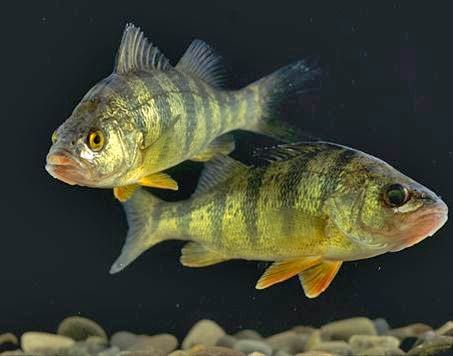
Teleost fish (infraclass Teleostei) represent the most advanced and diverse group of ray-finned fishes, comprising approximately 30,000 species. Their defining characteristics include:
- Homocercal Tail: Teleosts are primarily distinguished by a homocercal tail, in which the upper and lower halves are approximately equal in size.1
- Respiratory System: They possess gills protected by a bony, movable cover called the operculum, which replaces the individual gill septa found in more primitive fish.123
- Swim Bladder: Most modern teleosts have a swim bladder, a hydrostatic organ used to control buoyancy. In advanced teleosts, this organ has lost its connection to the digestive tract (physoclistic), while more primitive teleosts retain this connection (physostomous).2
- Functional Morphology: While their body shapes are highly diverse, they generally utilize a fusiform shape to reduce drag. Their swimming is powered by axial musculature that produces undulatory movements, while paired fins (pectoral and pelvic) and midline fins (dorsal and anal) aid in stability, turning, and precision movement.13
How do teleost fish differ from other types of fish, such as cartilaginous fish?
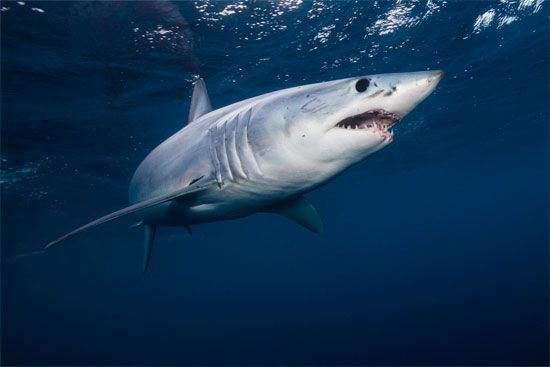
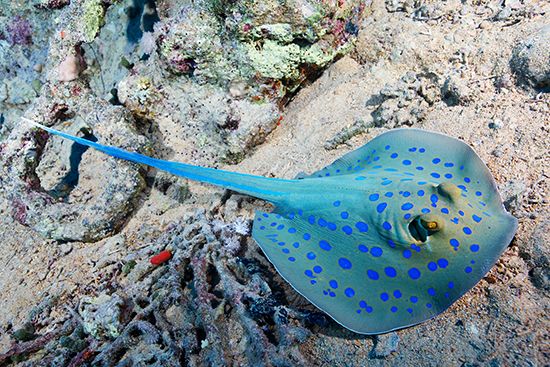
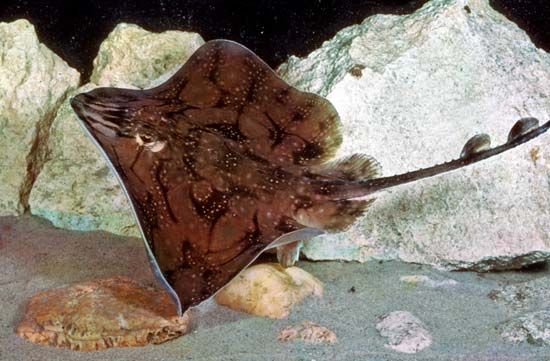
Teleost fish (infraclass Teleostei) and cartilaginous fish (class Chondrichthyes, including sharks, rays, and skates) represent two distinct evolutionary paths in fish development. Their primary differences are summarized below:
Key Differences
Feature
Teleost Fish
Cartilaginous Fish
Skeleton
Primarily bony (ossified)
Entirely cartilaginous
Tail Structure
Homocercal (upper and lower lobes equal)
Often heterocercal (asymmetrical)
Gill Protection
Bony, movable cover (
operculum
)
External flaps of skin over gill slits
Swim Bladder
Generally present (hydrostatic organ)
Absent
Fertilization
Mostly external (eggs scattered)
Internal (males use
claspers
)
Evolutionary and Functional Distinctions
- Skeletal Composition: While teleosts possess a bony skeleton, the cartilaginous skeleton of Chondrichthyes is considered a specialized, potentially degenerate trait rather than a primitive one.5
- Buoyancy: Teleosts utilize a swim bladder to control buoyancy, allowing them to maintain position in the water column with minimal effort. In contrast, cartilaginous fish lack this organ and must rely on other methods, such as oil-filled livers, to manage buoyancy.75
- Respiratory Efficiency: The development of the operculum in teleosts allows for a more efficient gill-ventilating apparatus compared to the gill slits found in cartilaginous fish, contributing to the high swimming efficiency and diversity of the teleost group.62
How do scientists classify and study the vast diversity of teleost fish?
Scientists classify and study the vast diversity of teleost fish by integrating traditional morphological analysis with modern molecular techniques. Because teleosts comprise approximately 30,000 species, ichthyologists rely on a multifaceted approach to understand their evolutionary relationships and taxonomy.1011
Methods of Study and Classification
- Comparative Anatomy: Historically, the study of the skeleton has been the primary tool for classification. Bony remains allow for direct comparisons between extant species and fossil records, which are essential for dating evolutionary divergence. Researchers examine external features—such as body dimensions, teeth, scales, and fin ray counts—to identify homologies (traits inherited from a common ancestor) versus analogies (similarities resulting from environmental pressures).108
- Molecular Genetics: In recent years, molecular analysis has become increasingly vital. By comparing sequences of DNA and proteins, scientists can measure the degree of divergence between species. For example, mitochondrial DNA is often used to study recently diverged groups due to its high mutation rate, while other molecules are selected based on the age of the taxon being studied.8
- Behavioral and Physiological Data: Beyond physical structure, researchers incorporate data from comparative behavior, physiology, and functional anatomy to refine classification schemes.10
These methods have led to the division of teleosts into approximately 12 superorders, though classifications remain dynamic as new molecular and fossil data emerge.1
How has the evolution of teleost fish contributed to their diversity and success?
The evolutionary success and immense diversity of teleost fish are primarily attributed to a series of functional advancements that optimized their ability to swim, feed, and breathe. Representing the culmination of over 400 million years of fish evolution, teleosts possess a body plan characterized by maximum swimming efficiency.1
Key Evolutionary Advantages
- Tail Structure: The development of the homocercal tail—where the upper and lower lobes are nearly equal—is a hallmark of teleosts. Unlike the asymmetrical tails of more primitive fishes, this structure allows for powerful, balanced propulsion, significantly enhancing swimming speed and maneuverability.81
- Feeding and Respiration: Teleosts evolved a highly efficient feeding and gill-ventilating apparatus. The freeing of the upper jaw from the cheek bones, a trend that began in their holostean ancestors, allowed for greater jaw movement and more powerful muscle development. Furthermore, the presence of a bony, movable operculum (gill cover) protects the gills while facilitating efficient water flow, which is critical for both respiration and feeding.1813
- Buoyancy Control: Most teleosts possess a swim bladder, a hydrostatic organ that allows them to maintain their position in the water column with minimal energy expenditure. This adaptation has enabled them to colonize diverse aquatic environments, from surface waters to the lightless depths of ocean trenches.14138
- Adaptive Radiation: These structural improvements allowed teleosts to outcompete older, less efficient groups for food and breeding grounds. Their ability to adapt to varied conditions—ranging from freezing Arctic waters to hot desert springs—has resulted in approximately 30,000 species, a diversity that exceeds that of all other vertebrate groups combined.15816
Sources
- teleost — Encyclopædia Britannica
- fish - The respiratory system — Encyclopædia Britannica
- ostariophysan - Teeth — Encyclopædia Britannica
- muscle - Jawed fishes — Encyclopædia Britannica
- skeleton - Lower chordates and fishes — Encyclopædia Britannica
- chondrichthyan - Evolution — Encyclopædia Britannica
- skeleton - Buoyancy devices — Encyclopædia Britannica
- fish - Actinopterygii: ray-finned fishes — Encyclopædia Britannica
- skeleton - General features — Encyclopædia Britannica
- fish - Distinguishing taxonomic features — Encyclopædia Britannica
- protacanthopterygian - Critical appraisal — Encyclopædia Britannica
- phylogeny - Evidence for specific phylogenies — Encyclopædia Britannica
- fish - Structural diversity — Encyclopædia Britannica
- fish - Agnatha: early jawless fishes — Encyclopædia Britannica
- swim bladder — Encyclopædia Britannica
- fish - Acanthodii: early jawed fishes — Encyclopædia Britannica
- fish - Evolution and paleontology — Encyclopædia Britannica
Published on · 4 min read