How the Nitrogen Cycle Works
The nitrogen cycle is the essential process by which nitrogen circulates through nature in various forms. Although nitrogen makes up 78 percent of Earth's…
What is How the Nitrogen Cycle Works?
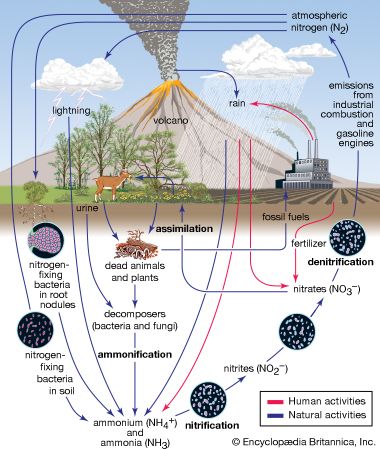
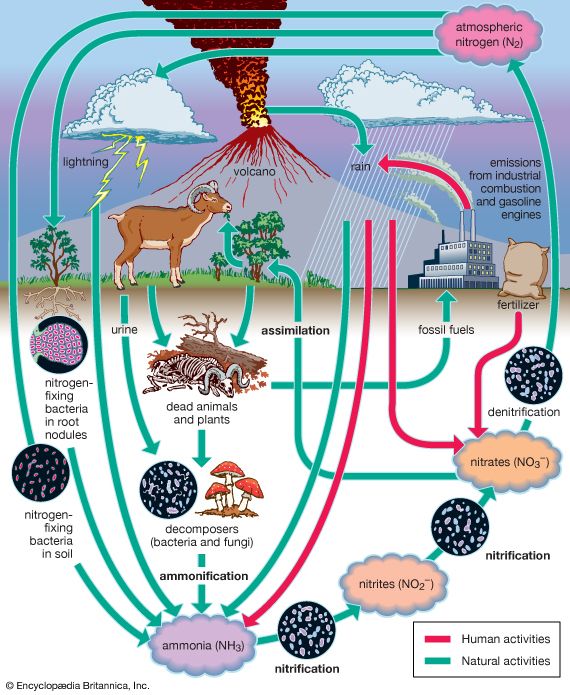
The nitrogen cycle is the essential process by which nitrogen circulates through nature in various forms. Although nitrogen makes up 78 percent of Earth’s atmosphere, most organisms cannot use it in its gaseous state. Instead, they rely on a series of microbial transformations to convert it into reactive compounds necessary for life, such as proteins and nucleic acids.123
The cycle consists of several key stages:
- Nitrogen Fixation: Bacteria and blue-green algae convert atmospheric nitrogen into ammonia or other compounds. This can also occur through abiotic processes like lightning or the Haber-Bosch process.124
- Assimilation: Plants and algae absorb these nitrogen compounds from the soil to build their tissues. Animals then ingest these plants to obtain the nitrogen they need.123
- Ammonification: When organisms die or produce waste, microorganisms decompose the organic matter, releasing nitrogen back into the soil as ammonia.12
- Nitrification: Nitrifying bacteria transform soil ammonia into nitrates, which are then available for plant uptake.1
- Denitrification: Denitrifying bacteria convert nitrates back into atmospheric nitrogen, completing the cycle.12
How does the Haber-Bosch process impact the natural nitrogen cycle?
The Haber-Bosch process significantly alters the natural nitrogen cycle by providing a massive, industrial-scale method for nitrogen fixation. In nature, nitrogen is primarily fixed by microorganisms and, to a lesser extent, by lightning. By contrast, the Haber-Bosch process uses high pressures, high temperatures, and catalysts to convert inert atmospheric nitrogen into ammonia on a global scale.6789
This industrial intervention has profound impacts:
- Agricultural Expansion: By producing synthetic fertilizers, the process allows for intensive agriculture that far exceeds the nitrogen-supplying capacity of natural soil processes or manure.97
- Chemical Interdependence: The production of nitrogen-based fertilizers is closely linked to the chemical industry, often requiring fossil fuels as a source of hydrogen and energy.910
- Environmental Alteration: The widespread application of these synthetic compounds increases the concentration of reactive nitrogen in the environment, which can lead to ecological shifts beyond what the natural cycle would typically sustain.108
What are the consequences of too much nitrogen in an ecosystem?
Excess nitrogen in an ecosystem can lead to severe environmental degradation, primarily through the processes of eutrophication and soil acidification.
Aquatic Ecosystems
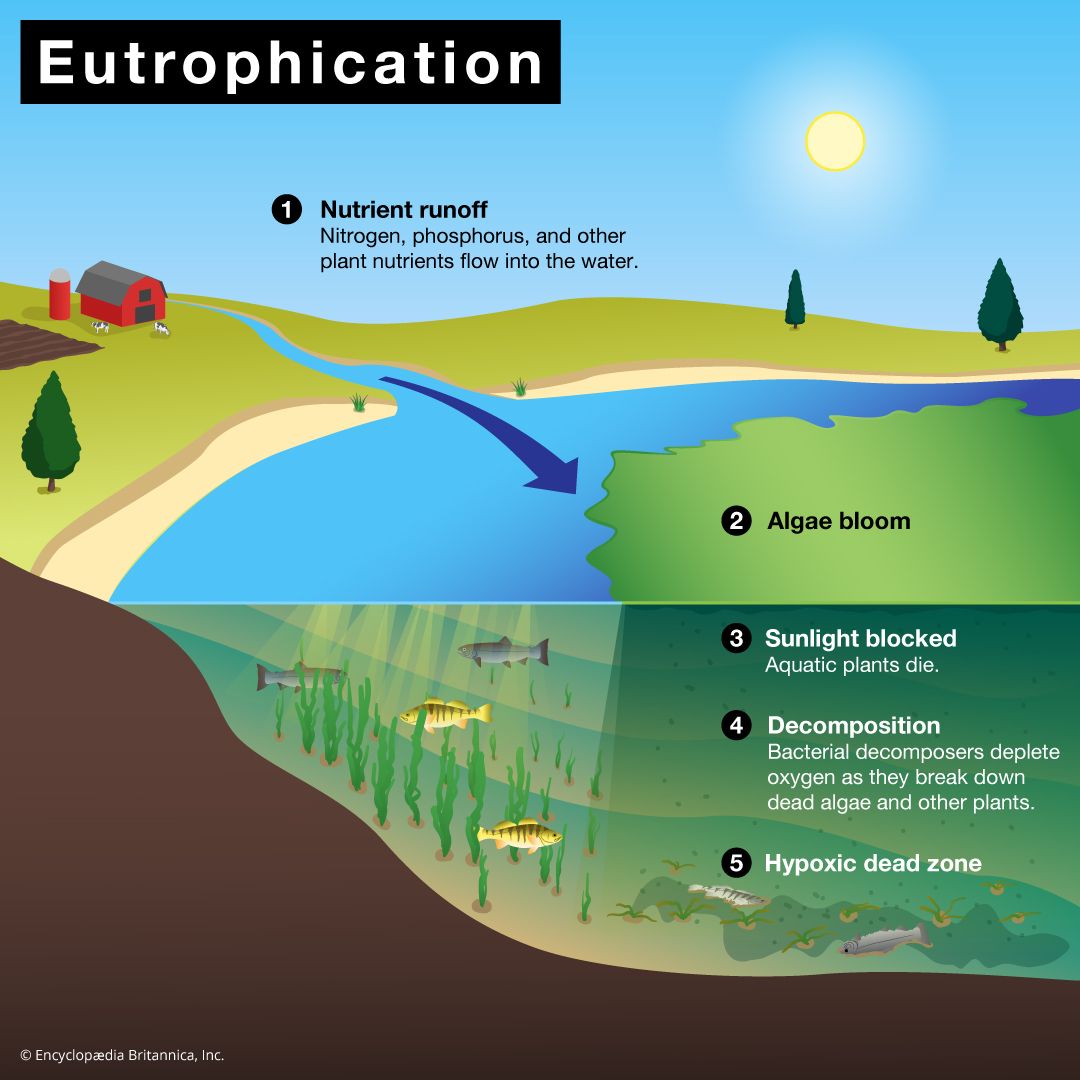
When nitrogen-rich runoff from fertilizers, sewage, and animal waste enters water bodies, it triggers cultural eutrophication. This nutrient loading stimulates massive growth of algae and other aquatic plants, known as water blooms. These blooms block sunlight and, upon decomposing, consume vast amounts of dissolved oxygen. This creates hypoxic “dead zones” where fish, mollusks, and other aquatic life cannot survive, leading to massive die-offs and the collapse of local food chains.121314
Terrestrial and Soil Impacts
Excess nitrogen also disrupts terrestrial environments:
- Soil Acidification: The nitrification of ammonia and ammonium compounds releases hydrogen ions, which increase soil acidity. This process leaches essential base cations like calcium and magnesium, which are necessary for plant health.15
- Forest Decline: Acidification and the mobilization of toxic aluminum can damage tree roots and foliage. Species such as red spruce and sugar maple have shown significant declines due to these chemical changes, leaving them more vulnerable to drought, insects, and pathogens.15
- Human and Animal Health: High levels of nitrates in groundwater pose direct health risks, as they can be toxic to both humans and livestock.1614
How do legumes specifically interact with nitrogen-fixing bacteria?
Legumes, which belong to the pea family, maintain a mutualistic relationship with specific nitrogen-fixing bacteria, most notably those of the genus Rhizobium.419
This interaction begins when the bacteria invade the root hairs of the host plant. Once inside, the bacteria multiply and stimulate the plant to form root nodules—specialized structures consisting of enlarged plant cells and bacteria living in intimate association.4
Within these nodules, the bacteria perform the essential task of converting atmospheric nitrogen into ammonia. The host plant then utilizes this ammonia to support its own growth and development. Because this process is so vital for the health of legumes, such as soybeans, alfalfa, and peas, farmers often inoculate seeds with commercial cultures of Rhizobium to ensure that these beneficial nodules form effectively, particularly in soils where the bacteria are not naturally abundant.4
Sources
- Nitrogen cycle — Encyclopædia Britannica
- Bacteria: Top Questions — Encyclopædia Britannica
- How the Nitrogen Cycle Works — Encyclopædia Britannica
- Nitrogen-fixing bacteria — Encyclopædia Britannica
- Why is nitrogen essential to life? — Encyclopædia Britannica
- Haber-Bosch process — Encyclopædia Britannica
- chemical industry - Nitrogen — Encyclopædia Britannica
- nitrogen fixation — Encyclopædia Britannica
- Fritz Haber - Early research — Encyclopædia Britannica
- chemical industry - Nitric acid — Encyclopædia Britannica
- Atmosphere - Nitrogen budget — Encyclopædia Britannica
- eutrophication Has Greek Roots — Merriam-Webster
- Acid rain - Effects on forested and mountainous regions — Encyclopædia Britannica
- eutrophication — Encyclopædia Britannica
- Agricultural technology - Plant nutrients — Encyclopædia Britannica
- Agricultural technology - Eutrophication — Encyclopædia Britannica
- Biosphere - The nitrogen cycle — Encyclopædia Britannica
- soil - Biological phenomena — Encyclopædia Britannica
- Nitrogen-fixing bacteria: Top Questions — Encyclopædia Britannica
Published on · 3 min read