Toad
While people often distinguish between frogs and toads, it is important to note that there is no strict taxonomic basis for these labels; all toads are…
What are the key characteristics that distinguish toads from frogs?
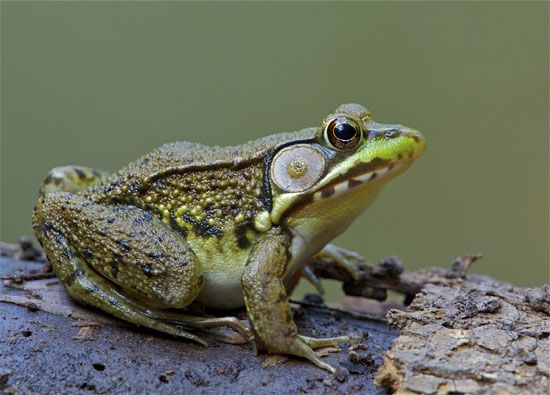
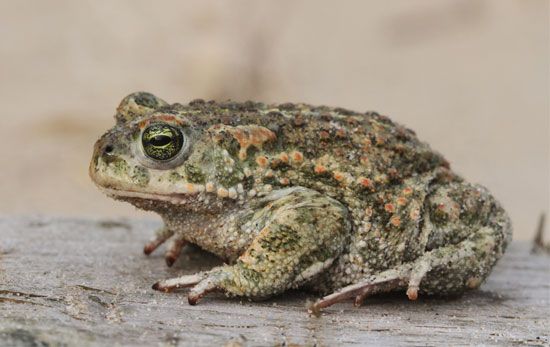
While people often distinguish between frogs and toads, it is important to note that there is no strict taxonomic basis for these labels; all toads are technically classified as frogs within the order Anura. The terms are largely based on superficial characteristics.1
When attempting to identify them in the wild, you can look for these general differences:
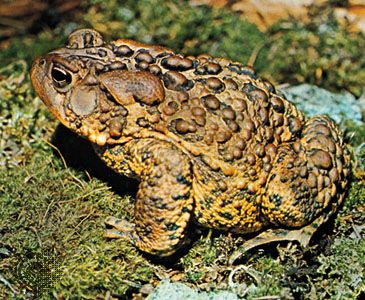
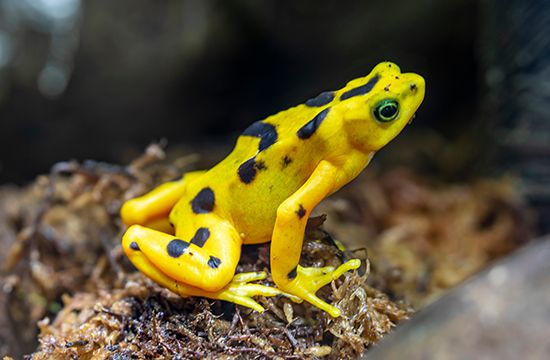
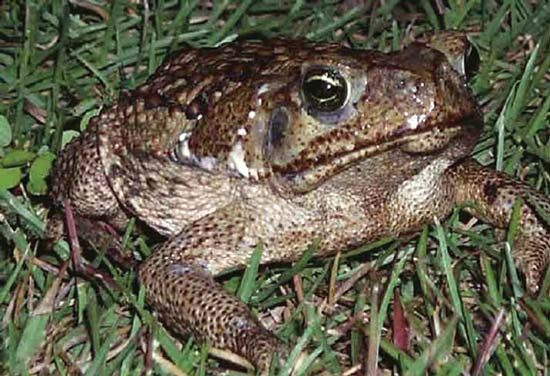
- Skin Texture: Frogs typically have smooth, moist skin, whereas toads often have dry, rough, and bumpy skin. While the bumps on a toad may look like warts, they are actually glandular structures and cannot transmit skin conditions to humans.12
- Habitat: Because frogs require moisture to keep their skin hydrated, they are commonly found near bodies of water. Toads are generally better at retaining moisture and are more frequently found in drier environments away from ponds or streams.1
- Legs and Locomotion: Frogs usually possess long, powerful hind legs adapted for leaping and swimming. Toads typically have shorter hind legs, giving them a squat appearance; they often move by taking small hops or even walking.12
What are the main differences between amphibians and other animal groups?
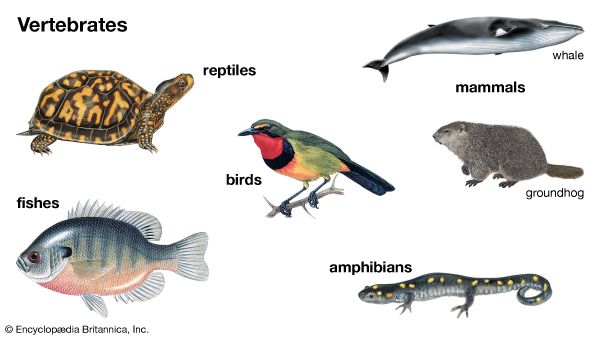
Amphibians are a unique group of vertebrates that occupy a distinct evolutionary position between aquatic and terrestrial life. Their name, derived from the Greek for “living a double life,” reflects their dual strategy of exploiting both water and land habitats.5
Key characteristics that distinguish amphibians from other animal groups include:
- Reproduction and Development: Unlike reptiles, birds, and mammals, which typically produce shelled or amniotic eggs, amphibians generally lay simple, gelatinous eggs in water or damp environments. Most species undergo metamorphosis, starting life as free-swimming, gill-breathing larvae before developing into air-breathing adults](https://www.britannica.com/science/larva) before developing into air-breathing adults.6758
- Respiration: Amphibians rely heavily on cutaneous (skin-surface) respiration. While many develop simple, saclike lungs as adults, their skin remains a vital organ for gas exchange throughout their lives, a feature not found in the same capacity in birds or mammals.58
- Physiology: Like reptiles, amphibians are ectothermic (cold-blooded), meaning they cannot maintain a constant internal body temperature independent of their surroundings. They are also characterized by unique anatomical traits, such as pedicellate (two-part) teeth and a double-channeled hearing system.975
What types of vocalizations do toads make and why?
Toads, which are members of the order Anura, produce vocalizations primarily to facilitate reproduction and defend territory.1112
The primary vocalization is the mating call, which males use to attract females to breeding sites. These calls are species-specific, serving as a critical mechanism to prevent hybridization between closely related species that may inhabit the same area. In addition to attracting mates, males may use territorial calls to warn off other males, sometimes escalating to physical aggression if the intruder does not retreat.12
These sounds are produced by forcing air from the lungs over the vocal cords, causing them to vibrate. The sound is then amplified by a vocal sac—an inflatable pouch in the throat that acts as a resonating chamber. Unlike many other vertebrates, toads and frogs do not expel air while calling; instead, the air cycles back and forth between the lungs and the buccal cavity.1112
What is the process of metamorphosis in amphibians?
Metamorphosis in amphibians is an abrupt, hormone-controlled process that transforms a larval stage into a juvenile or adult form, often facilitating a transition from aquatic to terrestrial life.14
While salamanders and caecilians undergo structural modifications—such as the resorption of gills and tailfins and the development of eyelids and skin glands—these changes are relatively minor. In contrast, anurans (frogs and toads) experience radical transformations:14
- Respiratory and Circulatory Shifts: Gills and their associated circulation disappear as lungs and pulmonary ventilation develop.14
- Structural Changes: Limbs develop, the tail is resorbed, and the skin thickens. The digestive tract shortens, and adult mouthparts replace larval ones.14
- Sensory and Urogenital Updates: Eyes enlarge and develop eyelids, and the urogenital system shifts from producing dilute ammonia to concentrated urea.14
These modifications allow the animal to shift from larval feeding and respiration modes to those required for an adult existence.14
Sources
- What’s the Difference Between a Frog and a Toad? — Encyclopædia Britannica
- frog and toad - Form and function — Encyclopædia Britannica
- frog and toad - From tadpole to adult — Encyclopædia Britannica
- frog and toad - Size range and diversity of structure — Encyclopædia Britannica
- amphibian — Encyclopædia Britannica
- Vertebrate: Top Questions — Encyclopædia Britannica
- Respiratory system - Amphibians — Encyclopædia Britannica
- Did you know? — Merriam-Webster
- Vertebrate - The tetrapods — Encyclopædia Britannica
- Reproductive behaviour - Amphibians — Encyclopædia Britannica
- vocal sac — Encyclopædia Britannica
- vocal sac — Merriam-Webster
- frog and toad - Breeding behaviour — Encyclopædia Britannica
- amphibian - Metamorphosis — Encyclopædia Britannica
- amphibian - Larval stage — Encyclopædia Britannica
Published on · 4 min read