Vertebrate
The nervous system of vertebrates is distinguished from that of invertebrates by its fundamental structural organization and development. While many…
How does the nervous system of vertebrates differ from that of other animals?
The nervous system of vertebrates is distinguished from that of invertebrates by its fundamental structural organization and development. While many invertebrates possess centralized nervous systems featuring ventral nerve cords and segmental ganglia, vertebrates are characterized by a hollow, dorsally placed nerve cord, which serves as the precursor to the spinal cord.123
Key differences include:
- Structural Plan: Vertebrates possess a central nervous system consisting of a brain and a dorsal spinal cord. In contrast, many invertebrates, such as annelids, mollusks, and arthropods, typically feature ventral nerve cords.42
- Cephalization: While both groups exhibit cephalization—the concentration of nervous functions in the head—the vertebrate brain developed through the accumulation of nerve cells at the cephalic end of the dorsal nerve cord, forming a brainstem that regulates reflex activity a brainstem that regulates reflex activity.1
- Neurochemistry: There are distinct differences in neurotransmitter usage. For example, in vertebrates, motor neurons that innervate striated muscle are consistently cholinergic (secreting acetylcholine), whereas in arthropods, motor neurons are not cholinergic.5
What are some of the key adaptations that have allowed vertebrates to be successful in various environments?
Vertebrates have achieved remarkable success across diverse environments—from the deep ocean to the air and land—through a suite of specialized physiological and structural adaptations. Key evolutionary developments include:
- Skeletal Evolution: The emergence of bone provided critical structural rigidity for terrestrial life, allowing vertebrates to overcome the lack of buoyancy outside of water. Furthermore, bone serves as an internal reservoir for phosphate and calcium, which, alongside the kidney and endocrine system, enables internal fluid homeostasis—a necessity for maintaining a constant internal environment in varying external conditions.6
- Advanced Sensory Systems: Vertebrates possess highly specialized sense organs, including complex eyes with adjustable lenses and irises for focusing and light regulation. Many species also utilize electroreception for hunting or communication, and their auditory systems are capable of decomposing complex sounds into component frequencies.7
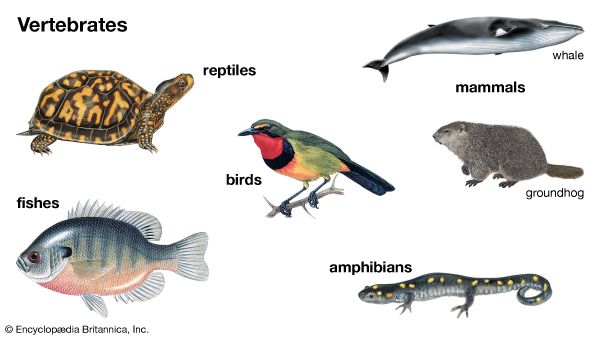
- Integumentary Adaptations: The epidermis has evolved significantly to facilitate the transition to land. Adaptations range from the moist, glandular skin of amphibians to the tough, dry, and protective skin of reptiles, and the insulating feathers or hair found in birds and mammals, respectively.2
- Metabolic and Feeding Efficiency: The development of pharyngeal slits and gills supports high metabolic rates. Specialized mouth structures and pharyngeal adaptations allow for the active capture of larger prey, while closed circulatory systems and bilateral kidneys ensure efficient nutrient transport and waste excretion.89
What are some examples of unique vertebrate species and their special features?
Vertebrates exhibit a vast array of unique adaptations that allow them to thrive in diverse and often extreme environments. Here are several notable examples:
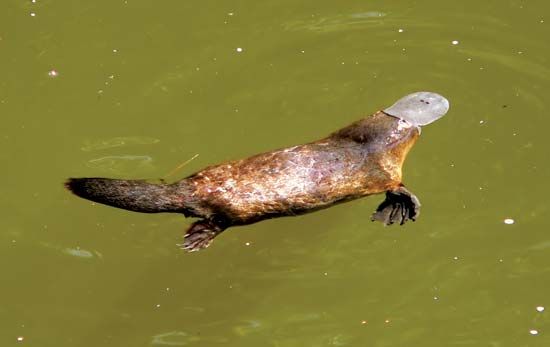
- Platypus: As a monotreme, this mammal defies typical mammalian norms by laying eggs and lacking teats, instead “sweating” milk for its young. It also possesses a specialized bill filled with electroreceptors, allowing it to navigate and hunt underwater without the use of sight.11
- Axolotl: This salamander is famous for paedomorphosis, a condition where it retains larval features—such as external gills—throughout its entire adult life.12
- Blobfish: Adapted to the intense pressure of the deep ocean (600–1,200 meters), this fish has a gelatinous body and soft, malleable bones. Its low-density flesh allows it to maintain its form at extreme depths where muscle would be inefficient.13
- Star-nosed Mole: This mammal features a unique, star-shaped ring of fleshy appendages on its snout. This “star” is densely packed with nerve fibers, functioning as a highly sensitive touch organ that allows the mole to navigate and identify prey with incredible speed.13
- Notothenid Fishes: Inhabiting the freezing waters of Antarctica, these fish have evolved specialized proteins in their blood that act as natural antifreeze, preventing them from freezing in temperatures as low as −2°C (28°F).14
What role does the endoskeleton play in vertebrate animals?
The endoskeleton serves as a fundamental internal framework for vertebrate animals, providing essential structural support, protection, and a mechanism for movement. Its primary roles include:
- Support and Structure: The endoskeleton provides the necessary rigidity to maintain the body’s shape and posture. It begins development in the embryo as a notochord, which serves as the initial supporting structure before being replaced or supplemented by cartilage or bone in more advanced vertebrates.1920
- Protection: A critical function of the endoskeleton is the protection of vital organs. For instance, the bones of the skull shield the brain, while the vertebral column protects the spinal cord.2119
- Locomotion: The endoskeleton facilitates movement by providing a rigid base for the attachment of muscles. Through the formation of joints, such as ball-and-socket or hinge joints, the skeleton allows for complex, coordinated movements in various planes.2122
- Physiological Roles: Beyond mechanics, the skeleton acts as a reservoir for minerals like calcium and phosphate, which are vital for maintaining homeostasis within the body.21
Sources
- nervous system - The primitive condition — Encyclopædia Britannica
- Animal behaviour - Sensory-motor mechanisms — Encyclopædia Britannica
- nervous system - Complexly compartmentalized systems — Encyclopædia Britannica
- nervous system - Moderately cephalized systems — Encyclopædia Britannica
- nervous system - Evolution and development of the nervous system — Encyclopædia Britannica
- Vertebrate - General features — Encyclopædia Britannica
- bone - Evolutionary origin and significance — Encyclopædia Britannica
- Integument - Embryology and evolution — Encyclopædia Britannica
- Animal communication - Signal reception — Encyclopædia Britannica
- Vertebrate - External features — Encyclopædia Britannica
- Why Is the Platypus a Mammal? — Encyclopædia Britannica
- axolotl — Encyclopædia Britannica
- amphibian - Common features — Encyclopædia Britannica
- 10 Animals With Evolutionary Traits Plucked Straight Out of a Nightmare — Encyclopædia Britannica
- 8 Animals That Live in Extreme Environments — Encyclopædia Britannica
- 5 Vertebrate Groups — Encyclopædia Britannica
- Marine ecosystem - Physical and chemical properties of seawater — Encyclopædia Britannica
- deep-sea fish — Encyclopædia Britannica
- skeleton - Comparative study of skeletal systems — Encyclopædia Britannica
- Vertebrate - The skeletal system — Encyclopædia Britannica
- skeleton - Joints — Encyclopædia Britannica
- skeleton - Skeletomusculature of arthropods — Encyclopædia Britannica
- cephalochordate - Circulatory system — Encyclopædia Britannica
- Circulatory system - General features of circulation — Encyclopædia Britannica
- skeleton - Embryology of vertebrate skeletons — Encyclopædia Britannica
Published on · 4 min read