Atoll
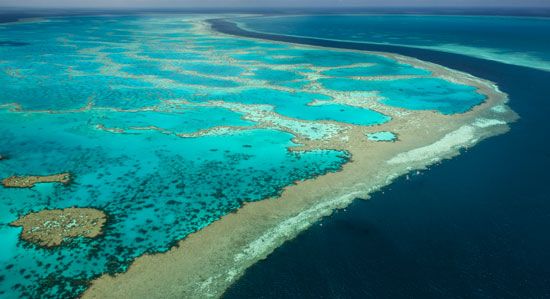
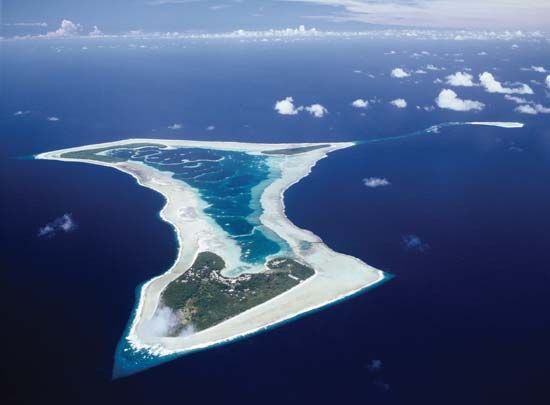
An atoll is a ring-shaped coral reef that encloses a central lagoon. Unlike other reef types, atolls lack a central non-reef landmass, often appearing as a…
What is an atoll and how does it differ from other types of coral reefs?
An atoll is a ring-shaped coral reef that encloses a central lagoon2. Unlike other reef types, atolls lack a central non-reef landmass, often appearing as a circular or closed-shape ribbon of reef rising from the ocean floor.12
Coral reefs are categorized into four primary forms based on their structure and relationship to land:
- Fringing reefs: These reefs directly skirt the edge of a mainland or a non-reef island.23
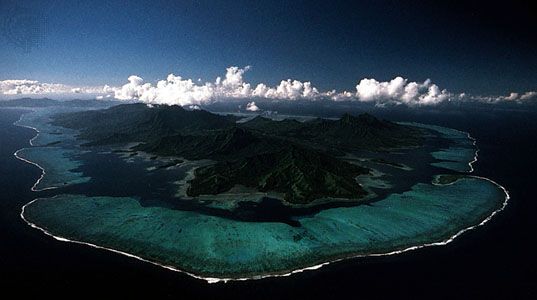
- Barrier reefs: These are separated from a landmass by a deep lagoon or channel.23
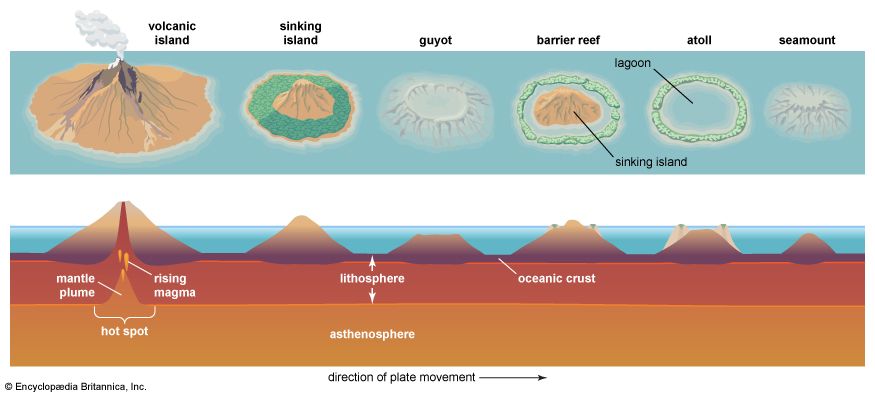
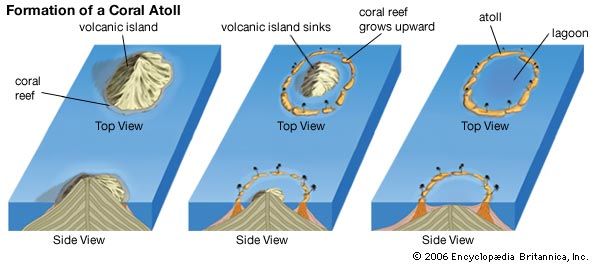
- Atolls: These function like circular barrier reefs but have no central island, as the original volcanic landmass has subsided below sea level.21
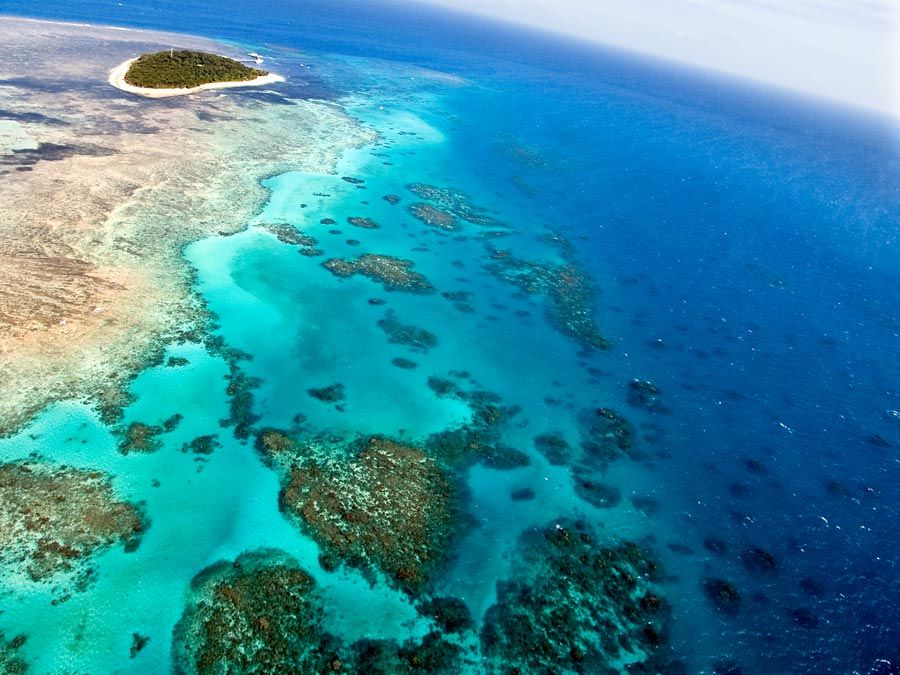
- Platform or patch reefs: These are irregular, table-like, or pinnacle-shaped reefs that can exist independently or within the lagoons of other reef types.23
According to Charles Darwin’s subsidence theory, atolls represent the final stage of reef development, where a reef continues to grow upward as its volcanic foundation sinks.1
What types of plants and animals are commonly found on atolls?
Atolls are characterized by their low-lying, limestone-based soils, which create challenging conditions for plant and animal life. Because these environments are isolated and often lack the diverse habitats found on high volcanic islands, their terrestrial flora and fauna are relatively limited.678
Plant Life
Vegetation on atolls is typically dominated by species capable of thriving in sandy, rocky, or saline environments. Common plants include:
- Coconut palms: A staple of atoll landscapes.7
- Pandanus: Often found alongside coconut trees.7
- Breadfruit trees: Frequently cultivated by atoll inhabitants.7
- Xerophilous plants: Desert-type vegetation that is well-adapted to the thin, limestone-derived soils.6
Animal Life
Terrestrial animal diversity on atolls is generally low, as many species struggle to reach these remote locations.8
- Indigenous Species: There are few native land mammals; however, atolls often support various seabirds, such as terns, frigate birds, and shearwaters, which use these islands as breeding grounds.94
- Introduced Species: Many animals found on atolls, such as pigs, goats, and rats, were introduced by human activity.6
- Marine Life: While terrestrial life is sparse, the lagoons and surrounding reefs host a highly productive and diverse array of marine organisms, including numerous fish species, shrimp, and, in some protected areas like the Aldabra Islands, giant tortoises6.4
What economic activities are typically associated with atoll communities?
Economic activities in atoll communities are typically defined by a reliance on subsistence practices supplemented by specific export-oriented industries and external financial support.
Subsistence and Traditional Economy
For many residents of outer atolls, the economy remains rooted in subsistence farming and fishing. Common agricultural staples include coconuts, breadfruit, taro, bananas, and various root crops like yams and cassava. Fishing provides the primary source of protein, utilizing traditional methods such as nets, lines, and spears within lagoons and coastal waters.14151617
Commercial Activities and Exports
- Copra: The production of copra—dried coconut meat—is a vital source of income for village economies, serving as a key export for many Pacific island nations.151816
- Marine Resources: Beyond local consumption, atoll communities often derive revenue by selling fishing rights to foreign fleets.1516
- Specialized Industries: Some atolls have diversified into seaweed farming or the production of handicrafts.16
Modern Economic Drivers
In many regions, traditional activities are increasingly supported or overshadowed by the service sector, particularly tourism, which has become a major GDP contributor in places like the Maldives. Additionally, many atoll-based economies remain heavily dependent on foreign aid and remittances from citizens working abroad to fund development and infrastructure.14191516
What are some famous examples of atolls around the world?
Several regions across the globe are home to famous atolls, many of which are located in the Pacific and Indian Oceans. These coral formations often serve as significant cultural, historical, and scientific sites.
Notable Atolls
- Bikini Atoll: Located in the Marshall Islands, this atoll is internationally recognized as the site of numerous U.S. nuclear weapons tests conducted between 1946 and 1958. Today, it is a destination for scuba diving among the sunken warships from those experiments.22
- Kwajalein Atoll: Also in the Marshall Islands, this formation surrounds the world’s largest lagoon and serves as a key U.S. military missile-testing site.23
- Aldabra Islands: One of the world’s largest atolls, located in the Indian Ocean as part of the Seychelles. It is a UNESCO World Heritage site famous for its population of giant tortoises.24
- Tuamotu Archipelago: Situated in French Polynesia, this is the largest group of coral atolls in the world. It includes Rangiroa, one of the largest atolls, and Raroia, where the famous Kon-Tiki expedition ended in 1947.25
- Maldives: This independent nation in the Indian Ocean consists of approximately 1,200 coral islands grouped into clusters of atolls. The term atoll itself is derived from the Divehi language spoken in the Maldives.2627
Sources
- atoll — Merriam-Webster
- coral reef - Types of coral reefs — Encyclopædia Britannica
- coral reef - Structure — Encyclopædia Britannica
- atoll — Encyclopædia Britannica
- coral island — Encyclopædia Britannica
- French Polynesia - Plant and animal life — Encyclopædia Britannica
- lagoon - Coral lagoons — Encyclopædia Britannica
- lagoon — Encyclopædia Britannica
- British Virgin Islands - Plant and animal life — Encyclopædia Britannica
- Micronesia - Land — Encyclopædia Britannica
- Tonga - Plant and animal life — Encyclopædia Britannica
- Seychelles - Plant and animal life — Encyclopædia Britannica
- biogeographic region - Components of species diversity: species richness and relative abundance — Encyclopædia Britannica
- Maldives - Agriculture, forestry, and fishing — Encyclopædia Britannica
- Maldives - Services — Encyclopædia Britannica
- Maldives - Labour and taxation — Encyclopædia Britannica
- Andaman and Nicobar Islands - Agriculture, forestry, and fishing — Encyclopædia Britannica
- Micronesia - Economy — Encyclopædia Britannica
- Copra — Encyclopædia Britannica
- Kiribati - Economy — Encyclopædia Britannica
- Polynesian culture - Fishing — Encyclopædia Britannica
- Bikini — Encyclopædia Britannica
- Did you know? — Merriam-Webster
- Maldives — Encyclopædia Britannica
- Aldabra Islands — Encyclopædia Britannica
- Tuamotu Archipelago — Encyclopædia Britannica
- Pacific Islands — Encyclopædia Britannica
- Kwajalein Atoll — Encyclopædia Britannica
- Majuro — Encyclopædia Britannica
Published on · 4 min read