Tumbleweed
A tumbleweed is a plant that detaches from its roots once mature, becoming a light, rolling mass that is driven across open terrain by the wind. As the plant…
What is tumbleweed?
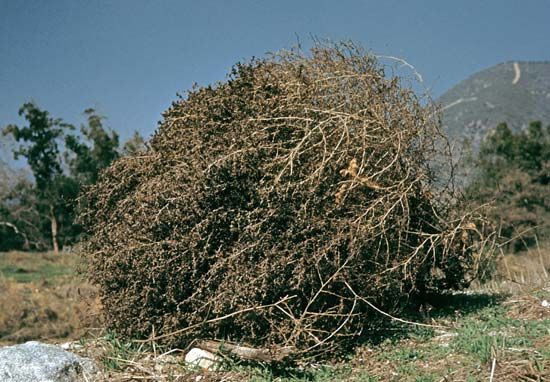
A tumbleweed is a plant that detaches from its roots once mature, becoming a light, rolling mass that is driven across open terrain by the wind. As the plant tumbles, it effectively scatters its seeds across a wide area, a method of dispersal known as chamaechory.12
Common examples of plants that exhibit this behavior include:
- Pigweed (Amaranth retroflexus)
- Russian thistle
- Tumbling mustard
- Various amaranths
- The grass Spinifex, found on Indonesian shores and Australian steppes12
Some plants, such as the steppe plant Colutea arborea, may begin as inflated pods that travel by air before hitting the ground and transitioning into windblown tumbleweeds. This strategy is particularly common among pioneer vegetation in open, windy environments.12
What are other ways plants disperse their seeds besides wind?
Plants have evolved a variety of ingenious strategies to disperse their seeds beyond wind, ensuring their offspring can colonize new areas and reduce competition for resources. These methods include:34
Dispersal by Water (Hydrochory)
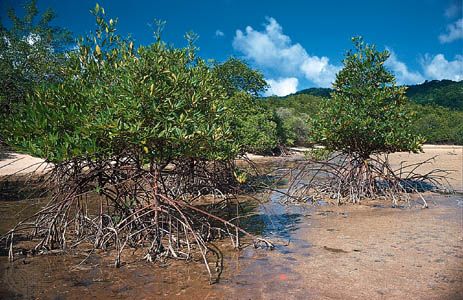
Many plants in aquatic or coastal environments produce buoyant seeds or fruits that float. For example, the coconut palm uses its fibrous husk to travel across oceans, while mangroves produce hardy propagules that can survive in salt water for up to a year.564
Dispersal by Animals (Zoochory)
- Ingestion: Many animals, including birds, mammals, and even fish like the pacu, eat fruits and later deposit the seeds in their feces, often far from the parent plant.74
- Attachment: Some seeds feature hooks, barbs, or spines that cling to the fur, feathers, or clothing of passing animals, such as the burdock plant.4
- Caching: Animals like squirrels bury seeds for later consumption but often forget them, allowing the seeds to germinate. Some plants even use “fecal mimicry” to trick dung beetles into burying their seeds.4
Self-Dispersal
- Explosive Mechanisms: Some plants, such as the squirting cucumber or sandbox tree, use water pressure or drying tissues to forcibly eject seeds at high speeds.84
- Gravity (Barochory): Heavy fruits, such as those of the horse chestnut, simply fall to the ground.8
- Geocarpy: Some plants, like the peanut, actively bury their fruits underground to protect them.8
Why are tumbleweeds often considered invasive species in some regions?
Tumbleweeds, such as the Russian thistle, are often considered invasive species in North America because they are non-native plants that have become serious weeds in the region.9
While the provided search results confirm that these plants are categorized as weeds, they do not explicitly detail the specific ecological or economic impacts that lead to their classification as “invasive” in various regions. Generally, invasive species are recognized for their ability to spread rapidly, outcompete native vegetation for resources, and disrupt local ecosystems, but the specific mechanisms of how tumbleweeds achieve this are not addressed in the available data.910
What environmental conditions are necessary for a tumbleweed to grow?
The provided search results do not contain information regarding the specific environmental conditions necessary for a tumbleweed to grow.
Sorry, the Britannica knowledge base does not contain this information.
Sources
- tumbleweed — Encyclopædia Britannica
- Seed - Dispersal by wind — Encyclopædia Britannica
- Seed dispersal - Hydrochory: dispersal by water — Encyclopædia Britannica
- Seed dispersal — Encyclopædia Britannica
- Seed - Dispersal by water — Encyclopædia Britannica
- Seed dispersal - Zoochory: animal dispersal — Encyclopædia Britannica
- Seed dispersal - Self-dispersal — Encyclopædia Britannica
- Falling Far from the Tree: 7 Brilliant Ways Seeds and Fruits Are Dispersed — Encyclopædia Britannica
- Russian thistle — Merriam-Webster
- Seed dispersal - Anemochory: wind dispersal — Encyclopædia Britannica
Published on · 2 min read