Ural River
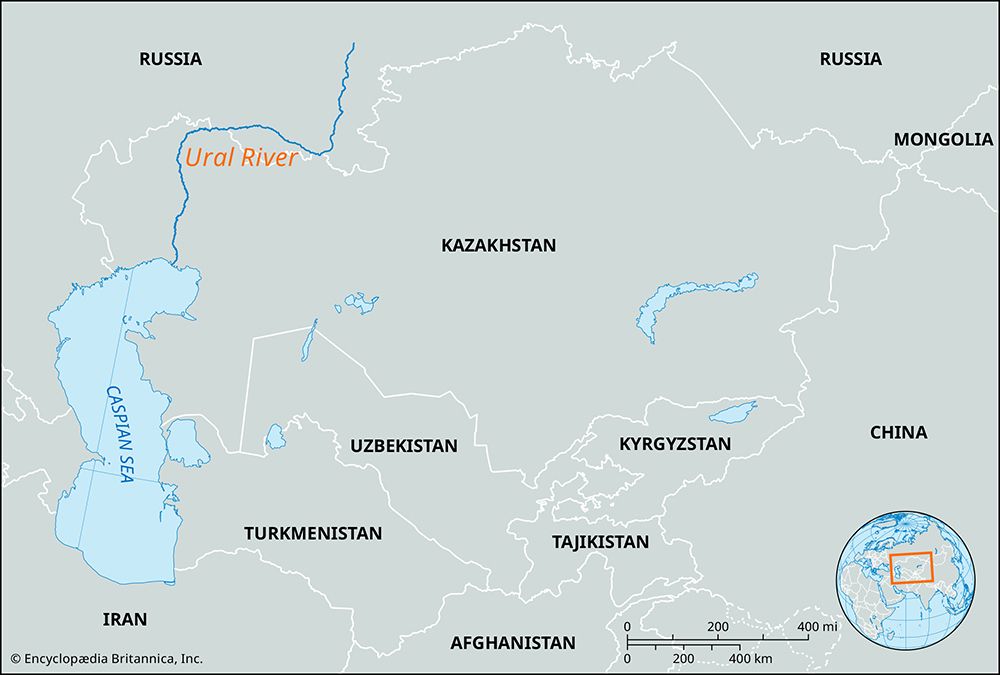
The Ural River is a 1,509-mile (2,428-km) waterway flowing through Russia and Kazakhstan. It originates in the Ural Mountains near Mount Kruglaya and follows…
What is Ural River?
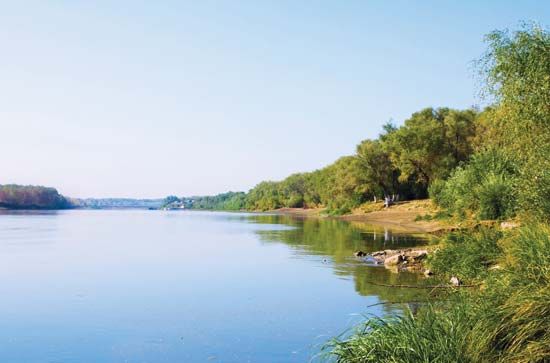
The Ural River is a 1,509-mile (2,428-km) waterway flowing through Russia and Kazakhstan. It originates in the Ural Mountains near Mount Kruglaya and follows a southward path, passing through cities such as Magnitogorsk, Orsk, and Orenburg. After traversing a semidesert lowland, the river empties into the Caspian Sea at Atyraū.12
Known in Kazakh as Zhayyq, the river serves as a significant geographical feature in the region. Its flow is characterized by a major spring maximum, and it typically remains frozen from late November through April. While navigation is possible up to the city of Oral in Kazakhstan, the river also supports infrastructure, including a dam and hydroelectric station at Iriklinsky. Additionally, the river marks the southern boundary of the Ural Mountains, which serve as a traditional physiographic divide between Europe and Asia.213
How do the Ural Mountains act as a boundary between Europe and Asia?
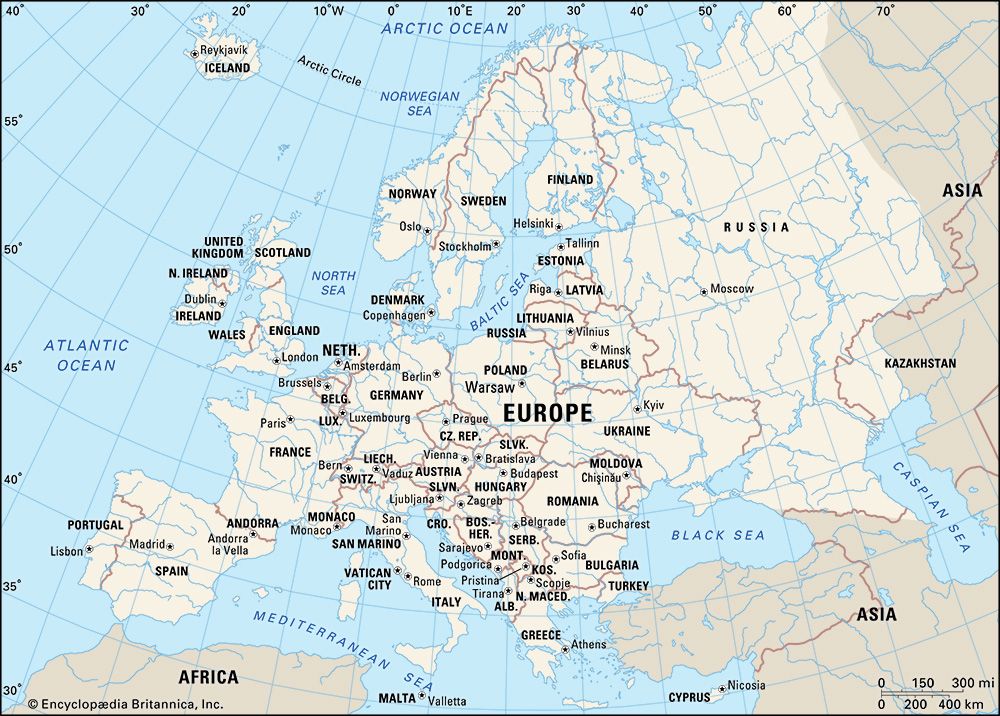
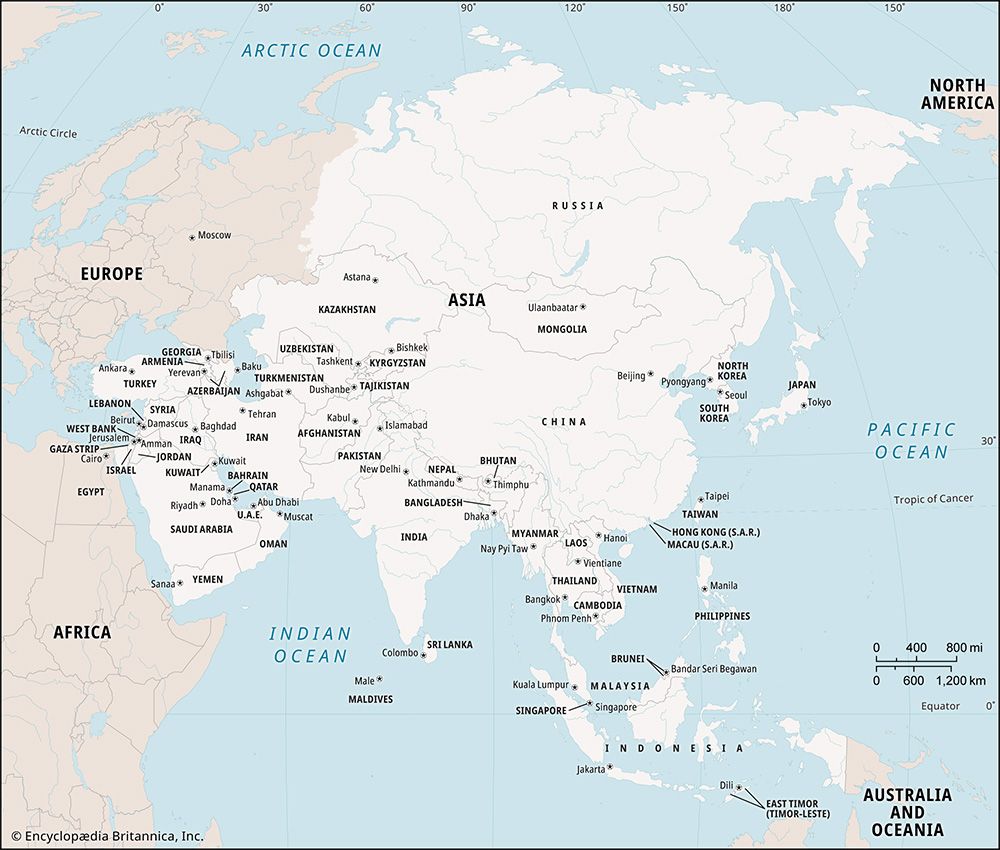
The Ural Mountains serve as a primary, traditional physiographic boundary between Europe and Asiacom/place/Europe) and Asia. Because the division between these two continents is a historical and cultural construct rather than a purely physical one, the boundary is defined by convention rather than universal geological consensus.31
Most geographers have adopted a specific borderline that utilizes the Ural range as its anchor. This line runs south from the Arctic Ocean along the spine of the Ural Mountains. Upon reaching the southern end of the range, the boundary typically turns southwest along the Emba River toward the northern shore of the Caspian Sea. West of the Caspian, the boundary continues through the Kuma-Manych Depression toward the Black Sea region.1
Geologically, this boundary is rooted in the Uralian orogenic belt, which formed during the Permian Period following the collision of the European and Asian continental plates.4
What is the significance of the Caspian Sea in this region?
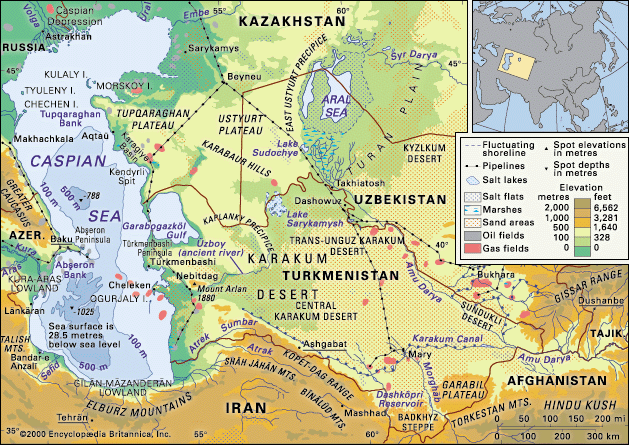
The Caspian Sea is of immense significance to the region, serving as a vital economic, geographic, and scientific hub. As the world’s largest inland body of water, it acts as a critical nexus for the five bordering nations: Kazakhstan, Turkmenistan, Iran, Azerbaijan, and Russia.85
Economic Importance
The sea is a major center for the production of petroleum and natural gas, with extensive extraction operations occurring both offshore and along its coasts. It also serves as a crucial transportation artery for goods such as grain, cotton, and timber, supported by major ports like Baku and Astrakhan. Additionally, the region is historically famous for its sturgeon population, which accounts for the majority of the world’s caviar supply.8910
Scientific and Geographic Role
The Caspian is of exceptional scientific interest because its history of fluctuating water levels provides clues to the region’s complex geologic and climatic evolution. Geographically, it serves as a key marker in defining the boundary between Europe and Asia, anchoring the eastern edge of the isthmus that separates the Black Sea from the Caspian.811
What are some major cities located along the Ural River?
Several major cities are situated along the course of the Ural River, which flows through Russia and Kazakhstan:
- Magnitogorsk: Located in Russia, this city sits along the river’s path as it flows past the eastern flank of the Ural Mountains.
- Orsk: Also in Russia, this city is positioned where the river cuts westward across the southern end of the Ural range.
- Orenburg: A major Russian city and regional headquarters located along the river’s path.
- Oral: Situated in Kazakhstan, this city serves as the limit for river navigation.
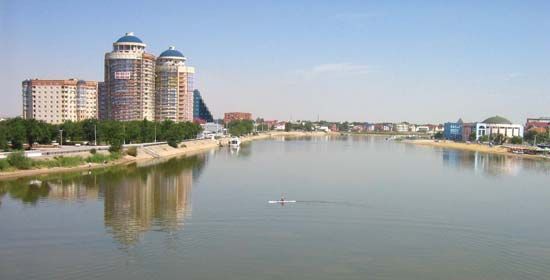
- Atyrau: Located in Kazakhstan, this city is situated at the river’s mouth where it enters the Caspian Sea.
Sources
- Ural River — Encyclopædia Britannica
- Ural — Merriam-Webster
- Ural Mountains — Encyclopædia Britannica
- Ural Mountains — Merriam-Webster
- Eurasia — Encyclopædia Britannica
- How many countries are there in Asia?: Top Questions — Encyclopædia Britannica
- Europe - Uralian orogenic belt — Encyclopædia Britannica
- Caspian Sea — Encyclopædia Britannica
- Caspian Sea - Resources — Encyclopædia Britannica
- Caspian Sea - Transportation — Encyclopædia Britannica
- Caspian Sea: Top Questions — Encyclopædia Britannica
- Caspian Sea - Climate — Encyclopædia Britannica
- Caspian Sea - Hydrology — Encyclopædia Britannica
- Russia - Settlement patterns — Encyclopædia Britannica
- Orenburg — Encyclopædia Britannica
- Ural Mountains - People of the Ural Mountains — Encyclopædia Britannica
Published on · 3 min read