Varnish Tree
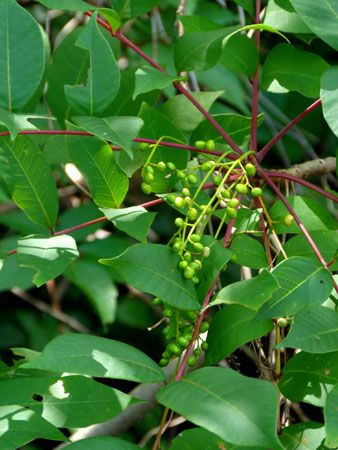
The term varnish tree refers to various trees that produce a milky sap used to create lacquer or varnish. The most prominent example is the Asian tree…
What is Varnish tree?
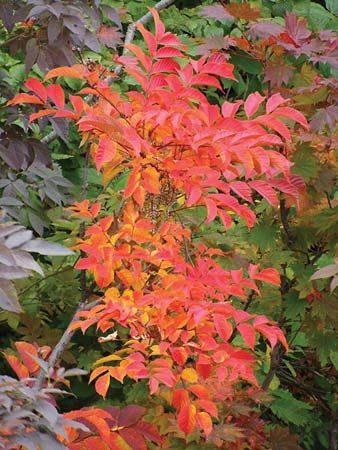
The term varnish tree refers to various trees that produce a milky sap used to create lacquer or varnish. The most prominent example is the Asian tree Toxicodendron vernicifluum, which is also known as the Japanese lacquer tree.123
This tree is related to poison ivy and is known for being highly irritating to the skin. When the tree is tapped, it exudes a thick, milky emulsion that serves as a durable, water-resistant coating. Notably, this substance possesses the unique property of drying only in a moist atmosphere, and it has been used for centuries to create the highly polished woodenware characteristic of Chinese and Japanese craftsmanship.1
How is the sap harvested from the tree?
The sap of the Toxicodendron vernicifluum is harvested through a careful process once the tree reaches approximately 10 years of age.1
- Trunk and Branches: Lateral incisions are made into the bark of the trunk to collect the running sap between June and September. Branches with a diameter of at least 3 cm are also tapped after the bark is removed.1
- Smaller Branches: Smaller branches are cut off and soaked in water for 10 days to extract a specific quality of lacquer known as seshime.1
- Sustainability: While these harvesting methods eventually kill the tree, the process is sustainable because five or six new shoots typically sprout from the roots. These shoots can be harvested again after about six years.1
Once collected, the milky, molasses-like sap is strained through hempen cloth to remove impurities. It is then stirred and slightly heated to evaporate excess moisture before being stored in airtight vessels for later use in lacquerwork.1
Why is the varnish tree related to poison ivy?
The varnish tree (Toxicodendron vernicifluum) and poison ivy are related primarily through their shared membership in the Anacardiaceae family, also known as the sumac family.15
Beyond their botanical classification, the two plants are linked by their production of urushiol, an oily, toxic resin found in the sap and resin ducts of both species. Urushiol is a potent allergen that acts as a skin irritant, capable of causing contact dermatitis in humans upon exposure. Because both plants secrete this same chemical compound, they share the ability to provoke similar immune system responses, such as severe, itchy inflammation.657
While the varnish tree is valued for the durable lacquer derived from its sap, the presence of urushiol necessitates careful handling, much like the caution required when encountering poison ivy or its relatives, such as poison oak and poison sumac.167
What are the traditional uses of Japanese lacquerware?
Japanese lacquerware has served a variety of functional and aesthetic purposes throughout history, evolving from simple domestic items to highly intricate works of art.
Domestic and Ritual Utensils
Beginning in the Heian period (794–1185), lacquer became a staple for domestic utensils, often filling the role that ceramic wares occupied in China. These items were typically finished in polished black or red lacquer. By the Muromachi period (1338–1573), the rise of the tea and incense ceremonies created a demand for exquisitely crafted small utensils, which became a primary application for the art.10
Personal Accessories
One of the most iconic uses of lacquer is the inro, a portable, often multitiered medicine case worn on the kimono sash. These cases were essential components of traditional Japanese costume and became a canvas for the finest craftsmanship, often featuring ingenious designs and novelty finishes.1011
Architecture and Furnishings
Lacquer was also utilized for the decoration of important buildings and the creation of furniture. During the Edo period (1603–1867), lacquer ensembles for the study—such as writing tables and boxes for ink stones and brushes—became common, alongside various pieces of furniture and dining ware.1011
Sources
- Varnish tree — Encyclopædia Britannica
- Japanese lacquer tree — Merriam-Webster
- varnish tree — Merriam-Webster
- lacquerwork - Obtaining and preparing lacquer — Encyclopædia Britannica
- Anacardiaceae — Encyclopædia Britannica
- immune system disorder - Contact hypersensitivity and dermatitis — Encyclopædia Britannica
- urushiol — Merriam-Webster
- poison ivy — Encyclopædia Britannica
- Oriental lacquer — Encyclopædia Britannica
- lacquerwork - Japan — Encyclopædia Britannica
- lacquerwork - Japanese processes — Encyclopædia Britannica
- Japanese art - Lacquerware — Encyclopædia Britannica
- rō-iro — Encyclopædia Britannica
Published on · 3 min read