What Are Turtle Shells Made Of?
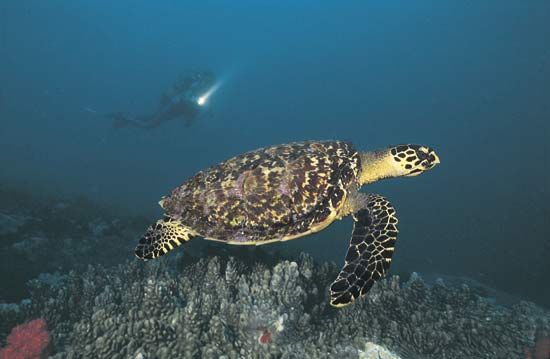
Turtle shells are primarily composed of bone and cartilage, forming an integral part of the animal's skeleton. The shell consists of two main sections: the…
What are turtle shells made of?
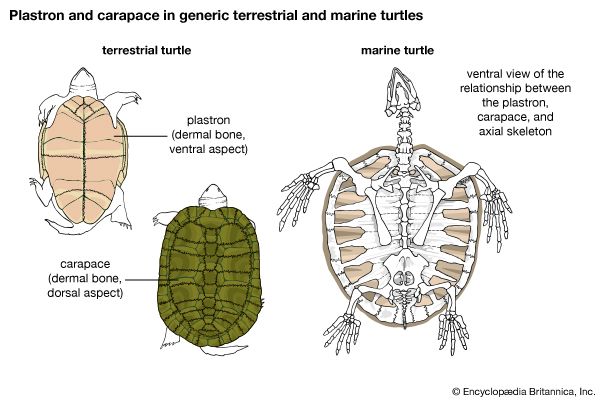
Turtle shells are primarily composed of bone and cartilage, forming an integral part of the animal’s skeleton. The shell consists of two main sections: the top carapace and the underside plastron.12
These structures are formed from two types of bone:
- Endochondral bones: Derived from the skeleton, these include the 10 trunk vertebrae and ribs that are fused to the carapace.12
- Dermal bones: These develop within the skin and form the plates that overlie the ribs and vertebrae, as well as the perimeter of the shell.12
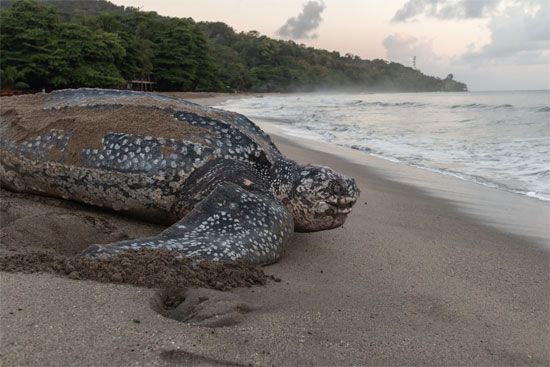
While most turtles possess this rigid, bony structure, there are exceptions. For instance, the leatherback sea turtle has a significantly reduced bony architecture, featuring a shell covered in thick, leathery skin rather than the typical plates. Unlike the skin of some other reptiles, a turtle’s shell is a permanent skeletal feature that cannot be shed.31
How do turtles differ in their ability to retract their heads into their shells?
Turtles are categorized into two primary suborders based on how they move their necks and retract their heads into their shells:
- Cryptodira (Vertical-necked turtles): The name means “hidden neck.” These turtles possess the ability to fold their necks vertically in an S-shape, which allows them to withdraw their heads directly into the shell for protection.4
- Pleurodira (Side-necked turtles): These turtles cannot withdraw their heads into the shell in the same way. Instead, they exhibit a defensive posture where they lay their head and neck horizontally to the side, tucking them beneath the margins of the shell.24
While both groups possess eight cervical vertebrae, the fundamental difference in their neck anatomy and skull architecture distinguishes these two evolutionary lineages.4
What is the purpose of the keratinous sheaths found in a turtle’s mouth?
Because modern turtles lack teeth, they rely on sharp keratinous sheaths that cover their upper and lower jaws, functioning much like a pair of false teeth. These sheaths serve several critical purposes in feeding:2
- Cutting and Killing: The edges of the sheaths are often sharp—and occasionally serrated—allowing turtles to slice pieces of flesh from carcasses and quickly dispatch small prey.2
- Processing Vegetation: These cutting edges are highly effective at chopping plant matter into manageable, bite-sized pieces.2
- Crushing: Turtles that consume mollusks utilize a broad, thick portion of the sheath located inside the mouth to crush the shells of their prey.2
Because turtles do not chew, these specialized structures are essential for processing a wide variety of food sources.2
How does the leatherback sea turtle’s shell differ from other species?
The leatherback sea turtle (Dermochelys coriacea) possesses a shell that is fundamentally different from the hard, scute-covered shells of other sea turtles in the family Cheloniidae.3
Key differences include:
- Reduced Bony Architecture: Unlike the hard-shelled cheloniids, which have a bony carapace and plastron covered in epidermal scales (scutes), the leatherback’s shell features a greatly reduced bony structure.73
- Leathery Skin: While hatchlings may initially possess scutes, these are quickly shed as the turtle grows. The resulting bony shell is covered by a thick, leathery skin rather than hard plates.73
- Flexibility: The bones in a leatherback’s shell are less firmly articulated than those of other sea turtles, providing the animal with greater flexibility at the expense of traditional armored protection.7
- Distinctive Ridges: Beneath the leathery skin, the carapace is formed by a matrix of bones that includes seven longitudinal ridges.8
These unique adaptations contribute to the leatherback’s status as a highly specialized, wide-ranging reptile capable of deep-sea diving and long-distance migration.8
Sources
- What are turtle shells made of? — Encyclopædia Britannica
- turtle - Form and function — Encyclopædia Britannica
- sea turtle: Top Questions — Encyclopædia Britannica
- side-necked turtle — Encyclopædia Britannica
- jaw — Encyclopædia Britannica
- Beak — Encyclopædia Britannica
- leatherback sea turtle — Encyclopædia Britannica
- sea turtle — Encyclopædia Britannica
- softshell turtle — Encyclopædia Britannica
Published on · 3 min read