What Do Giraffes Eat?
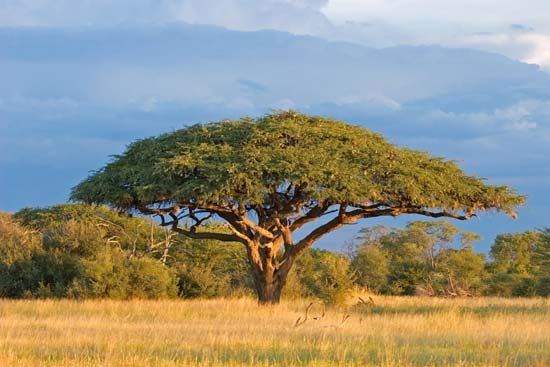
Giraffes are specialized browsers that primarily feed on the new, tender shoots and leaves of trees, showing a particular preference for the thorny acacia…
What do giraffes eat?
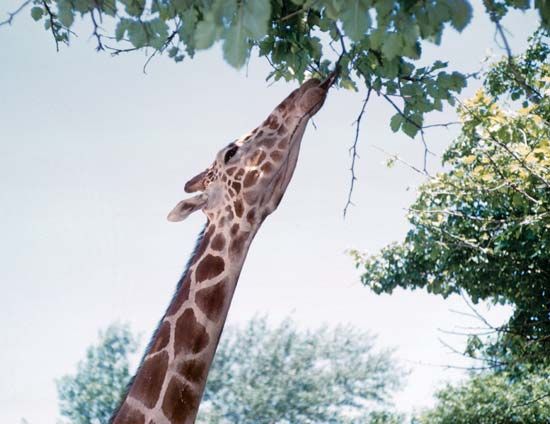
Giraffes are specialized browsers that primarily feed on the new, tender shoots and leaves of trees, showing a particular preference for the thorny acacia tree1. By using their long necks, they can reach foliage up to 6 meters (20 feet) high, allowing them to access food sources unavailable to other herbivores and thereby reducing competition.12
These animals are prodigious eaters, with a large male consuming approximately 65 kg (145 pounds) of food daily. To protect their mouths while feeding on thorny branches, their tongues and the insides of their mouths are coated with tough tissue. They use their prehensile lips or long tongues to grasp leaves; if the foliage is not thorny, they often “comb” the leaves from the stem by pulling it across their lower canine and incisor teeth. While they primarily browse, they may occasionally eat grass. Additionally, giraffes obtain most of their required water directly from their food, though they will drink during the dry season.21
How does the okapi differ from its relative, the giraffe?
While the okapi and the giraffe are both members of the family Giraffidae, they differ significantly in their physical characteristics, habitats, and social behaviors.
Physical Differences
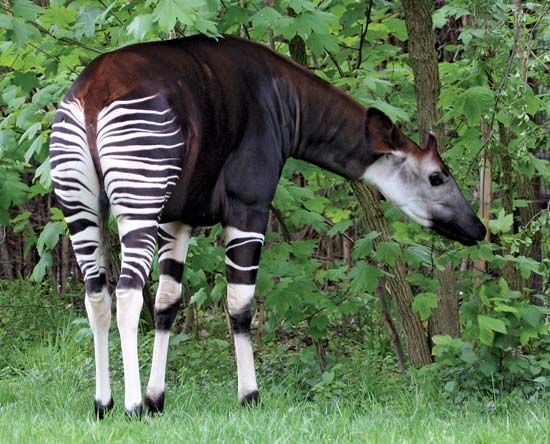
The most striking difference is size and stature. Giraffes are the tallest land animals, with males reaching heights exceeding 5.5 meters (18 feet), whereas okapis are much smaller, standing about 1.5 meters (5 feet) at the shoulder. While both possess long, prehensile tongues, the okapi has a noticeably shorter neck and shorter legs compared to the giraffe’s elongated frame. Additionally, their coat patterns are distinct: giraffes feature irregular brown patches on a light background, while okapis have a sleek, deep brown coat with characteristic black-and-white horizontal stripes on their buttocks and upper legs.
Habitat and Behavior
- Environment: Giraffes are typically found in the grasslands and open woodlands of Africa. In contrast, the okapi is a shy, elusive animal restricted to the dense rainforests of the Congo region.
- Social Structure: Giraffes are gregarious animals that live in nonterritorial groups. The okapi, however, is a solitary creature.
What predators do giraffes face in the wild?
In the wild, giraffes primarily face predation from lions and hyenas.1
While adult giraffes are formidable due to their size, these predators frequently target vulnerable individuals, such as those that are young or especially sick. In fact, approximately half of all very young giraffe calves are killed by lions and hyenas. To protect their young, mother giraffes may stand over their calves and kick at attackers with their front and back legs.421
Giraffes utilize several strategies to mitigate these threats:
- Vigilance: Because they are gregarious and live in groups, they benefit from increased awareness; if one giraffe spots a predator, others in the group will look in that direction.1
- Height: Their extreme height serves as a critical vantage point, allowing them to spot predators from a significant distance.5
How do giraffes protect themselves from predators?
Giraffes employ several physical and behavioral strategies to protect themselves from predators in the wild:
- Vigilance and Height: Their extreme height provides a critical vantage point, allowing them to spot predators from a significant distance. Because they are gregarious animals that live in nonterritorial groups, they benefit from shared vigilance; if one giraffe stares at a predator, others in the group will look in that direction, increasing the group’s overall awareness.62
- Defensive Kicking: When attacked, particularly by lions or hyenas, a mother giraffe may stand over her calf and kick at the predators with her front and back legs to defend her offspring.2
- Group Dynamics: Living in groups provides safety through the “dilution effect,” where an individual’s statistical chance of being targeted by a predator is reduced when they are part of a larger group.1
These adaptations are essential for survival, as giraffes are vulnerable to predation, especially during their youth.2
Sources
- What do giraffes eat? — Encyclopædia Britannica
- giraffe — Encyclopædia Britannica
- okapi — Encyclopædia Britannica
- lion - Hunting — Encyclopædia Britannica
- 9 of the World’s Deadliest Mammals - Lions ( Panthera leo ) — Encyclopædia Britannica
- How tall are giraffes? — Encyclopædia Britannica
- Animal social behavior - Aggregation and individual protection — Encyclopædia Britannica
Published on · 3 min read