Why Do Cats Like Scratching Posts?
Cats are naturally inclined to use scratching posts because the behavior serves several essential instinctual needs:
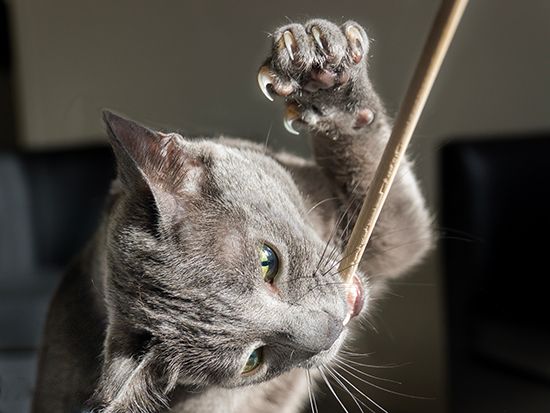
Why do cats like scratching posts?
Cats are naturally inclined to use scratching posts because the behavior serves several essential instinctual needs:
- Territorial Marking: Scratching allows cats to leave both visual marks and their unique scent, which is deposited by glands on their paws. This signals ownership of their domain, mimicking how they mark trees in the wild.1
- Claw Maintenance: The action helps cats shed the old, outer sheath of their claws, exposing the sharp, healthy layer underneath. This is vital for their natural hunting and defense instincts.1
- Physical Health: Scratching provides a necessary outlet for exercise, enabling cats to stretch their muscles and flex their feet and claws.1
- Mental Stimulation: The texture and resistance of a post offer a satisfying sensory experience. This engagement helps reduce stress and prevents boredom, which is especially beneficial for indoor cats.1
How do cats use scent glands to communicate?
Cats utilize scent glands as a primary method of chemical communication, allowing them to convey information about their identity, territory, and social status.23
These glands are strategically located across a cat’s body, including the temples, chin, corners of the mouth, the base of the tail, the anal area, and the paw pads. Cats use these glands in several ways:3
- Rubbing and Bunting: By rubbing their faces or bodies against objects, people, or other animals, cats deposit secretions to mark their territory or belongings. A specific form of this, known as bunting, serves as a social bonding ritual that allows cats in the same “colony” to exchange scents and establish a shared group odor.34
- Kneading: The scent glands in a cat’s paw pads allow them to leave their personal scent on surfaces they knead, which also serves as a self-soothing or affectionate behavior.3
- Scratching: By scratching items, cats leave their unique scent from their paw pads, reinforcing their territorial boundaries.3
While these secretions provide information to other cats, they also use the Jacobson’s organ to detect pheromones and chemical signals, helping them interpret these complex social and environmental cues.2
What are the best materials for a cat scratching post?
When selecting materials for a cat scratching post, the primary goal is to provide a texture that mimics the natural surfaces cats encounter in the wild, such as tree bark.
While the provided search results do not explicitly list a “best” material, they highlight that cats are drawn to textures that offer resistance and sensory satisfaction, which are essential for claw maintenance and territorial marking. Based on these needs, effective materials typically include:1
- Sisal Rope or Fabric: This is widely considered the gold standard because it is durable, provides the necessary resistance for cats to flex their claws, and effectively mimics the rough texture of tree bark.1
- Corrugated Cardboard: As noted in studies regarding feline preferences, cardboard is an excellent material that cats find satisfying to scratch. It is also an effective insulator, which helps keep cats warm while they engage with the post.7
- Natural Wood: Since cats naturally scratch tree trunks to leave visual and scent marks, raw, untreated wood is an ideal, instinct-driven material for a scratching post.1
How can you train a cat to use a scratching post instead of furniture?
Training a cat to use a scratching post instead of furniture is a manageable process because scratching is an instinctual behavior rather than a “bad habit”. Because cats are independent-minded and not motivated by a desire to please, they must see how using the post benefits them.189
To successfully redirect your cat, follow these principles:
- Positive Reinforcement: Never use punishment or shouting, as this only teaches your cat to fear you. Instead, use positive reinforcement such as food rewards, praise, and petting whenever the cat uses the post correctly.981
- Strategic Placement: Place the scratching post in areas your cat already frequents or where they have previously scratched furniture.8
- Deterrence: Temporarily apply double-sided sticky tape to the furniture you want to protect; cats find the texture unpleasant and will be discouraged from scratching those surfaces.8
- Consistency: Keep training sessions short—about five to ten minutes—and end them while your cat is still interested.1
Sources
- Why do cats like scratching posts? — Encyclopædia Britannica
- Why do cats open their mouths after smelling something? — Encyclopædia Britannica
- Sit, Shake, Pronk: 8 Words for Quirky Animal Behaviors | Bunt — Merriam-Webster
- cat - Body language and communication — Encyclopædia Britannica
- cat - Elimination habits — Encyclopædia Britannica
- scent gland — Merriam-Webster
- Why do cats like boxes? — Encyclopædia Britannica
- cats as pets - Training cats — Encyclopædia Britannica
- scratching post — Merriam-Webster
- cats as pets - Cats vs. dogs — Encyclopædia Britannica
- cats as pets - Behavior problems — Encyclopædia Britannica
Published on · 3 min read