Wrentit
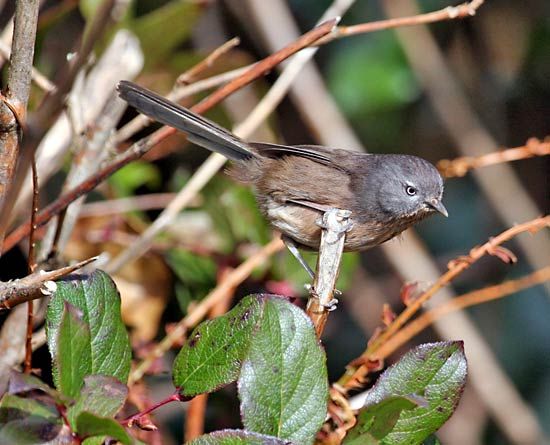
The wrentit (Chamaea fasciata) is a small, fluffy brown bird native to the Pacific coast of North America. Belonging to the family Timaliidae, this bird…
What is Wrentit?
The wrentit (Chamaea fasciata) is a small, fluffy brown bird native to the Pacific coast of North America. Belonging to the family Timaliidae, this bird typically measures about 16 cm (6.5 inches) in length and is characterized by its long tail and short, rounded wings.12
Wrentits are known for their secretive behavior, often inhabiting thick brush where they forage for insects and fruit. They are frequently heard rather than seen, as they are known to call harshly and sing loudly within their dense habitats.1
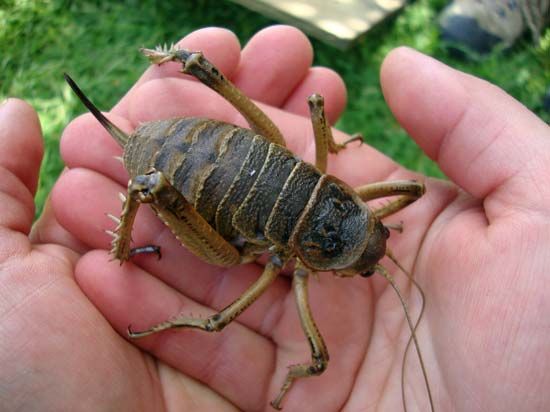
It is important to distinguish the wrentit from the giant wētā (Deinacrida), a genus of large, flightless, cricketlike insects endemic to New Zealand. While the names may sound similar, they refer to entirely different organisms—one being a bird and the other an invertebrate.31
What kind of habitat does the wrentit prefer?
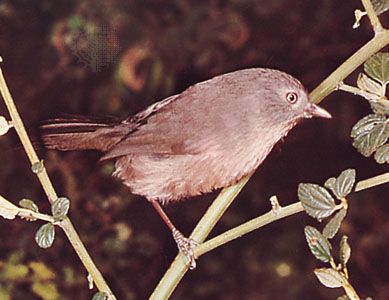
The wrentit (Chamaea fasciata) is a bird native to the Pacific coast of North America that specifically favors habitats characterized by thick brush.1
Within these dense environments, the wrentit lives in pairs, utilizing the heavy vegetation to forage for its primary diet of fruit and insects. Because of this preference for dense cover, the species is often heard singing or calling from within the brush, even when it remains hidden from view.1
How does the wrentit’s song help it survive in dense brush?
The wrentit’s loud, harsh song is a vital adaptation for survival in the dense, brushy habitats of the Pacific coast of North America. Because these birds spend much of their time hidden within thick vegetation, their vocalizations serve as a primary means of communication and territorial behaviour.114
Like many other species inhabiting dense cover, the wrentit uses its strong voice to broadcast its presence without needing to be seen. This loud birdsong functions in several critical ways:5
- Territory Defense: It allows the bird to advertise and protect its territory from intruders, serving as an auditory boundary marker that discourages competition for food and nesting space.64
- Mate Attraction: The song is used to attract potential mates, particularly during the breeding season.6
- Social Cohesion: Vocalizations help maintain the bond between mated pairs as they forage together in the brush.16
By relying on sound rather than visual displays, the wrentit can effectively manage its social and territorial needs while remaining safely concealed from predators.56
Why is the wrentit often confused with wrens or tits?
The wrentit (Chamaea fasciata) is often compared to wrens and tits primarily due to its physical appearance and behavioral traits. As a small, fluffy brown bird with a long tail and short, rounded wings, its overall morphology—particularly its size and coloration—bears a resemblance to various species of wrens.17
The common name “wrentit” itself reflects these historical associations, as the bird was traditionally linked to these groups based on its appearance and its tendency to forage in dense brush, a behavior common to many small, secretive passerines. While the wrentit is now classified within the family Timaliidae, the name persists as a descriptive reference to its wren-like stature and tit-like, fluffy plumage.17
Sources
- Wrentit — Encyclopædia Britannica
- giant wētā — Encyclopædia Britannica
- wren-tit — Merriam-Webster
- Galliform - Vocalizations — Encyclopædia Britannica
- Bird - Sound — Encyclopædia Britannica
- Territorial behaviour — Encyclopædia Britannica
- Passeriform - Annotated classification — Encyclopædia Britannica
Published on · 2 min read