Yampi Sound
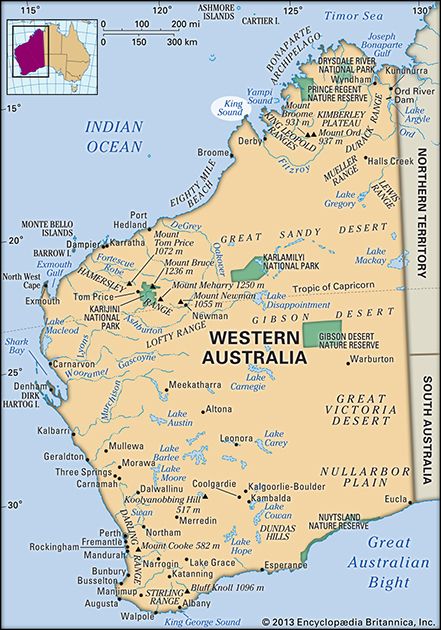
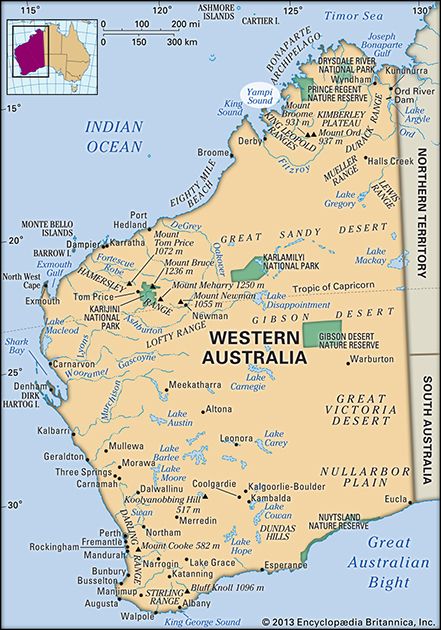
Yampi Sound is a body of water located in the Indian Ocean off the northern coast of Western Australia, situated between King Sound and Collier Bay.
What is Yampi Sound?
Yampi Sound is a body of water located in the Indian Ocean off the northern coast of Western Australia, situated between King Sound and Collier Bay.12
The area is notable for containing the Buccaneer Archipelago, which includes significant islands such as Koolan, Irvine, and Cockatoo. These islands are rich in high-grade iron ore, and mining operations for hematite have been conducted on Cockatoo and Koolan since the mid-20th century.1
The sound was named in 1838 by Lieutenant John Lort Stokes, who surveyed the region aboard HMS Beagle; the name itself is derived from an Aboriginal word meaning “freshwater”. Navigation within the sound is notoriously difficult due to extreme tidal ranges and the presence of various shoals and reefs.12
What is the Buccaneer Archipelago?
The Buccaneer Archipelago is a group of 800 to 1,000 islands and islets located in Yampi Sound, an embayment of the Indian Ocean off the northern coast of Western Australia. Situated at the entrance to King Sound, the archipelago is organized into four distinct clusters and was named after the English navigator William Dampier, who sighted the islands in 1688.31
While the largest island is Macleay, the most significant islands are Cockatoo, Koolan, and Irvine. These islands are notable for their rich deposits of high-grade iron ore, which have been the focus of mining operations since the mid-20th century. The islands are characterized by rugged terrain; for example, Cockatoo Island features coastal cliffs rising to 470 feet (143 meters), while Koolan Island reaches elevations of 670 feet (204 meters). The nearest mainland port is Derby, located approximately 80 miles (130 km) to the south.31
How do extreme tides affect coastal navigation?
Extreme tides significantly complicate coastal navigation by altering water depths, shifting shorelines, and generating powerful currents. In regions with large tidal ranges, such as macro-tidal environments where the range exceeds four meters, the rise and fall of the sea level can drastically change the navigable area, potentially exposing shoals, reefs, or sandbanks that are otherwise submerged at high tide.6
The primary hazards for vessels include:
- Strong Tidal Currents: In constricted areas like inlets, estuaries, or narrow channels, the volume of water moving during a tidal cycle can create currents exceeding two meters per second. These swift flows can push vessels off course and make maneuvering difficult.67
- Depth Variability: Shallow coastal areas, such as the North Sea, become treacherous when low tides reduce water depth, increasing the risk of grounding on shifting banks or glacial deposits.7
- Shoreline Migration: On gently sloping coasts, a large tidal range can cause the shoreline to shift by as much as a kilometer during a single cycle, complicating the identification of safe passage and landing zones.6
Navigators must account for these predictable but powerful forces to avoid accidents, especially in areas where tidal ranges are extreme, such as the Bay of Fundy or parts of the Australian coast.86
What is hematite and how is it used?
Hematite is a heavy, hard oxide mineral composed of ferric oxide (Fe2O3\text{Fe}_2\text{O}_3). Its name is derived from the Greek word for “blood,” referencing its characteristic red color, though it can also appear as steel-gray crystals with a metallic lustre.1011
Uses of Hematite
Hematite is primarily valued as the world’s most important iron ore due to its high iron content, which reaches approximately 70 percent. Beyond its role in metal production, it has several specialized applications:10
- Pigments: Its earthy, fine-grained form, known as red ochre, is widely used as a pigment in paints, cosmetics, and roof tiles.101211
- Polishing: A purified form called rouge is utilized as a polishing powder for plate glass.1011
- Electronics: When combined with cobalt and nickel oxides, hematite is used to create ferrites—ferromagnetic ceramic materials essential for computers and electronic transmission equipment.12
Hematite is chemically stable in air and possesses a tightly packed crystal structure, functioning as a semiconductor.13
Sources
- Yampi Sound — Encyclopædia Britannica
- King Sound — Encyclopædia Britannica
- Buccaneer Archipelago — Encyclopædia Britannica
- Western Australia - European exploration and settlement — Encyclopædia Britannica
- The Bahamas - Land — Encyclopædia Britannica
- Pacific Ocean - Tides of the Pacific Ocean — Encyclopædia Britannica
- Indian Ocean - Tides — Encyclopædia Britannica
- coastal landforms - Tides — Encyclopædia Britannica
- Why is the North Sea so dangerous? — Encyclopædia Britannica
- hematite — Encyclopædia Britannica
- Iron oxide - Physical properties — Encyclopædia Britannica
- iron processing - Chemical compounds — Encyclopædia Britannica
- dolomite - Hematite — Encyclopædia Britannica
Published on · 3 min read