Yellowstone Caldera
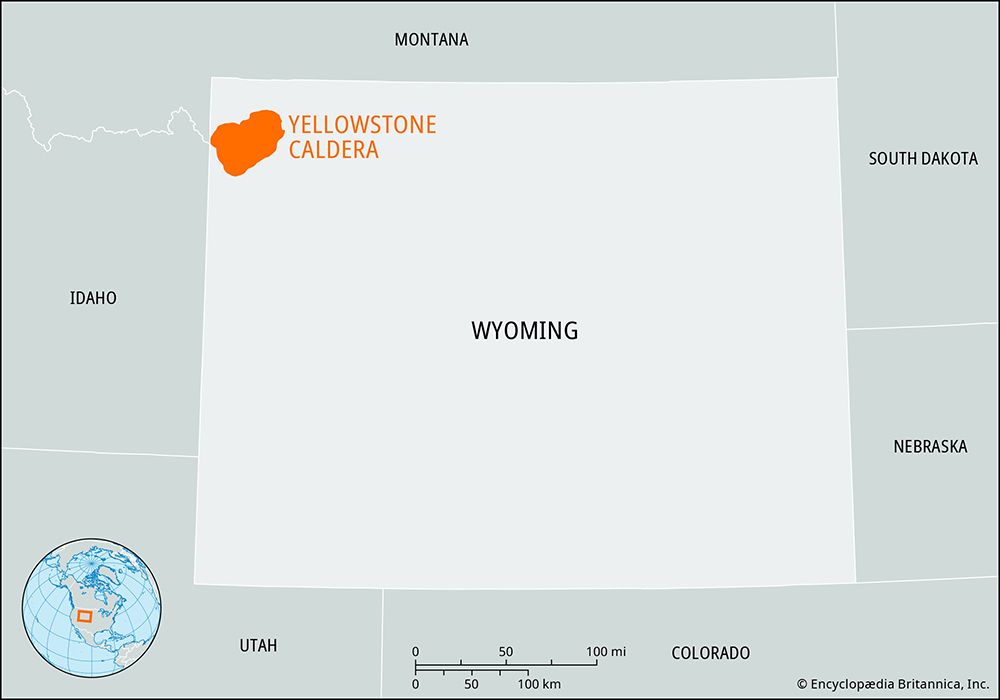
The Yellowstone Caldera is a massive volcanic basin located in the west-central region of Yellowstone National Park in Wyoming. Measuring approximately 30 by…
What is Yellowstone Caldera?
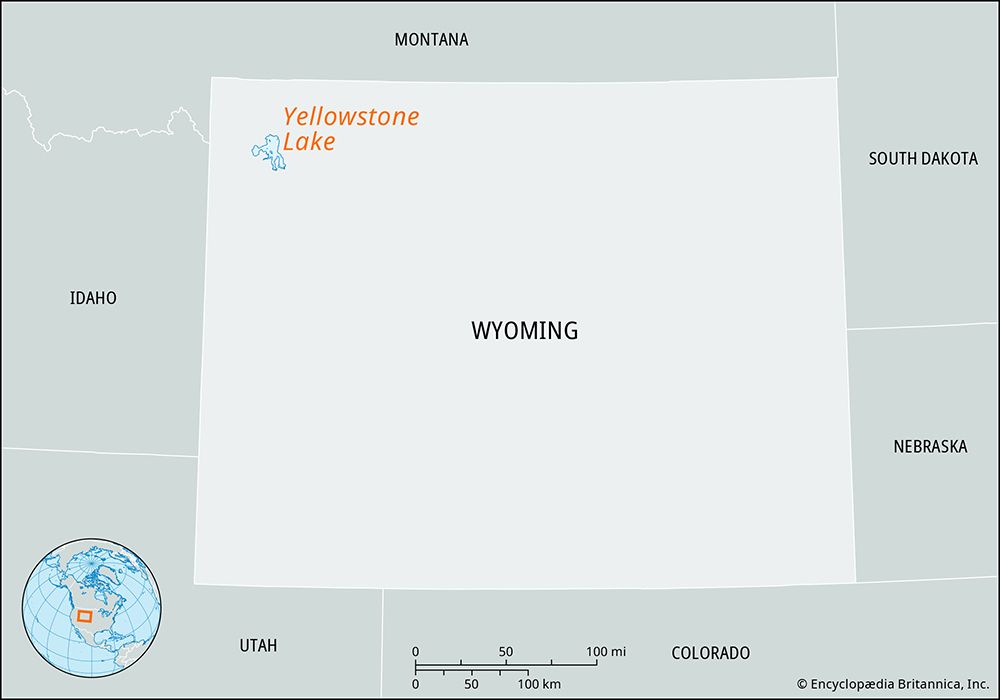
The Yellowstone Caldera is a massive volcanic basin located in the west-central region of Yellowstone National Park in Wyoming. Measuring approximately 30 by 45 miles (50 by 70 km), it was formed by a cataclysmic supervolcano eruption about 640,000 years ago.12
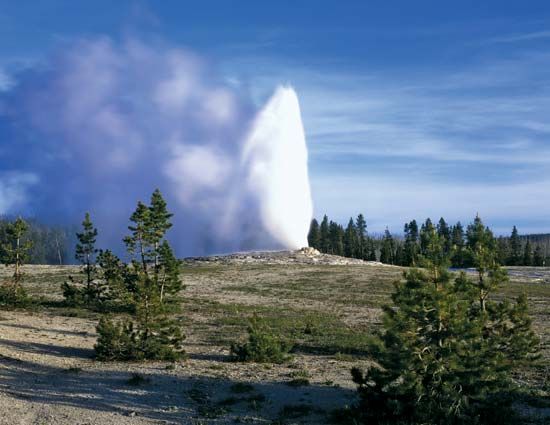
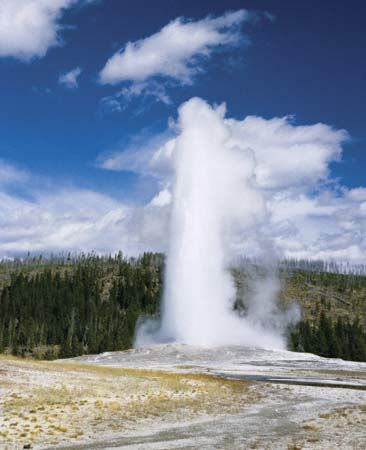
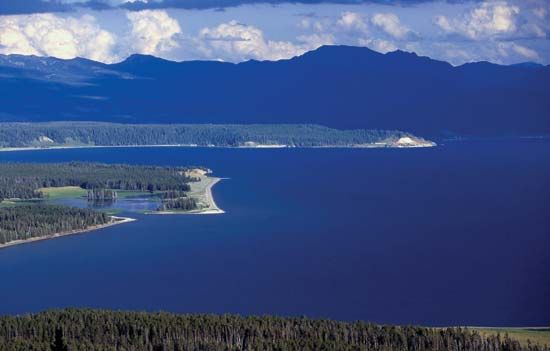
This caldera is the youngest and largest of three major volcanic events that have shaped the region over the past 2.1 million years. These eruptions occurred when subsurface magma domes collapsed after releasing vast amounts of material, including lava and pyroclastic flows and pyroclastic flows. The area remains geologically active, characterized by frequent earthquakes, ongoing formation of resurgent magma domes, and numerous hydrothermal features, such as Old Faithful. Yellowstone Lake occupies a significant portion of the caldera’s southeastern area.123
What is a volcanic hotspot and how does it create landforms?
A hotspot is a region in Earth’s upper mantle where intense heat causes magma to rise and melt through the crust, creating volcanic activity far from plate boundaries. While the exact nature of these features is debated, many scientists believe they are the surface expression of stationary mantle plumes ascending from deep within the Earth.456
Hotspots create distinct landforms depending on the setting:
- Volcanic Chains: As a lithospheric plate moves over a stationary hotspot, it creates a linear chain of volcanoes. The active volcano remains over the plume, while older volcanoes are carried away, become extinct, and eventually erode into atolls or submerged seamounts, as seen in the Hawaiian-Emperor seamount chain.456
- Continental Domes: In continental regions, the warming of the lithosphere can cause localized thermal expansion, resulting in a broad upwarping or doming of the surface, such as at Yellowstone National Park.6
- Flood Basalts: Some hotspots produce massive eruptions of basaltic lava that cover vast areas, creating remarkably flat surfaces known as flood basalts or traps.6
How do scientists monitor the activity of a supervolcano?
Scientists monitor the activity of volcanoes, including supervolcanoes, by employing a variety of geophysical and geochemical techniques to detect signs of unrest, such as the movement of magma toward the surface.8
Key monitoring methods include:
- Seismic Monitoring: Networks of seismographs detect swarms of earthquake tremors. An increase in the frequency and intensity of these quakes often signals that magma is moving through the crust.89
- Ground Deformation: Instruments like tiltmeters and laser-based systems measure changes in the slope or elevation of the ground. Inflation of the surface can indicate that a magma chamber is filling with molten rock.8
- Gas Analysis: Scientists monitor emissions from fumaroles and hot springs. Changes in the composition or volume of gases, such as carbon dioxide and sulfur compounds, provide critical data on the state of the underlying magma.82
- Field Measurements: Researchers also use instruments sensitive to variations in magnetic and gravity fields to track subsurface changes.8
Permanent observatories are established at active sites to ensure continuous data collection and early warning capabilities.8
What are the differences between a caldera and a typical volcano?
While the terms are sometimes used interchangeably, a caldera is fundamentally different from a typical volcano, such as a stratovolcano or shield volcano.
A typical volcano is a landform built upward by the accumulation of lava, ash, and other materials, often resulting in a conical peak. In contrast, a caldera is a large, bowl-shaped depression—typically over 1 km (0.6 mile) in diameter—formed by the inward collapse of the ground.12131415
Key differences include:
- Formation: Typical volcanoes are constructed through the eruption and deposition of material. A caldera forms when a massive eruption empties an underlying magma reservoir, leaving the surface above without support, causing it to collapse into the void.1415
- Size and Scale: Calderas are significantly larger than the craters found at the summits of typical volcanoes. While a crater is a vent-related feature, a caldera is a structural collapse of the entire volcanic summit or surrounding area.14131615
- Structure: A caldera may contain smaller volcanic cones that form on its floor after the initial collapse, and they are frequently filled with lakes, such as Crater Lake.141615
Sources
- Yellowstone Caldera — Encyclopædia Britannica
- Yellowstone National Park - Geology — Encyclopædia Britannica
- volcano - Pyroclastic flows — Encyclopædia Britannica
- hotspot — Encyclopædia Britannica
- plate tectonics - Hotspots — Encyclopædia Britannica
- mountain - Landforms associated with hot spot volcanism — Encyclopædia Britannica
- volcano - Other volcanic structures and features — Encyclopædia Britannica
- geology - Volcanology — Encyclopædia Britannica
- seismograph - Applications of the seismograph — Encyclopædia Britannica
- volcano - Gas clouds — Encyclopædia Britannica
- volcano - Long-term environmental effects — Encyclopædia Britannica
- volcano - Calderas — Encyclopædia Britannica
- Did you know? — Merriam-Webster
- volcano - Major types — Encyclopædia Britannica
- stratovolcano — Encyclopædia Britannica
- caldera — Encyclopædia Britannica
Published on · 3 min read