Al-Jawf
The name Al-Jawf refers to two distinct locations on the Arabian Peninsula:
What is Al-Jawf?
The name Al-Jawf refers to two distinct locations on the Arabian Peninsula:
Al-Jawf, Yemen
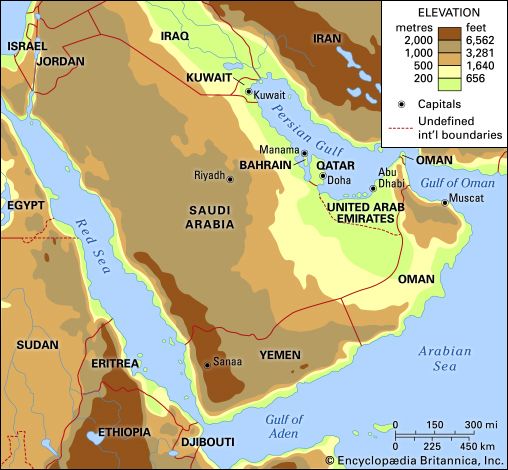
This is an oasis region in western Yemen, bordered by the Rubʿ al-Khali desert. Historically, it served as the core of the ancient kingdom of Maʿīn. Once a densely populated center of civilization, the region is now sparsely settled by nomadic tribes who focus on raising camels, sheep, and goats. It has also been a site of significant conflict, including the 1962–70 civil war and recent Houthi insurgencies.1
Al-Jawf, Saudi Arabia
This is a town and oasis located in northern Saudi Arabia at the edge of the Nafūd desert. Historically significant as a stop on ancient caravan routes connecting the Mediterranean Sea and the Indian Ocean, it remains an important agricultural center today, known for producing dates, cereals, and fruits.2
What was the ancient kingdom of Ma’in?
The ancient kingdom of Maʿīn (c. 1000–2nd century BCE) was a prominent South Arabian state centered in the Al-Jawf oasis region of modern-day Yemen. Unlike neighboring agricultural federations, the Minaeans functioned primarily as a sophisticated trading organization that monopolized regional trade routes.314
Key characteristics of the kingdom included:
- Governance: The state operated with features of a city-state democracy. Legislative power was shared between the king, a council, and representatives of various social classes. Magistrates known as kabīr were appointed biennially to oversee trading settlements.34
- Trade Network: Based in their capital, Qarnaw, the Minaeans established trading outposts as far as Egypt and the island of Delos. They maintained significant influence over caravan routes connecting to cities like Yathrib (Medina) and Gaza.4
- Social Structure: The Minaeans were organized into diverse groups without a single dominant community, contrasting with the tribal federations of their neighbors.4
- Decline: The kingdom eventually fell to the Sabaeans late in the 2nd century BCE.3
How do oases support life in the Arabian Peninsula?
Oases are essential to life in the Arabian Peninsula, serving as fertile hubs that sustain human populations and agriculture within an otherwise harsh desert environment. Their ability to support life relies on several key factors:56
- Water Access: Oases exist wherever there is a perennial supply of fresh water, typically sourced from underground groundwater aquifers. This water is accessed through springs, wells, and traditional irrigation methods, which allow for the cultivation of crops that could not otherwise survive in the arid climate.56
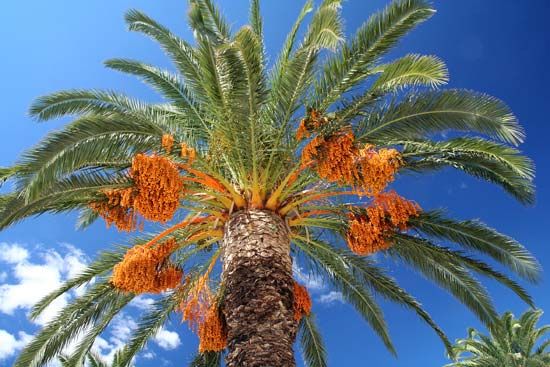
- Agricultural Productivity: These areas function as small, labor-intensive gardens. The date palm is the cornerstone of oasis life, providing food for humans and livestock, as well as materials for construction and handicraftslivestock](https://www.britannica.com/animal/livestock), as well as materials for construction and handicrafts. Beneath the shade of the palms, farmers grow a variety of produce, including citrus, wheat, barley, onions, and tomatoes5.57
- Environmental Protection: Trees such as the tamarisk are often planted on the borders of oases to act as windbreaks, helping to prevent the encroachment of sand that threatens to bury cultivated land.7
What is the significance of the Rub’ al-Khali desert?
The Rubʿ al-Khali, or “The Empty Quarter,” is a vast desert region in the southern Arabian Peninsula that holds significant global importance due to its unique geography and immense natural resources.910
Geographical Significance
As the world’s largest area of continuous sand, the Rubʿ al-Khali covers approximately 250,000 square miles (650,000 square km). It is characterized by varied topography, ranging from fine, soft sands in the west to massive sand dunes—some exceeding 800 feet in height—and expansive salt flats in the east. Despite being one of the driest and most inhospitable environments on Earth, it has been a site of human activity since the Pleistocene Epoch, with the southwestern region containing abundant Paleolithic and Neolithic archaeological sites.91011
Economic Importance
The desert is of critical economic significance due to its vast petroleum and natural gas reserves. It houses Al-Ghawār, the world’s largest conventional oil field, and the Al-Shaybah operation, which includes significant refinery infrastructure. These resources have fundamentally transformed the region’s economy and accelerated modernization across the Arabian Peninsula.911
Sources
- Al-Jawf — Encyclopædia Britannica
- Al-Jawf — Encyclopædia Britannica
- Maʿīn — Encyclopædia Britannica
- history of Arabia - Minaean s — Encyclopædia Britannica
- oasis — Encyclopædia Britannica
- Sahara - People of the Sahara — Encyclopædia Britannica
- Arabian Desert - Plant life — Encyclopædia Britannica
- Asia - Groundwater — Encyclopædia Britannica
- Rubʿ al-Khali — Encyclopædia Britannica
- Arabian Desert - People of the Arabian Desert — Encyclopædia Britannica
- Arabia - The Rubʿ al-Khali — Encyclopædia Britannica
Published on · 3 min read