Anomalure
Anomalures are specialized rodents native to African tropical forests that have evolved distinct features to thrive in an arboreal environment. Contrary to…
How have anomalures adapted to their arboreal lifestyle, and what specialized features do they possess?
Anomalures are specialized rodents native to African tropical forests that have evolved distinct features to thrive in an arboreal environment. Contrary to their common name, they are not squirrels but belong to the family Anomaluridae.1
To adapt to life in the trees, these mammals possess several specialized physical traits:
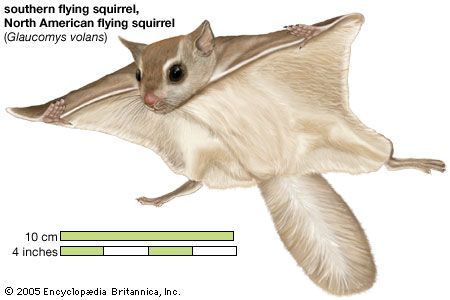
- Gliding Membranes: Large and pygmy species feature broad, fur-covered skin membranes (patagia) that connect their forelimbs and hind limbs. Unlike flying squirrels, which use wrist bones to support these membranes, anomalures utilize a unique cartilaginous strut attached to the elbow joint to create a controlled gliding platform.1
- Stability Features: They possess slender bodies with strong, curved claws that provide a secure grip on tree bark. Additionally, the underside of their long tails features two rows of prominent, keeled, overlapping scales that act as an anchor, helping the animals stabilize themselves when resting on vertical tree trunks.12
- Physical Build: They have lightly built skeletons and large eyes, which are well-suited for their nocturnal, tree-dwelling lifestyle.1
What is the diet of anomalures, and how does it differ from other rodent species?
The diet of anomalures is specialized to their forest habitat, consisting primarily of bark, sap, and various plant and insect matter. Large anomalures gnaw on tree bark to lick the exuding sap, and they also consume flowers, leaves, nuts, termites, and ants. Pygmy anomalures focus on oil palm pulp and insects, while also gnawing bark to access sap. Little is known about the diet of the flightless anomalure, though it has been observed eating termites.1
While both anomalures and squirrels are rodents that consume plant materials like bark, leaves, and nuts, their dietary habits reflect their distinct evolutionary paths. Squirrels are equipped with powerful jaws and chisel-like incisors specifically adapted for gnawing open hard nuts, which are a primary component of their diet. In contrast, anomalures are not closely related to squirrels; they belong to a separate suborder, Anomaluromorpha, and their feeding behaviors—such as the heavy reliance on sap and specific forest resources like oil palm—are distinct from the nut-heavy diet typical of many tree squirrel species.451
How are anomalures related to other rodent families, such as squirrels or mice?
Anomalures (family Anomaluridae) are not closely related to squirrels (family Sciuridae) or mice (family Muridae). Although they are often referred to as “scaly-tailed squirrels” due to their physical resemblance to flying squirrels, this is a case of convergent evolution rather than a close biological relationship.1
In modern biological classification, anomalures are placed in their own suborder, Anomaluromorpha, alongside the spring hare (family Pedetidae). This grouping is considered an artificial arrangement, as the evolutionary connections between these families and other rodents remain largely unknown.61
Current scientific understanding indicates that anomalures are not closely related to any living rodent groups. Their closest known relatives are extinct species identified only through the fossil record, which lived in Africa between the Late Eocene and Early Pliocene epochs. Because the evolutionary history of rodents above the familial level is still a subject of ongoing research, the exact placement of anomalures within the broader order of Rodentia continues to be tested by new fossil discoveries and genetic analyses.16
How many species of anomalures are currently recognized, and what are their conservation statuses?
There are seven recognized species of anomalures (family Anomaluridae), which are categorized into three genera:
- Genus Anomalurus (Large anomalures): This group includes several species, such as Pel’s anomalure (A. pelii) and the little anomalure (A. pusillus).
- Genus Idiurus (Pygmy anomalures): This genus includes two species, I. macrotis and I. zenkeri.
- Genus Zenkerella (Flightless anomalure): This genus consists of a single rare species, the flightless anomalure (Z. insignis).
Regarding their conservation status, the provided information does not specify the current threat levels for these individual species. However, as these animals are inhabitants of tropical forests, they are inherently susceptible to habitat loss. Factors such as deforestation and habitat fragmentation—often driven by human development—pose significant risks to forest-dwelling species by reducing available resources and isolating populations, which can ultimately threaten their long-term survival.
Sources
- anomalure — Encyclopædia Britannica
- Locomotion - Gliding — Encyclopædia Britannica
- scaletail — Merriam-Webster
- What do squirrels eat? — Encyclopædia Britannica
- squirrel — Encyclopædia Britannica
- rodent - Evolution and classification — Encyclopædia Britannica
- Anomalurus — Merriam-Webster
- habitat loss — Encyclopædia Britannica
Published on · 3 min read