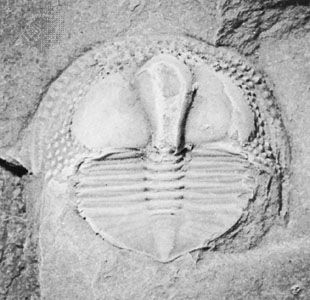
Ameura
The term "Ameura" refers to a genus of trilobites, which are extinct arthropods found in North America dating from the Late Carboniferous to the Late Permian…
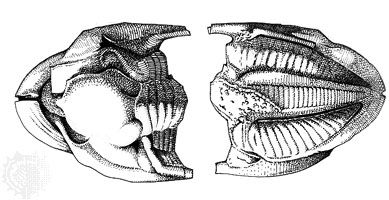
How has our understanding of Ameura changed over time with new fossil discoveries?
The term “Ameura” refers to a genus of trilobites, which are extinct arthropods found in North America dating from the Late Carboniferous to the Late Permian Period.1
It is important to clarify that there is no scientific evidence suggesting that our understanding of Ameura has undergone significant changes due to new fossil discoveries. Current paleontological knowledge defines the genus by its well-developed cephalon (head) and a long pygidium (tail) containing many axial lobe segments. Observations of fossil specimens, which are frequently found in a defensive, rolled-up position, have remained consistent in characterizing their behavior.1
What can Ameura fossils tell us about the climate and environmental conditions of their time?
Ameura fossils themselves serve primarily as indicators of their own existence within specific geological timeframes, rather than as direct proxies for climate data. As trilobites, these extinct arthropods were exclusively marine animals, and their presence in North America rock strata from the Late Carboniferous to the Late Permian Period confirms that these regions were submerged under marine environments during those times.12
While the fossils do not independently record climate, they are found within sedimentary layers that geologists analyze to reconstruct the environmental conditions of the era. During the Carboniferous and Permian periods, the Earth underwent significant shifts:3
- Carboniferous Period: The climate was heavily influenced by latitudinal positions, with equatorial regions supporting tropical conditions while higher latitudes experienced cooler, moist environments and continental glaciation in areas like Gondwana.4
- Permian Period: The assembly of the Pangea supercontinent led to widespread global warming and the development of arid climates. By the Late Permian, conditions became hot and dry, with expansive deserts in tropical and subtropical regions.5
The fact that Ameura specimens are often found in a defensive, rolled-up position suggests they were responding to immediate biological threats rather than climatic ones.1
What is a trilobite and what time period did they live in?
A trilobite is an extinct group of fossil arthropods characterized by a distinctive three-lobed, three-segmented body structure. These exclusively marine animals possessed an exoskeleton made of chitin, which they shed as they grew, leaving behind the fossils commonly found today. Their bodies were divided into a head region (cephalon), a thorax, and a tail region (pygidium), and they typically featured compound eyes and jointed appendages.4
Trilobites first appeared approximately 521 million years ago near the beginning of the Cambrian Period. While they dominated the seas during the early Paleozoic Era, their abundance declined in subsequent geological periods. A few forms persisted until they were finally eliminated during the mass extinction event at the end of the Permian Period, roughly 252 million years ago. Because of their widespread distribution and distinct evolutionary changes, they are frequently used by scientists as index fossils to correlate geological strata.48
How has the study of Ameura contributed to our understanding of trilobite evolution?
The study of Ameura provides insight into the later stages of trilobite evolution, specifically during the Late Carboniferous to the Late Permian Period (318 million to 251 million years ago). As one of the few forms to persist until the end of the Permian, Ameura represents the final chapter of a lineage that had dominated marine environments since the Cambrian Period.14
Morphologically, Ameura is characterized by a well-developed cephalon (head) and a long pygidium (tail) containing numerous segments in the central axial lobe. The frequent discovery of these fossils in a rolled-up, defensive posture highlights the behavioral adaptations that trilobites employed to protect their vulnerable undersides against predators. While Ameura itself does not define the origin of the group—which likely traces back to the Ediacaran Period—its presence in the fossil record helps paleontologists track the persistence and eventual decline of these arthropods leading up to the mass extinction at the end of the Permian.14
We could dive deeper into how index fossils like trilobites are used to date geological strata.
Sources
- Ameura — Encyclopædia Britannica
- Permian Period - Paleoclimate — Encyclopædia Britannica
- Carboniferous Period - Paleoclimate — Encyclopædia Britannica
- trilobite — Encyclopædia Britannica
- geology - Invertebrate paleontology — Encyclopædia Britannica
- Cambrian Period - Correlation of Cambrian strata — Encyclopædia Britannica
- fossil — Encyclopædia Britannica
- Paleozoic Era — Encyclopædia Britannica
- Devonian Period - Invertebrates — Encyclopædia Britannica
Published on · 3 min read