Bathyuriscus
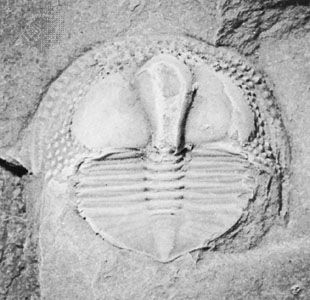
Bathyuriscus is a genus of trilobites, which are extinct arthropods. These organisms serve as a valuable index fossil for the Middle Cambrian epoch in North…
What is Bathyuriscus?
Bathyuriscus is a genus of trilobites, which are extinct arthropods. These organisms serve as a valuable index fossil for the Middle Cambrian epoch in North America, dating back approximately 520 to 512 million years ago.1
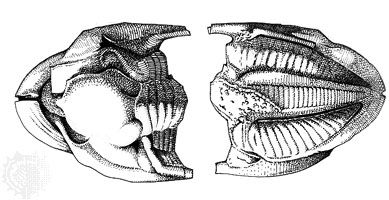
Morphologically, Bathyuriscus is characterized by a well-developed head segment featuring marginal spines. Additionally, the creature possessed a large tail region composed of numerous well-developed segments. Scientists currently recognize several distinct species within this genus.1
What are trilobites?
Trilobites are a group of extinct arthropods that lived exclusively in marine environments. They first appeared approximately 521 million years ago during the Cambrian Period and persisted until the Permian Period.2
These animals are easily recognized by their distinctive three-lobed, three-segmented body form. Their anatomy was divided into three regions:
Trilobites possessed a chitinous exoskeleton that they shed to grow, which explains why their fossilized remains are relatively common. Each body segment featured a pair of jointed appendages, with the forwardmost ones adapted for sensing and feeding. While some were active predators or scavengers, others likely consumed plankton.2
Because they evolved rapidly and were widely distributed, trilobites are frequently used by geologists as index fossils to correlate rock strata across different regions.23
Why are index fossils important to scientists?
Index fossils are essential to scientists because they serve as reliable markers for determining the relative age of rock layers. To be considered a useful index fossil, a specimen must be easily recognizable, abundant, widely distributed geographically, and exist for only a short span of geologic time.5
These fossils provide the foundation for biostratigraphy, a method used to correlate sedimentary rock strata across different locations. By identifying specific fossils within these layers, researchers can establish precise boundaries within the geologic time scale. Because organisms like protists, ammonoids, and certain mammals evolved rapidly and possessed hard body parts—such as shells, bones, or teeth—they are particularly effective at helping scientists date geological deposits accurately.56
What was the Cambrian Period like?
The Cambrian Period (538.8 million to 485.9 million years ago) was a transformative era that marked the beginning of the Phanerozoic Eon and the rise of complex animal life.78
Climate and Geography
The Cambrian world was significantly warmer than the preceding Neoproterozoic Era, with global temperatures averaging 22 °C (72 °F). The absence of land at the poles likely prevented the formation of ice caps. Geographically, the supercontinent Rodinia had broken apart, leading to the formation of the Pacific Ocean and the eventual assembly of Gondwana. Significant sea-level rises flooded continental margins, creating vast, warm, shallow-water environments that altered ocean chemistry and increased oxygen levels.97108
The Cambrian Explosion
This period is famous for the “Cambrian explosion,” a rapid evolutionary radiation where most major animal phyla appeared in the fossil record. Life was almost entirely aquatic, concentrated in shallow marine environments. Key organisms included:1189
- Trilobites: The dominant arthropods, highly useful for biostratigraphic correlation.12
- Sponges: Including diverse archaeocyathans in warm, low-latitude seas.12
- Mollusks and Echinoderms: Both groups underwent significant diversification.12
- Early Chordates: The oldest unequivocal remains of jawless fish have been discovered in Lower Cambrian deposits.12
Landscapes were largely desolate, as plants had not yet colonized the continents, leading to rapid erosion.8
Sources
- Bathyuriscus — Encyclopædia Britannica
- trilobite — Encyclopædia Britannica
- Cambrian Period - Correlation of Cambrian strata — Encyclopædia Britannica
- trilobite — Merriam-Webster
- index fossil — Encyclopædia Britannica
- biostratigraphy — Merriam-Webster
- A Journey Through Time Since the Precambrian - Cambrian Period: 541 million to 485.4 million years ago — Encyclopædia Britannica
- Cambrian Period - Paleoclimate — Encyclopædia Britannica
- Cambrian Period — Encyclopædia Britannica
- Cambrian explosion — Merriam-Webster
- Cambrian Period - Types and distribution — Encyclopædia Britannica
- Cambrian Period - Fauna — Encyclopædia Britannica
Published on · 2 min read