Aviary
An aviary is a specialized structure designed for keeping captive birds, distinguished primarily by its scale and accessibility. Unlike traditional bird…
How do aviaries differ from traditional bird cages or outdoor bird habitats?
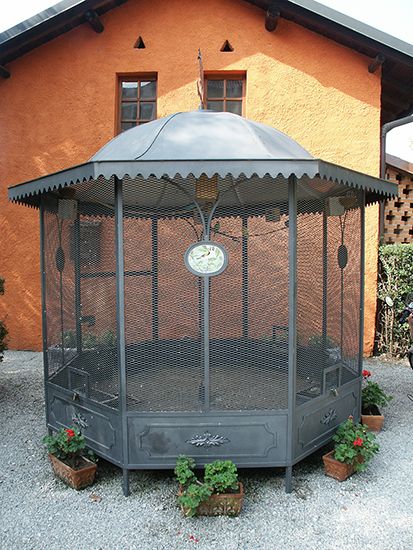
An aviary is a specialized structure designed for keeping captive birds, distinguished primarily by its scale and accessibility. Unlike traditional bird cages, which are typically smaller enclosures, an aviary is usually spacious enough for an aviculturist or visitor to enter.1
Key differences include:
- Size and Scope: While cages may house one or a pair of birds, aviaries range from room-sized enclosures to massive flight structures—some spanning over 30 meters in length—that allow birds to exercise and fly more freely.12
- Environment: Aviaries are often designed to simulate natural habitats, incorporating vegetation, streams, and planted surroundings to support complex behaviors like mating and breeding. In contrast, traditional cages often rely on simpler equipment like perches and basic feeding stations.123
- Accessibility: Large-scale aviaries, particularly in zoos, may feature “walk-through” designs where visitors enter the enclosure through air-lock doors to observe birds in a simulated natural environment.2
- Construction: Because many birds risk injury by flying into glass, aviaries frequently utilize wire mesh or specialized barriers like piano wire to provide safety while maintaining visibility.12
What are the different types of aviaries, and how do they vary in design?
Aviaries are structures designed to house captive birds, ranging from small, room-sized enclosures to massive flight structures. Their design varies significantly based on the species housed, the intended purpose, and the available environment.13
Common Types and Designs
- Private Aviaries: Often maintained for pleasure, these may consist of a dedicated room or a porch. In colder climates, they are typically enclosed and heated, or they include a smaller, heated shelter where birds can retreat at night.1
- Urban Zoo Aviaries: These vary from collections of small cages for individual birds to large, multi-species displays. They may focus on specific habitats, such as woodland or seashore environments.3
- Walk-Through Aviaries: These large-scale enclosures allow visitors to enter through “air-lock” doors to observe birds in a simulated natural environment, often featuring vegetation and streams.3
- Outdoor Aviaries: Commonly used for water birds and birds of prey, these structures include an attached shelter and are built to be large enough to allow for sufficient exercise.3
Design Features and Barriers
Designers employ various methods to contain birds while maintaining visibility and safety:
- Barriers: While wire mesh is common, some aviaries use vertically placed piano wire (spaced at half-inch to one-inch intervals) to provide a less visible barrier. Glass is used occasionally, though it requires careful positioning to avoid reflections that could cause birds to injure themselves.13
- Lighting: Some aviaries are effectively enclosed by brightly lighting the bird area while keeping the public viewing space dark.3
- Structural Innovation: Large-scale aviaries, such as those at the San Diego or London zoos, may utilize advanced engineering like tension cables, tetrahedral frames, or even the roofing of natural canyons to create expansive flight spaces.3
What are some famous or notable aviaries around the world, and what makes them unique?
Several zoos around the world are renowned for their innovative and expansive aviaries, which prioritize both animal welfare and immersive public education. Notable examples include:
- San Diego Zoo: This zoo is home to one of the world’s most magnificent aviaries. Its design is unique because it utilizes the natural topography of the site, effectively roofing over existing canyons. One of these walk-through aviaries measures approximately 25 meters high, 46 meters long, and 21 meters wide, providing a vast, naturalistic flight space for birds.5
- London Zoo: The zoo features the famous Snowdon Aviary, which opened in 1965. Its design is architecturally significant, utilizing galvanized steel tension cables and aluminum tube shear legs to support mesh on tetrahedral frames suspended in midair. Built over an artificial cliff, the structure includes a walk-through path that cantilevers 12 meters out from the cliff top.5
- Jurong Bird Park: Located in Singapore, this specialty zoo is noted for its extensive collection of 3,000 birds across more than 300 species. Its most spectacular feature is a 2-hectare (5-acre) free-flight aviary. The park is designed to blend seamlessly into the lush, hilly landscape, and visitors can tour the various aviaries via a trackless tram.3
These facilities demonstrate how modern zoo architecture can move beyond simple cages to create complex, simulated habitats that support bird health and natural behaviors.51
What is an aviary, and what is its primary purpose?
An aviary is a structure designed for keeping captive birds, typically spacious enough for a person to enter. These enclosures range from small, room-sized spaces to massive flight cages that can exceed 30 meters in length and 15 meters in height.1
The primary purpose of an aviary depends on its setting:
- Private Use: Many aviaries are maintained by private aviculturists for personal pleasure and the study of bird behavior.1
- Public Exhibition: In zoos, the primary purpose is to display birds to the public, often in simulated natural habitats that allow for educational observation.12
- Research and Conservation: Aviaries are essential for aviculture, where they serve as environments for studying mating and breeding behaviors. This is critical for the perpetuation of declining species, as captive breeding programs have successfully prevented the extinction of various birds and helped restore native populations in the wild.3
Sources
- Aviary — Encyclopædia Britannica
- aviary — Merriam-Webster
- Zoo - Design and architecture — Encyclopædia Britannica
- Aviculture — Encyclopædia Britannica
- Jurong Bird Park — Encyclopædia Britannica
- San Diego Zoo — Encyclopædia Britannica
- London Zoo — Encyclopædia Britannica
Published on · 4 min read