Black Mangrove
Avicennia plants, commonly known as black mangroves, are keystone species that play a vital role in maintaining the health and structure of coastal…
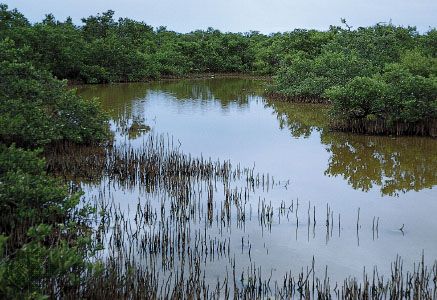
What role do Avicennia plants play in their ecosystem?
Avicennia plants, commonly known as black mangroves, are keystone species that play a vital role in maintaining the health and structure of coastal ecosystems. By stabilizing shorelines and preventing erosion, they act as a critical physical buffer between marine and terrestrial environments.1
Their ecological contributions include:
- Habitat Provision: They provide essential shelter for diverse terrestrial organisms and serve as vital breeding, spawning, and hatching grounds for various fish and shellfish.1
- Biodiversity Support: Their presence significantly influences community structure and supports high levels of biodiversity.1
- Nesting Sites: These mangrove stands are important for wading birds.1
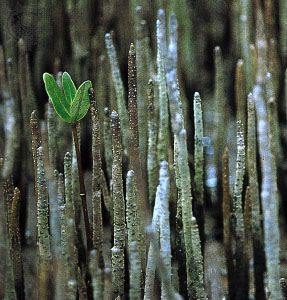
- Adaptation: Equipped with pneumatophores, they thrive in oxygen-poor, salty soils, often serving as pioneer species that colonize mud and sandbanks.21
Given their importance, it is ethically imperative to protect these vulnerable populations from the threats posed by coastal development and habitat loss.1
Are there any notable uses or economic importance of Avicennia species?
Avicennia species, commonly known as black mangroves, possess significant ethnobotanical and economic value alongside their critical role in maintaining coastal health. Their utility spans various practical and medicinal applications:
- Construction and Fuel: The wood of Avicennia is frequently utilized as a source of fuel and as a material for construction projects.2
- Agricultural Use: The leaves of these plants serve as a source of fodder for cattle.2
- Medicinal Applications: Various parts of the plant are used in traditional medicine. Tea prepared from the bark is believed to help treat digestive issues such as peptic ulcers, diarrhea, and hemorrhoids, as well as to relieve rheumatic pain.2
- Additional Uses: The fruit is employed as an insect repellent, and the salt exuded from the leaves is edible.2
- Economic Protection: Beyond direct harvesting, these mangroves provide immense economic value by acting as natural coastal defenses. They protect shorelines from storm surges and flooding, potentially preventing billions of dollars in global damage annually. Furthermore, by serving as essential nursery habitats for fish and shellfish, they directly support local fisheries and global seafood supplies.312
What are the main species of Avicennia and how do they differ from each other?
The genus Avicennia, commonly known as black mangroves, comprises at least eight recognized species of trees or shrubs found along tropical and warm temperate coasts worldwide. While they share fundamental characteristics—such as salt-exuding glands on their leaves, pneumatophores for gas exchange, and the ability to thrive in intertidal estuaries—they differ primarily in their geographic distribution.2
The eight accepted species are:
- A. alba: Found in tropical Asia.2
- A. balanophora: Native to Queensland, Australia.2
- Grey mangrove (A. bicolor): Distributed along the Pacific coast from Mexico to Colombia.2
- Black mangrove (A. germinans): Widespread across the Americas and found in western tropical Africa.2
- A. integra: Located in the Northern Territory, Australia.2
- Grey mangrove (A. marina): Widespread throughout the Old World tropics and subtropics.2
- Indian mangrove (A. officinalis): Native to tropical Asia and eastern Australia.2
- Schauer’s mangrove (A. schaueriana): Found along the Atlantic coast of South America.2
We could dive deeper into the specific environmental conditions that distinguish the habitats of these various species.
Where are Avicennia species commonly found, and what types of environments do they thrive in?
Avicennia species, commonly known as black mangroves, are widely distributed across the world’s tropical and warm temperate coasts. They are specialized to thrive in challenging intertidal environments, including estuaries, salt marshes, and muddy saline or brackish coastal areas.25
These plants are highly adapted to these waterlogged, saline conditions:
- Salt Tolerance: Avicennia species possess specialized glands on their leaves that exude salt, allowing them to survive in environments flooded by seawater. Because of this high tolerance, they are often among the first species to colonize newly formed mud and sandbanks.25
- Respiratory Roots: To survive in oxygen-poor, waterlogged soils, they utilize pneumatophores. These specialized roots grow upward from the primary root system, protruding above the mud or water to facilitate gas exchange through small openings called lenticels.265
As keystone species, they play a vital role in stabilizing shorelines, preventing erosion, and providing essential habitats for diverse marine and terrestrial life.25
Sources
- mangrove: Top Questions — Encyclopædia Britannica
- black mangrove — Encyclopædia Britannica
- Mangroves Matter - Learn more — Encyclopædia Britannica
- Avicennia — Merriam-Webster
- Pneumatophore — Encyclopædia Britannica
- mangrove — Encyclopædia Britannica
Published on · 3 min read
