Barnyard Grass
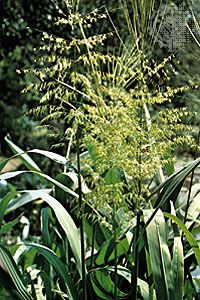
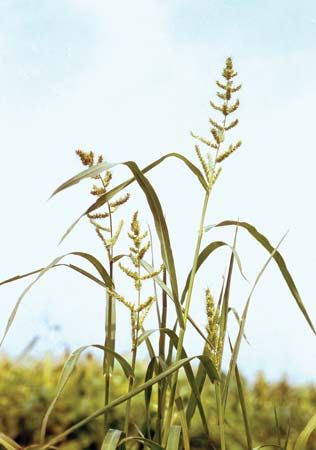
Barnyard grass (Echinochloa crus-galli) is a coarse, tufted grass belonging to the Poaceae family. It is widely recognized as a noxious agricultural weed and…
What is barnyard grass and where does it typically grow?
Barnyard grass (Echinochloa crus-galli) is a coarse, tufted grass belonging to the Poaceae family. It is widely recognized as a noxious agricultural weed and an invasive species in many regions outside of its native tropical Asia.1
This annual plant typically thrives in moist environments, including cultivated fields and waste areas. Its presence in agricultural settings is particularly problematic because it can severely deplete soil nitrogen levels, which often results in reduced crop yields or significant crop losses.1
Reaching heights of up to 105 cm (about 3.5 feet), the plant is characterized by flat leaves and stems that are flattened near the base. It produces tiny purplish flowers between summer and early fall, with a single plant capable of producing approximately 40,000 seeds.1
What are the key identifying features of barnyard grass?
Barnyard grass (Echinochloa crus-galli) is a coarse, tufted annual plant that can be identified by several distinct physical characteristics:
- Stems and Leaves: The plant reaches heights of up to 105 cm (about 3.5 feet). It features flat leaves borne on stems that are notably flattened near the base.1
- Leaf Sheath: The leaf sheath is typically open and is distinguished by the absence of ligules (the membranous or hairlike appendages usually found at the junction of the leaf blade and sheath).1
- Inflorescence and Flowers: The plant produces tiny, purplish flowers arranged on erect or drooping inflorescences. A key identifying feature is that these flowers are borne on only one side of the raceme.12
- Reproductive Capacity: Each individual plant is highly prolific, capable of producing approximately 40,000 seeds.1
How does barnyard grass reproduce and spread?
Barnyard grass (Echinochloa crus-galli) is a highly prolific annual plant that reproduces primarily through the production of a vast number of seeds. A single plant is capable of generating approximately 40,000 seeds, which allows it to colonize and dominate new areas effectively.1
While many grasses utilize various methods such as vegetative spread via rhizomes or stolons, barnyard grass is characterized by its reliance on seed production. Humans have played a significant role in the widespread dispersal of this species, often inadvertently expanding its range through agricultural activities. Once established, the plant’s ability to thrive in moist, cultivated environments allows it to persist as a persistent and noxious weed.13
How does barnyard grass impact agricultural environments?
Barnyard grass (Echinochloa crus-galli) is widely recognized as a noxious agricultural weed that poses significant challenges to farming. Because it thrives in moist, cultivated environments, it often competes directly with crops for essential resources.1
The primary impact of this invasive species on agricultural environments is the severe depletion of soil nitrogen levels. By consuming these vital nutrients, the grass hinders the growth of surrounding crops, which frequently results in reduced yields. In instances of heavy infestation, the competition can become so intense that it leads to substantial crop losses for farmers.1
Sources
- Barnyard grass — Encyclopædia Britannica
- barnyard grass — Merriam-Webster
- Poaceae - Distribution and abundance — Encyclopædia Britannica
Published on · 2 min read