Bumastus
Bumastus is a genus of trilobites, which are extinct arthropods. These organisms are found as fossils in North America and Europe, dating back to the…
What is Bumastus?
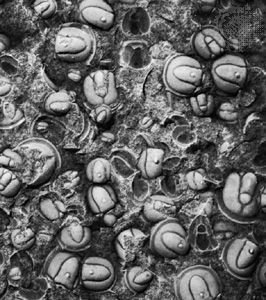
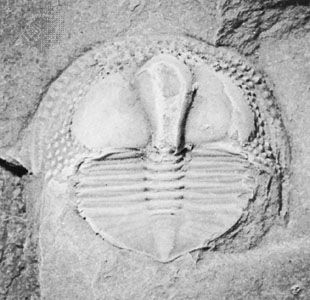
Bumastus is a genus of trilobites, which are extinct arthropods. These organisms are found as fossils in North America and Europe, dating back to the Ordovician and Silurian periods, approximately 408 to 505 million years ago.1
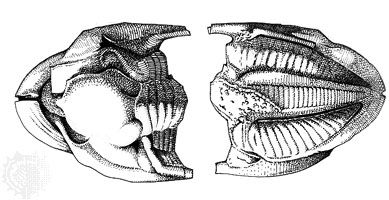
The genus is characterized by a highly distinctive appearance. Its body is elliptical and flat on the bottom, while the back and sides are strongly arched and concave. Additionally, the head and tail regions are notably large and smooth, featuring fused segments. Bumastus lived as a bottom-dwelling creature.1
What are the main differences between the Ordovician and Silurian periods?
The Ordovician Period (485.4–443.8 million years ago) and the Silurian Period (443.8–419.2 million years ago) represent two distinct chapters of the Paleozoic Era, marked by significant shifts in climate, sea levels, and biological diversity.23
Key Differences
- Sea Levels and Climate: The Ordovician was characterized by some of the highest sea levels in the Phanerozoic Eon, though it ended with a severe ice age that caused sea levels to drop dramatically. In contrast, the Silurian began as these glaciers melted, leading to a rapid, dramatic rise in global sea levels that flooded vast continental platforms.43562
- Biological Recovery: The end of the Ordovician was marked by the second-largest mass extinction in Earth’s history, which decimated marine invertebrate populations. The Silurian is defined by the subsequent recovery and diversification of these faunal groups as marine habitats expanded.4367
- Life and Ecosystems: The Ordovician is famous for the “Ordovician radiation,” a period of intense diversification that established most modern marine invertebrate phyla. While the Ordovician saw the first appearance of plants on land, the Silurian marked a more significant step forward as vascular plants began to colonize coastal lowlands. Additionally, while fish were present in the Ordovician, they became widespread and more diverse during the Silurian, including the appearance of primitive jawed fishes.4362
How do scientists identify different types of trilobites?
Scientists identify and classify different types of trilobites primarily by examining their fossilized exoskeletons, which are divided into three distinct regions: the cephalon (head), the thorax, and the pygidium (tail). Because these arthropods evolved rapidly, their physical characteristics serve as essential tools for biostratigraphic zonation and correlation.910
Key identification features include:
- Segmentation: The number of segments in the thorax is a major taxonomic indicator. For instance, the order Polymerida is identified by having more than five thoracic segments, while the order Agnostida is distinguished by having only two.10
- Morphology: Unique physical traits, such as the presence of spines, the shape of the head region, or the development of pleural lobes, are used to distinguish specific genera like Deiphon.11
- Sensory Organs: The presence or absence of compound eyes is a significant diagnostic feature used to differentiate between species.9
- Ecological Niche: Scientists also consider whether a species was benthic (bottom-dwelling) or pelagic (open-sea swimming), as specialized appendages often indicate different lifestyles and geographic distributions.10
What other creatures lived alongside Bumastus in ancient oceans?
Bumastus was a bottom-dwelling trilobite that lived in shallow, marine environments during the Ordovician and Silurian periods. During the Silurian, it shared its habitat with a variety of other marine invertebrates that thrived in the widespread shallow seas of the time.113
Common creatures found alongside Bumastus in these ancient reef mounds and seafloor communities included:
- Brachiopods: Filter-feeding organisms that resembled clams but were not mollusks.13
- Gastropods: A class of mollusks that includes ancestors of modern snails and slugs.13
- Crinoids: Echinoderms related to modern sea lilies and feather stars.13
- Corals: These were essential for building the common mound-type reefs (bioherms) of the Silurian seafloor.13
- Fishes: The Silurian saw the emergence and widespread distribution of various jawless fishes as well as early fishes that possessed primitive jaws.13
Sources
- Bumastus — Encyclopædia Britannica
- A Journey Through Time Since the Precambrian - Silurian Period: 443.4 million to 419.2 million years ago — Encyclopædia Britannica
- Silurian Period - Late Ordovician mass extinction — Encyclopædia Britannica
- Silurian Period — Encyclopædia Britannica
- A Journey Through Time Since the Precambrian - Ordovician Period: 485.4 million to 443.4 million years ago — Encyclopædia Britannica
- Ordovician Period — Encyclopædia Britannica
- Silurian Period - Effects of Late Ordovician glaciation — Encyclopædia Britannica
- Ordovician Period - Exploitation of habitats — Encyclopædia Britannica
- trilobite — Encyclopædia Britannica
- Trilobita — Merriam-Webster
- Deiphon — Encyclopædia Britannica
- Cambrian Period - Correlation of Cambrian strata — Encyclopædia Britannica
- Silurian Period - Silurian life — Encyclopædia Britannica
- Devonian Period - Invertebrates — Encyclopædia Britannica
- megalodon - Predators and prey — Encyclopædia Britannica
Published on · 3 min read