Butter-and-eggs
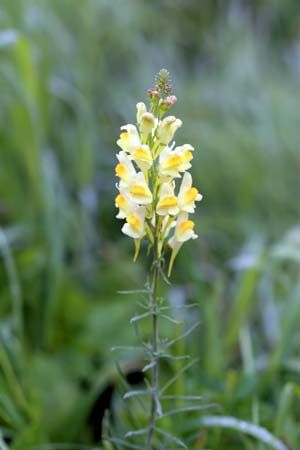
Butter-and-eggs (Linaria vulgaris) is a perennial herbaceous plant belonging to the Plantaginaceae family. Native to Eurasia, it has become widely…
What is Butter-and-eggs?
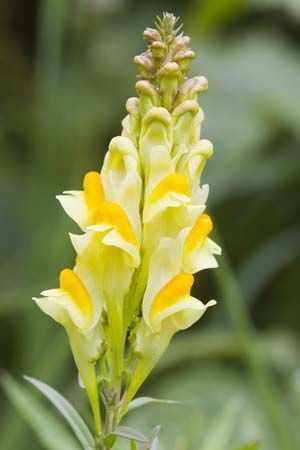
Butter-and-eggs (Linaria vulgaris) is a perennial herbaceous plant belonging to the Plantaginaceae family1. Native to Eurasia, it has become widely naturalized in North America, where it is classified as an invasive species.12
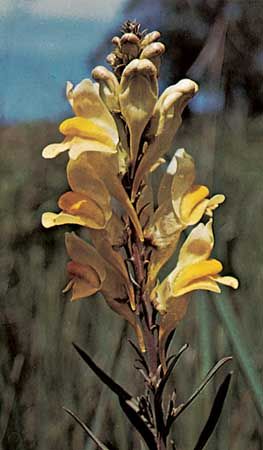
The plant can reach heights of up to 1 metre (3.3 feet) and is characterized by narrow, flax-like leaves. Its showy flowers are notable for being two-lipped and spurred, resembling snapdragons, and they feature distinctive yellow and orange coloration. The plant produces seeds within a capsule fruit, which are equipped with a small notched wing to facilitate wind dispersal. It is also commonly referred to as common toadflax.12
What makes a plant considered an invasive species?
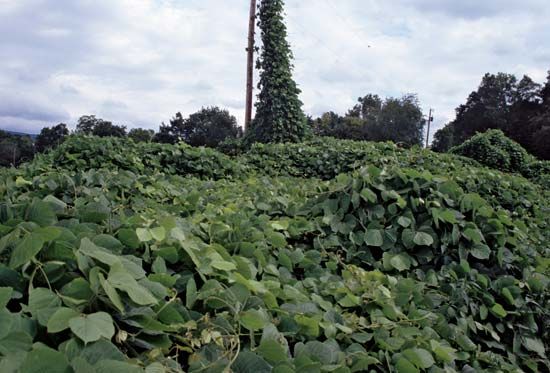
An invasive species is defined as any nonnative organism that significantly disrupts or modifies the ecosystems it colonizes. While many introduced species fail to survive in new environments due to a lack of necessary adaptations, those that become invasive typically possess a competitive advantage over indigenous species.3
Several factors contribute to a plant or animal being classified as invasive:
- Lack of Natural Predators: In their new habitat, invasive species often thrive because they lack the natural predators or biological checks that kept their populations in balance in their native range.3
- Resource Competition: Invasive plants may outcompete native species by monopolizing essential resources such as sunlight, water, food, or living space. For example, the common buckthorn creates dense vegetation that blocks sunlight, effectively displacing native flora.34
- Rapid Spread: Many invasive plants, such as purple loosestrife, are capable of spreading rapidly, allowing them to overrun large areas and replace diverse native vegetation.5
- Human Facilitation: Human activities, including global commerce and the pet trade, are the primary drivers for the transport of these species to new habitats.3
Ultimately, these invasions reduce biodiversity and can cause significant economic and ecological harm.3
How do snapdragons compare to butter-and-eggs?
While butter-and-eggs (Linaria vulgaris) and snapdragons are often compared due to their visual similarities, they are distinct plants. Both belong to the Plantaginaceae family and share a characteristic two-lipped, spurred flower structure, which is why butter-and-eggs is frequently described as resembling a snapdragon.12
However, they differ significantly in their classification and ecological status:
- Genus and Classification: Butter-and-eggs is a member of the toadflax genus (Linaria), which contains nearly 200 species of herbaceous plants. Snapdragons belong to a different genus within the same family.2
- Ecological Impact: Butter-and-eggs is native to Eurasia and is considered an invasive species in North America, where it has become widely naturalized. Snapdragons are generally cultivated for ornamental purposes and do not share this widespread invasive reputation.12
- Physical Traits: Butter-and-eggs is specifically noted for its narrow, flax-like leaves and yellow-orange coloration, whereas snapdragons exhibit a broader range of cultivated colors and leaf shapes.12
What are some other examples of plants in the Plantaginaceae family?
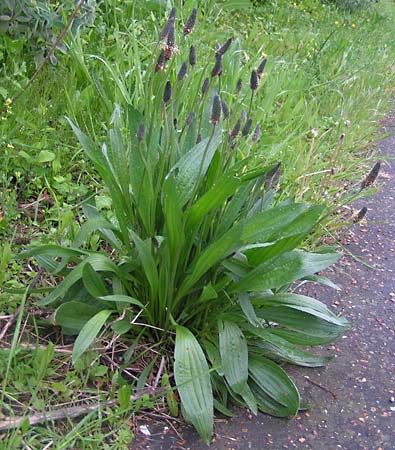
The Plantaginaceae family is a diverse group comprising approximately 90 genera and 1,900 species of herbaceous plants. Following modern taxonomic reorganization, many plants previously classified as “scrophs” are now included in this family.78
Notable examples of plants within the Plantaginaceae family include:
- Speedwell (Veronica): The largest genus in the family, containing about 450 species.7
- Plantains (Plantago): A genus of about 270 species of small annuals, distinct from the unrelated plantain banana.79
- Penstemon: A group of about 270 species known for their showy flowers.7
- Toadflax (Linaria): Comprising nearly 200 species, these plants are recognized for their attractive, two-lipped flowers.7
- Foxglove (Digitalis): A genus of about 20 species, including those used to produce heart medications like digoxin and digitoxin.78
- Aquatic Genera: This includes Hippuris (such as H. vulgaris), Littorella, and Callitriche.78
- Other Genera: The family also includes Angelonia, Bacopa, Globularia, Russelia, and Stemodia, among others.7
We could dive deeper into the medicinal properties of these plants or explore how the APG classification system changed our understanding of plant relationships.
Sources
- Butter-and-eggs — Encyclopædia Britannica
- Toadflax — Encyclopædia Britannica
- invasive species — Encyclopædia Britannica
- conservation - Removing invasive species — Encyclopædia Britannica
- habitat loss — Encyclopædia Britannica
- invasive species - Solutions — Encyclopædia Britannica
- Plantaginaceae — Encyclopædia Britannica
- Plantaginaceae — Merriam-Webster
- Plantain — Encyclopædia Britannica
- Lamiales - Plantaginaceae — Encyclopædia Britannica
Published on · 3 min read