Canvasback
The canvasback (Aythya valisineria) is a large North American diving duck belonging to the family Anatidae and the pochard group. Highly regarded as a game…
What is Canvasback?
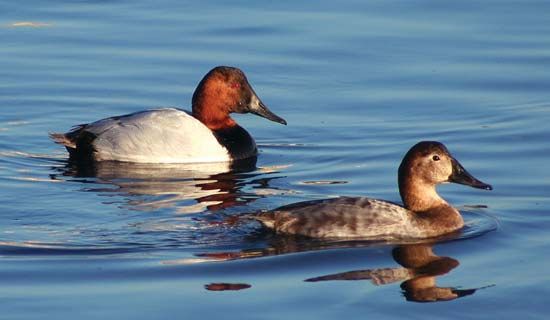
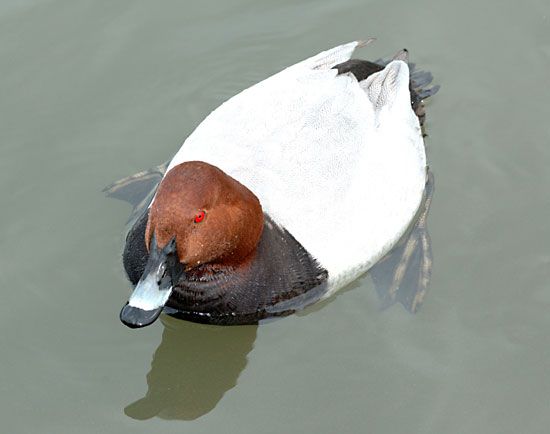
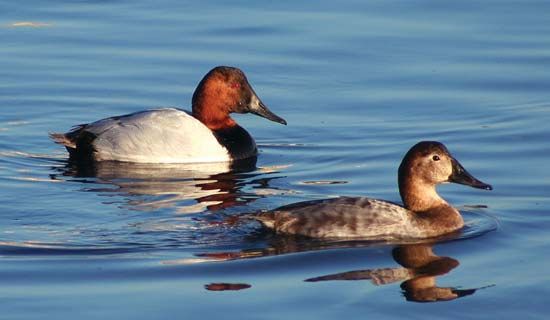
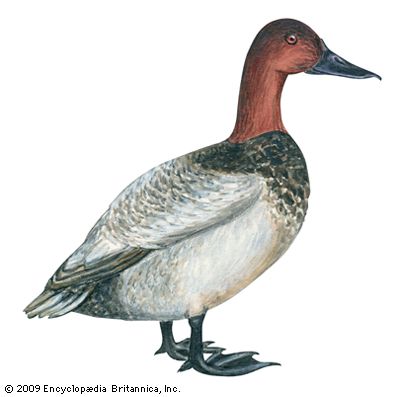
The canvasback (Aythya valisineria) is a large North American diving duck belonging to the family Anatidae and the pochard group. Highly regarded as a game bird, the male is distinguished by a red head and neck, a black breast, and a white back and sides that are finely lined in gray, resembling the texture of canvas.12
These ducks breed in northwestern North America and migrate to winter along coastal regions ranging from British Columbia and Massachusetts down to central Mexico. While they show a preference for the roots of wild celery, also known as eelgrass, they are opportunistic feeders that consume a variety of aquatic plants and some animal matter. They are often confused with the redhead, though the canvasback can be identified by its unique profile.12
What are the main differences between diving ducks and dabbling ducks?
The primary differences between dabbling ducks and diving ducks involve their feeding behaviors, physical adaptations, and preferred habitats.
Feeding and Habitat
- Dabbling Ducks: These birds typically feed in shallow water or on land. They employ a behavior known as “tipping up,” where they tilt their bodies forward to reach aquatic vegetation beneath the surface without fully submerging. They are most commonly found on inland waters like ponds and marshes.34
- Diving Ducks: These ducks are adapted for underwater foraging in deeper environments, such as lakes, bays, and coastal waters. They regularly dive beneath the surface—sometimes over 20 feet deep—to reach food sources like mussels, crabs, and submerged plants.35
Physical Adaptations
- Body and Legs: Diving ducks possess streamlined bodies and legs set further back on their frames, which makes them excellent swimmers and divers. Conversely, dabbling ducks float higher in the water and are more maneuverable on land, though their gait is often a waddle.36
- Takeoff: Dabbling ducks are capable of launching themselves directly into the air from the water. In contrast, many diving ducks must skitter or run along the surface of the water to gain enough momentum for flight.46
How do canvasback ducks use their specialized bills to feed?
The provided search results do not contain specific information regarding the mechanical use of the canvasback’s bill for feeding. While the sources confirm that canvasbacks are diving ducks that forage for wild celery and other aquatic foods at the bottom of lakes and bays, they do not detail the specific anatomical function of the bill during this process.13
Generally, a bird’s bill is adapted for food-getting, and while some species possess specialized structures like serrated edges for grazing, the specific feeding mechanics of the canvasback’s bill remain outside the scope of the provided data.7
What are some other species of North American pochards?
In addition to the canvasback, North America is home to several other species of pochards, which are members of the tribe Aythyini, also known as bay ducks. These include:12
- Redhead: A species that resembles the common European pochard but is generally larger and darker. It is distinguished by its round-headed, short-billed profile.1
- Greater Scaup: A smaller duck that features a white wing stripe extending nearly to the tip of the wing.1
- Lesser Scaup: Similar to the greater scaup but smaller, with a wing stripe that is only about half as long.1
These birds are well-adapted for deep-water environments, where they dive to feed primarily on aquatic plants and shellfish.12
Sources
- Canvasback — Encyclopædia Britannica
- Pochard — Encyclopædia Britannica
- What do ducks eat? — Encyclopædia Britannica
- Diving duck — Encyclopædia Britannica
- Dabbling duck — Encyclopædia Britannica
- Anseriform - Locomotion — Encyclopædia Britannica
- Beak — Encyclopædia Britannica
Published on · 3 min read