Redhead
The term "redhead" refers to two distinct subjects:
What is Redhead?
The term “redhead” refers to two distinct subjects:
- Human: A person who has red hair.1
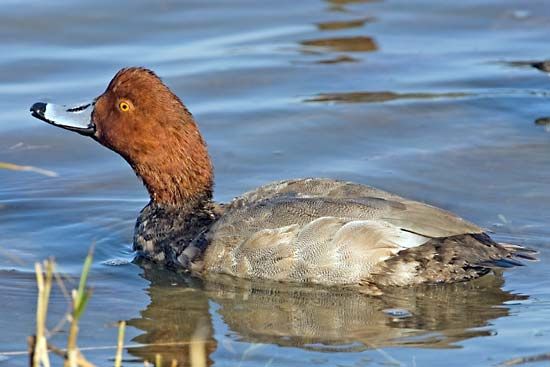
- Bird: A North American diving duck (Aythya americana) known as a popular game bird.12
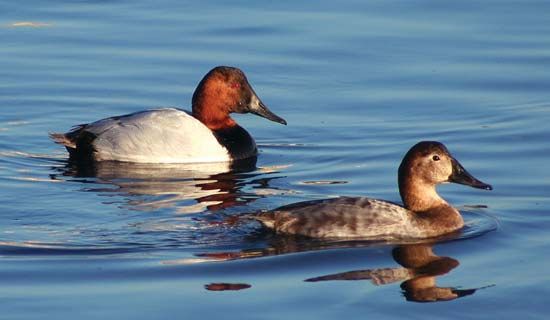
The redhead duck is characterized by its round, red-brown head in breeding males, while females are uniformly brown. These birds breed in marshes ranging from British Columbia to Wisconsin and migrate as far south as the Yucatán Peninsula for the winter. Unfortunately, their population has faced declines in the east due to the destruction of the brackish marshes they rely on for forage. Interestingly, some female redheads are known to parasitize the nests of other duck species.2
What genetic factors cause red hair in humans?
Red hair is primarily determined by the type of melanin produced by melanocytes within the hair matrix. These specialized cells synthesize two distinct forms of pigment: dark brown eumelanin and pale red or yellowish phaeomelanin.3
The production of these pigments begins with the oxidation of the amino acid tyrosine, a process facilitated by the enzyme tyrosinase. While both pigments share this initial pathway, their synthetic routes diverge to produce either the darker eumelanin or the lighter phaeomelanin. Individuals with red hair typically produce a higher proportion of phaeomelanin compared to eumelanin.3
How do diving ducks differ from other types of ducks?
Diving ducks differ from other ducks, such as dabbling ducks, primarily in their physical adaptations and foraging behaviors. While dabbling ducks typically feed by “tipping up” in shallow water to reach vegetation, diving ducks are specialized for underwater foraging at significant depths.45
Key differences include:
- Physical Anatomy: Diving ducks possess streamlined bodies and legs set far toward the rear, which makes them excellent swimmers but often results in an upright posture and a clumsy, waddling gait on land. In contrast, dabbling ducks have legs positioned further forward.467
- Foraging Strategy: Diving ducks submerge completely to reach food sources like crabs, mussels, and submerged vegetation, sometimes diving over 20 feet deep.46
- Takeoff: Unlike dabbling ducks, which can spring directly into the air from the water’s surface, diving ducks typically require a running start, skittering along the surface before becoming airborne.68
- Physiology: Diving ducks have unique respiratory adaptations, such as the ability to draw oxygen from stored hemoglobin and myoglobin rather than the respiratory system while submerged, and they possess enlarged nasal glands to excrete salt in marine environments.9
What are some other examples of bird species that parasitize nests?
Brood parasitism is a reproductive strategy in which a bird lays its eggs in the nest of another species, leaving the host to provide all parental care. Beyond the well-known cuckoos, several other bird groups exhibit this behavior:1011
- Cowbirds: Members of the family Icteridae, these birds are perhaps the most prolific brood parasites. The brown-headed cowbird of North America is known to lay eggs in the nests of over 200 different species. Like many parasites, they often remove an egg from the host’s nest before depositing their own.12
- Whydahs: Belonging to the family Estrildidae, these birds are also noted for their parasitic nesting habits, relying entirely on foster parents to raise their young.11
These parasites have evolved various adaptations, such as egg mimicry, to increase the likelihood that the host will accept and incubate the foreign egg. In many cases, the parasitic nestling will either displace the host’s own young or outcompete them for food, ensuring its own survival at the expense of the foster brood.1312
Sources
- redhead — Merriam-Webster
- Redhead — Encyclopædia Britannica
- melanocyte — Encyclopædia Britannica
- What do ducks eat? — Encyclopædia Britannica
- Duck — Encyclopædia Britannica
- Anseriform - Locomotion — Encyclopædia Britannica
- Diving duck — Encyclopædia Britannica
- Anseriform - Physiology — Encyclopædia Britannica
- Bird - Swimming and diving — Encyclopædia Britannica
- brood parasitism — Merriam-Webster
- Cuculiform - Brood parasitism — Encyclopædia Britannica
- Cowbird — Encyclopædia Britannica
- Passeriform - Territoriality and courtship — Encyclopædia Britannica
Published on · 3 min read