Chott El-Jarid
Chott El-Jarid is a large, saline lake and salt-flat basin located in southwestern Tunisia. Covering approximately 1,900 square miles (4,900 square km), it…
What is Chott el Jerid and where is it located in Tunisia?
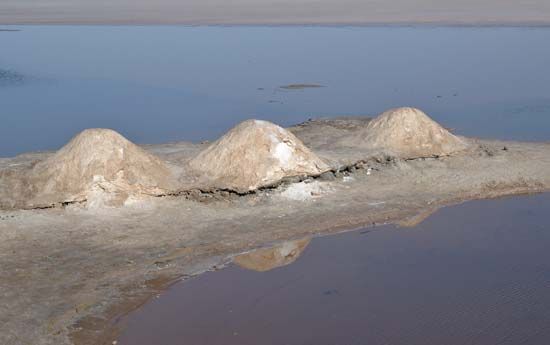
Chott El-Jarid is a large, saline lake and salt-flat basin located in southwestern Tunisia. Covering approximately 1,900 square miles (4,900 square km), it is typically dry, containing water only in its lowest areas or following periods of heavy rain.1
The lake is part of a larger depression that extends nearly 250 miles westward from the Gulf of Gabes, a region that was formerly an arm of the sea. The floor of this depression reaches as low as 52 feet (16 meters) below sea level.1
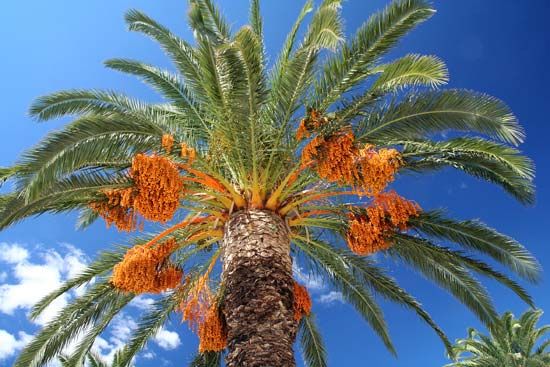
The area is known for its mineral wealth, particularly phosphates, and its unique landscape, which often produces mirages due to the combination of warm air and glittering salt deposits. The region is bordered by important oasis towns such as Tozeur and Nefta, which are renowned for their date palm production. Today, a roadway crosses the salt flats, serving as a popular route for tourists exploring the desert hinterlands.12
What is the significance of salt production in Chott el Jerid?
The significance of the salt flats at Chott el Jerid lies primarily in their mineral wealth. Since the discovery of phosphates in the area in 1949, the basin has served as an important source of these minerals, which are vital for industrial and agricultural applications.1
Beyond its industrial utility, the salt-rich environment is a defining feature of the region’s geography and culture. The glittering mineral salts covering the saline lake basin contribute to the frequent occurrence of mirages, a phenomenon that historically impacted ancient caravan routes. Today, these expansive salt flats are a notable destination for tourism, with a roadway crossing the basin that connects travelers to the surrounding desert hinterlands and historic oasis towns like Tozeur.21
How does Chott el Jerid contribute to Tunisia’s tourism industry?
Chott el Jerid plays a significant role in Tunisia’s tourism industry by serving as a unique gateway to the country’s desert hinterlands. The salt-flat basin is now traversed by a major roadway that facilitates travel for tourists visiting the region’s remote areas and desert oases.1
The landscape itself is a primary attraction, famous for the frequent occurrence of mirages caused by the interaction of warm air with the basin’s glittering mineral salts. These visual phenomena, which historically challenged ancient caravan travelers, now draw visitors interested in the region’s striking natural environment.2
Furthermore, the basin acts as a central feature for travelers exploring the periphery’s historic oasis towns, such as Tozeur and Nefta. These towns, known for their date palm production and traditional architecture, have developed significant tourism infrastructure, including international airports, to support the influx of visitors exploring the surrounding chott depressions and palm groves.12
How does Chott el Jerid compare to other salt lakes around the world?
Chott el Jerid is a large saline lake in southwestern Tunisia, covering approximately 1,900 square miles (4,900 square km). Like many other salt lakes globally, it is situated in a semiarid region where the balance between water input and evaporation, combined with an endorheic drainage basin, facilitates the accumulation of minerals.13
When compared to other salt lakes, Chott el Jerid exhibits several distinct characteristics:
- Geological Origin: Unlike some salt lakes formed by tectonic faulting—such as the Great Salt Lake in the United States—Chott el Jerid is part of a depression that was formerly an arm of the sea. It is part of a larger chain of basins extending westward into Algeria.14
- Hydrology: It is primarily a temporary lake, containing water only in its lowest areas except after heavy rains. This contrasts with permanent, deep salt lakes like the Caspian Sea, which maintain more stable water levels and physicochemical attributes.13
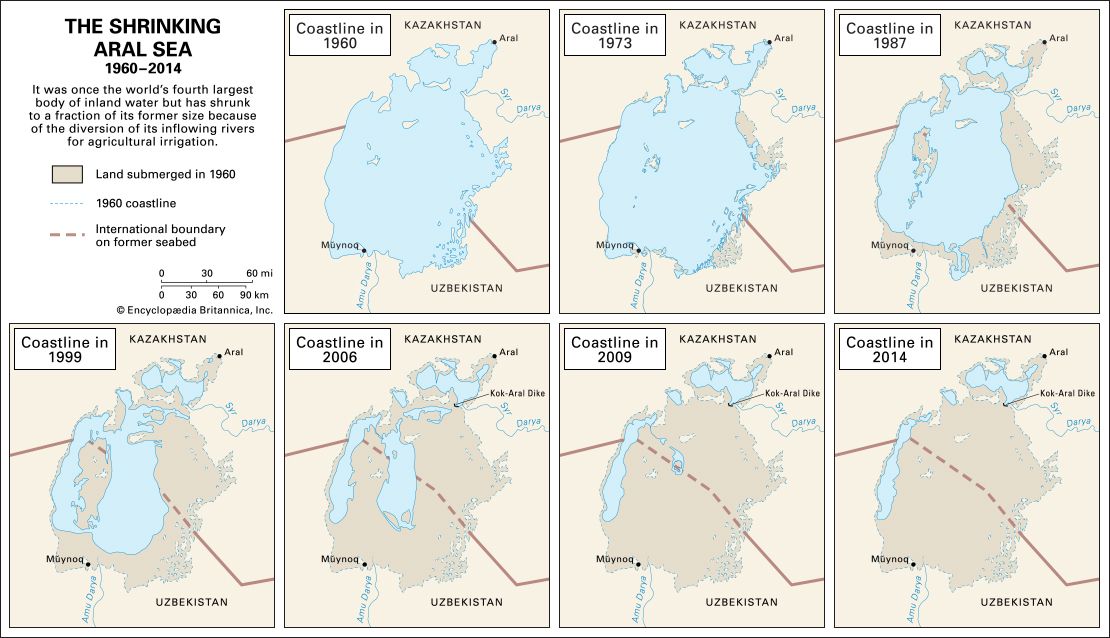
- Sensitivity: Like all salt lakes, it is highly sensitive to climatic shifts. However, it lacks the catastrophic environmental collapse seen in lakes like the Aral Sea, where human diversion of water for irrigation led to severe ecological and social consequences.3
Sources
- Chott El-Jarid — Encyclopædia Britannica
- Tozeur — Encyclopædia Britannica
- Inland water ecosystem - Saline lakes — Encyclopædia Britannica
- lake - Basins formed by tectonism , volcanism, and landslides — Encyclopædia Britannica
Published on · 3 min read