Citrange
A citrange is a hybrid tree and its fruit, created by crossing a variety of sweet orange (Citrus sinensis) with the hardy trifoliate orange (Poncirus…
What is Citrange?
A citrange is a hybrid tree and its fruit, created by crossing a variety of sweet orange (Citrus sinensis) with the hardy trifoliate orange (Poncirus trifoliata).1
These hybrids are notably more cold-hardy than standard oranges, lemons, or limes, making them valuable for cultivation in regions where traditional citrus cannot thrive. While there are about a dozen named varieties, the fruit itself is highly acidic and bitter, rendering it unsuitable for eating fresh; instead, it is primarily used for flavoring drinks or in culinary applications.1
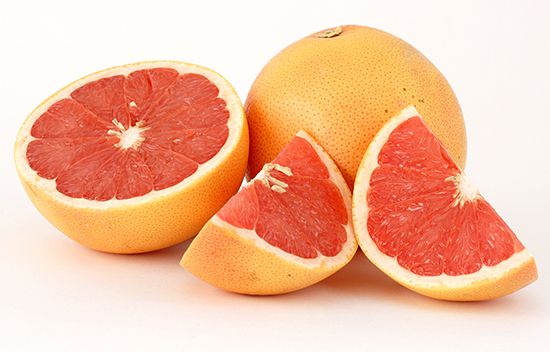
Beyond their fruit, citranges are frequently utilized as rootstocks for other citrus trees, such as grapefruit or lemon. They are favored for this purpose because they are vigorous, disease-resistant, and possess the ability to slightly dwarf the trees grafted onto them.1
What is a rootstock and why is it used in fruit farming?
In horticulture, a rootstock is the portion of a grafted plant that provides the root system. In fruit farming, trees are typically composed of a scion—the part that produces the desired fruit—joined to a rootstock through a process called grafting.4
Rootstocks are essential in modern agriculture for several key reasons:
- Growth Control: They can be used to invigorate the growth of a scion or to produce dwarf trees, which are easier to manage and harvest.4
- Environmental Adaptation: They allow growers to adapt specific fruit varieties to adverse soil or climatic conditions that the scion might not otherwise tolerate.4
- Disease and Pest Resistance: Selecting a specific rootstock can strengthen a plant’s resistance to certain plant diseases.4
- Propagation: Grafting onto a rootstock is often the only way to propagate certain species, ensuring that the resulting tree retains the specific characteristics of the desired cultivar.4
By matching the cambium layers of the scion and the rootstock, farmers create a union that allows the two parts to grow as a single, functional organism.4
How do scientists create hybrid plants like the citrange?
Scientists create hybrid plants like the citrange through a process called hybridization, which involves crossing two carefully selected parent plants to combine their desirable traits.1
In controlled breeding, scientists ensure that pollen from a specific male parent reaches the stigma of a chosen female parent. If the flowers contain both male and female parts, the anthers are removed from the female parent to prevent self-pollination, and the flower is often covered with a bag to protect it from unwanted “foreign” pollen. Once the stigma is receptive, pollen from the desired male parent is manually transferred to it.6
Following this initial cross, breeders manage the resulting hybrid populations through various methods:
- Pedigree Procedure: Breeders select superior plants over successive generations, maintaining detailed records of parent-progeny relationships to achieve pure-breeding lines.1
- Bulk-Population Method: Large numbers of hybrid offspring are grown together, allowing natural and artificial selection to eliminate undesirable traits over time.1
- Backcrossing: Progeny are repeatedly crossed back to one of the original parent varieties to transfer a specific, desirable trait while retaining the overall characteristics of the superior parent.1
What makes the trifoliate orange so cold-hardy?
The trifoliate orange (Poncirus trifoliata) is a distinct, thorny tree native to China that belongs to the rue family and is closely related to the genus Citrus. Its exceptional cold-hardiness is a defining characteristic that distinguishes it from most other citrus species, which are typically sensitive to freezing temperatures.110
While the provided sources confirm that the trifoliate orange is inherently hardy and frequently used as a rootstock to confer this trait to hybrids like the citrange, they do not detail the specific physiological or genetic mechanisms—such as cellular solute accumulation or dormancy patterns—that enable the plant to survive extreme cold. Its resilience makes it a vital tool in fruit farming, allowing for the cultivation of citrus-related crops in regions that would otherwise be too cold for standard oranges, lemons, or limes.10
Sources
- Citrange — Encyclopædia Britannica
- Citrus — Encyclopædia Britannica
- Grapefruit — Encyclopædia Britannica
- rootstock — Merriam-Webster
- graft — Encyclopædia Britannica
- Plant breeding - Hybridization — Encyclopædia Britannica
- Plant breeding - Mating systems — Encyclopædia Britannica
- genetic modification — Merriam-Webster
- genetics - Agriculture and animal husbandry — Encyclopædia Britannica
- trifoliate orange — Merriam-Webster
Published on · 3 min read