Coral-bells
Coral-bells (Heuchera sanguinea) is a hardy, compact garden perennial belonging to the saxifrage family (Saxifragaceae). Native to North America, this plant…
What is coral-bells?
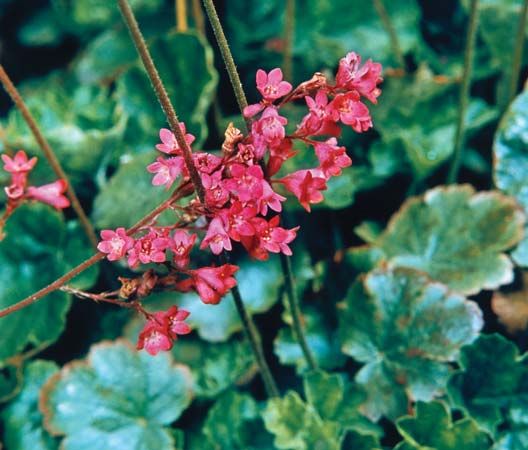
Coral-bells (Heuchera sanguinea) is a hardy, compact garden perennial belonging to the saxifrage family (Saxifragaceae). Native to North America, this plant grows in tufts and typically reaches about 45 centimeters (18 inches) in height.1
It is widely cultivated for its spikes of tiny, pendant, coral-colored flowers that resemble the shape of lily of the valley bells. The plant features leaves borne on short stalks rising from the base, and many colorful varieties have been developed for use as garden ornamentals.12
What are some other plants in the saxifrage family?
The Saxifragaceae family, commonly known as the saxifrage family, includes approximately 36 genera and 600 species of mostly perennial herbaceous plants. While the saxifrage genus (Saxifraga) is the most well-known, the family features several other popular garden ornamentals and unique species:
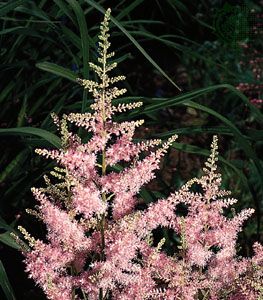
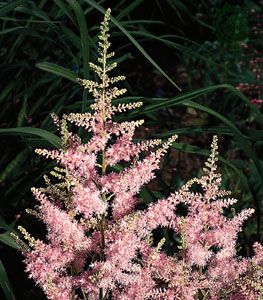
- Astilbe: Known for its feathery, plume-like flower spikes.
- Pickaback plant (Tolmiea menziesii): A unique plant that produces new plantlets at the base of its leaves.
- Foamflower (Tiarella): Also known as false mitrewort, often used as a ground cover.
- Bishop’s cap or mitrewort (Mitella): Small, delicate woodland plants.
- Woodland stars (Lithophragma): Native plants often found in naturalistic garden settings.
- Indian rhubarb (Darmera peltata): A striking plant known for its large, umbrella-like leaves.
- Bergenia: Including the Chinese bergenia (Bergenia purpurascens), which has a history of use in traditional medicine.
These plants are primarily native to northern cold and temperate regions and are highly valued for their adaptability to various moisture conditions, ranging from aquatic environments to dry, rocky crags.3
How do perennial plants differ from annuals?
The primary difference between annual and perennial plants lies in their life cycle and longevity.
- Annuals: These plants complete their entire life cycle—from germination to flowering, seed production, and death—within a single growing season. Because the entire plant dies after one season, the only part that survives to ensure the next generation is the seed. Common examples include corn, marigolds, and beans.67
- Perennials: These plants live for an indefinite number of years and often flower annually. In temperate climates, the aerial (above-ground) parts of many herbaceous perennials die back at the end of each growing season, but the plant survives underground through specialized structures such as bulbs, rhizomes, corms, tubers, or stolons. New shoots emerge from these subterranean parts when the next growing season begins.87
While annuals are programmed to complete their life cycle quickly, perennials are adapted to persist over multiple years, often entering a state of dormancy during unfavorable conditions like winter.79
What types of pollinators are attracted to coral bells?
Coral bells (Heuchera sanguinea) are known for their pendant, coral-colored flowers, which are a classic characteristic of plants adapted for bird pollination.110
Because birds rely on powerful vision and have a high sensitivity to the red part of the spectrum, they are strongly attracted to the vibrant, red-toned, scentless, and tubular flowers produced by coral bells. In the Americas, where these plants are native, hummingbirds are the primary pollinators. These birds are well-suited to the plant’s structure, as they can hover to access the nectar within the pendant, radially symmetrical bells without needing a landing platform.101
While the provided search results specifically highlight the relationship between these floral traits and bird pollinators, such plants may also attract various insects that seek nectar, though the plant’s morphology is specifically optimized for avian visitors.10
Sources
- coral-bells — Encyclopædia Britannica
- coral bells — Merriam-Webster
- Saxifragaceae — Encyclopædia Britannica
- Saxifragales - Order characteristics — Encyclopædia Britannica
- heuchera — Merriam-Webster
- Is That Plant 'Perennial' or 'Annual'? — Merriam-Webster
- Annual — Encyclopædia Britannica
- Angiosperm - General features — Encyclopædia Britannica
- Plant development - Senescence in plants — Encyclopædia Britannica
- Pollination - Birds — Encyclopædia Britannica
Published on · 3 min read