Coralroot
Coralroot is a genus (Corallorhiza) consisting of 11 species of nonphotosynthetic orchids. Native primarily to North and Central America, with one species…
What is Coralroot?
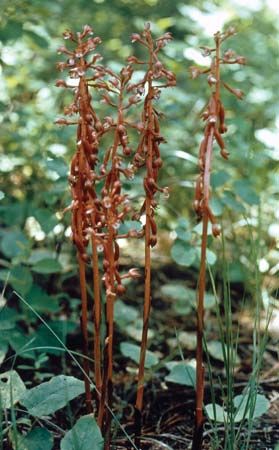
Coralroot is a genus (Corallorhiza) consisting of 11 species of nonphotosynthetic orchids. Native primarily to North and Central America, with one species found in Eurasia, these plants are nearly leafless and lack chlorophyll.1
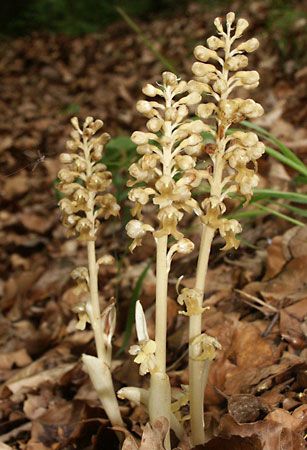
Their common name is derived from the coral-like appearance of their reddish rhizomes (underground stems). Because they do not photosynthesize, coralroots are obligate mycoheterotrophs, meaning they rely entirely on mycorrhizal fungi for their nutrition. They obtain carbon-based nutrients by leaching them from these fungal networks, which often connect to other autotrophic plants. Typically, coralroots bear red, yellow, or white flowers on a reddish or yellow stalk. A well-known example is the spotted coralroot, which is found throughout much of the United States.123
What are mycorrhizal fungi?
A mycorrhiza is a mutually beneficial, symbiotic association between fungi and the roots of higher plants. Unlike pathogenic root infections, this relationship is non-disease-producing and is essential for the survival and growth of approximately 90 percent of land plants.56
How the Association Works
In this partnership, the fungus and the plant exchange vital resources:
- Nutrient Exchange: The fungus helps the plant absorb mineral nutrients, particularly phosphorus, from the soil. In return, the plant provides the fungus with carbohydrates and other nutrients.6
- Survival Support: During periods of low sunlight, such as winter, fungi can provide plants with sugars and nitrogenous compounds absorbed from soil waste, helping the host survive.6
- Network Connectivity: In many forests, fungal mycelium networks connect trees and seedlings, allowing them to exchange nutrients and chemical signals.6
Main Types of Mycorrhiza
- Ectomycorrhizae: The fungus forms a mantle around the exterior of the plant’s roots. These often involve members of the Ascomycota and Basidiomycota phyla.563
- Endomycorrhizae: The fungus invades the interior of the host’s root cells. This includes arbuscular mycorrhiza, which are formed by members of the Glomeromycota phylum.563
How do plants survive without photosynthesis?
Plants that do not photosynthesize survive by obtaining nutrients from other sources, primarily through two distinct strategies: mycoheterotrophy and parasitism.47
Mycoheterotrophy
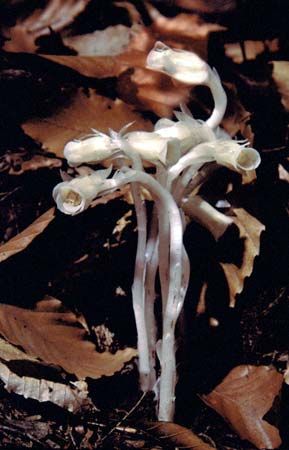
Mycoheterotrophs rely on fungal networks for their nutrition. These plants form root attachments to mycorrhizal fungi, which are typically engaged in a mutualistic relationship with other, photosynthetic plants. The mycoheterotroph leaches carbon-based nutrients that the fungi have acquired from these autotrophic partners. Because they do not need to produce their own food, these plants often lack chlorophyll and may appear white, purple, or brown rather than green. Examples include the Indian pipe and certain species of orchids.4
Parasitism
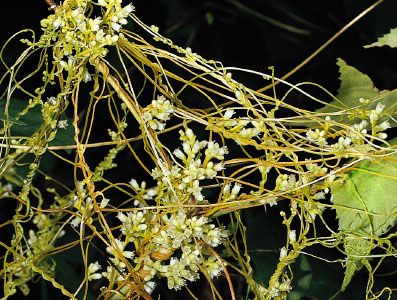
Parasitic plants obtain nutrients directly from a host plant by using a specialized organ called a haustorium, which penetrates the host to create a vascular union. While some parasitic plants (hemiparasites) can still photosynthesize, others—known as holoparasites—are nonphotosynthetic and depend entirely on their host for water and nutrients. Notable examples include dodder and witchweeds.7
What are some other types of parasitic plants?
Parasitic plants exhibit a wide range of evolutionary adaptations to obtain nutrients from their hosts. Beyond the examples previously mentioned, here are several other notable types of parasitic plants:
- Rafflesia: Often called the “corpse flower,” this genus includes the world’s largest individual flower. It is an obligate holoparasite that lives entirely within the tissues of its host vine, Tetrastigma, emerging only to produce its massive, foul-smelling blossom.89
- Broomrapes (Orobanche and Phelipanche species): These members of the Orobanchaceae family are significant agricultural pests. They are obligate parasites that detect chemical signals from host roots to trigger their own germination.8
- Dwarf mistletoes (Arceuthobium): These plants primarily parasitize coniferous trees. They are known for their unique method of dispersal, using high-velocity, projectile seeds that can travel at speeds up to 90 km/hr to reach new hosts.89
- Australian Christmas tree (Nuytsia floribunda): Unlike many other parasites, this tree is a facultative hemiparasite; it can photosynthesize but also uses specialized, guillotine-like haustoria to sever the roots of neighboring plants to steal water.9
- Stemsuckers (Pilostyles): These minute, obligate parasites live endophytically within the stems of plants in the pea family (Fabaceae). They lack traditional roots and leaves, appearing only when they break through the host’s bark to flower.89
Sources
- coralroot — Encyclopædia Britannica
- coralroot — Merriam-Webster
- mycoheterotroph: Top Questions — Encyclopædia Britannica
- mycoheterotroph — Encyclopædia Britannica
- mycorrhiza — Encyclopædia Britannica
- fungus - Mycorrhiza — Encyclopædia Britannica
- Plant - Mode of nutrition — Encyclopædia Britannica
- Parasitic plant — Encyclopædia Britannica
- 5 Awesome Parasitic Plants — Encyclopædia Britannica
Published on · 3 min read