Crocodile Bird
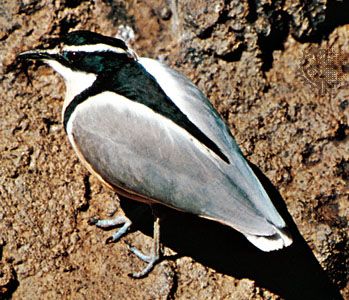
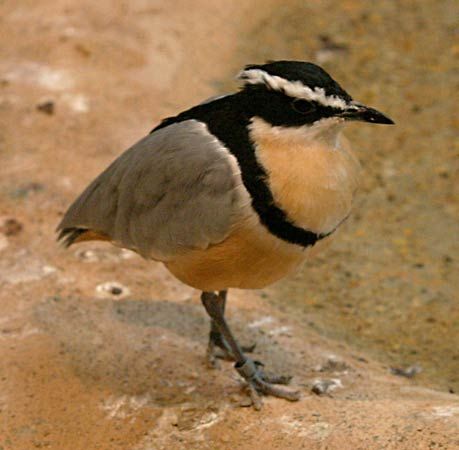
The term "crocodile bird" refers to the Egyptian plover (Pluvianus aegyptius), a shorebird belonging to the order Charadriiformes.
What is Crocodile bird?
The term “crocodile bird” refers to the Egyptian plover (Pluvianus aegyptius), a shorebird belonging to the order Charadriiformes.1
While the bird is famously associated with the Nile crocodile in historical accounts, the common belief that it enters the reptile’s mouth to clean its teeth is considered a myth. The Greek historian Herodotus popularized the story of this mutualistic association, claiming the bird removed parasites and food debris from the crocodile’s mouth. However, modern naturalists have never observed this specific tooth-cleaning behavior. While the bird may prey on insects near basking crocodiles, researchers generally regard the classic “cleaner” relationship as dubious.12
What is the difference between a myth and a scientific observation?
The distinction between a myth and a scientific observation lies primarily in their methodology, purpose, and susceptibility to revision.
Scientific Observation
Scientific observation relies on empirical evidence, which is information gathered through systematic experimentation or observation to confirm or disconfirm a scientific theory. This process is characterized by:3
- Evidence-Based: Scientific beliefs are ideally proportioned to the available evidence, following the principle that extraordinary claims require extraordinary evidence.3
- Open to Revision: While scientific models—such as likening the brain to a computer—can resemble myths by providing a pattern for understanding the world, science is defined by an awareness of these models’ limitations. When evidence contradicts a model, science allows for its replacement or refinement.4
- Methodological Rigor: It utilizes quantitative data (statistics, experiments) or qualitative analysis (case studies, observation) subject to internal and external validity assessments.3
Myth
A myth is typically a traditional story or a widely held but unfounded belief that serves to explain natural phenomena, customs, or societal values. Key characteristics include:56
- Cultural Function: Myths often function as paradigms that justify current social structures, loyalties, or beliefs.47
- Resistance to Change: Unlike scientific models, myths are generally not regarded by their community as open to replacement; they are often held with a quasi-religious faith that remains resistant to objective testing.47
- Nature of Truth: Myths may be considered “false ideas” or “unfounded notions” when viewed through a scientific lens, though they remain significant as cultural narratives that shape a society’s worldview.56
While some philosophers argue that all science contains a “mythological dimension”—meaning there are fundamental, unprovable assumptions taken for granted when scientific thought begins—the primary difference remains that science is an active, self-correcting inquiry, whereas myth is a foundational narrative.4
What is mutualism in the animal kingdom?
Mutualism is a type of symbiosis in which organisms from two different species interact in a way that provides benefits to both participants. These relationships are fundamental to the organization of biological communities and are often just as critical as antagonistic interactions.8
Key Characteristics and Examples
- Mutual Benefits: Participants may gain food, protection from enemies, nesting sites, or assistance with digestion.8
- Digestive Partnerships: Many animals rely on microorganisms to metabolize food. For example, cows host rumen bacteria to digest plants, and termites depend on gut protozoans to break down wood.910
- Plant-Animal Interactions: Many plants rely on animals for pollination and seed dispersal, while the animals receive nectar or fruit in return.1110
- Obligative Mutualism: In some cases, the dependency is so strict that neither partner can survive without the other, such as the relationship between yucca moths and yucca plants.9
Evolutionary Perspective
While mutualism is beneficial, it is driven by genetically selfish principles rather than altruism. These relationships often evolve from antagonistic interactions where species manipulate one another for their own advantage; mutualism occurs when these selfish activities happen to benefit both parties. At a fundamental level, the origin of eukaryotic cells is thought to have resulted from an ancient, obligative mutualistic association between separate single-celled organisms.1210
Who was Herodotus and why did he write about animals?
Herodotus (c. 484–420 BCE), often called the “father of history,” was a Greek author best known for writing the History of the Greco-Persian Wars. Born in Halicarnassus, he was a wide traveler who visited much of the Persian Empire, including Egypt, Babylonia, and Scythia, to gather information for his narrative.141516
Regarding his interest in animals, Herodotus did not write about them as a zoologist, but rather as an ethnographer documenting the unique customs of foreign cultures. In his travels, he observed that the Egyptians, for instance, lived in close proximity to animals, which he noted as a cultural practice that contrasted with the customs of the Greeks. His inclusion of such details served his broader historical and anthropological goal: to record the traditions, habits, and “grounds of feud” of both the Greeks and the “barbarians” to ensure their actions were preserved from decay.16
Sources
- Crocodile bird — Encyclopædia Britannica
- Even More Bird Names that Sound Like Insults (and Sometimes Are) | Leecheater — Merriam-Webster
- myth — Merriam-Webster
- Empirical evidence — Encyclopædia Britannica
- myth - Myth and science — Encyclopædia Britannica
- myth — Merriam-Webster
- myth - Myth and history — Encyclopædia Britannica
- symbiosis — Encyclopædia Britannica
- community ecology - Mutualism — Encyclopædia Britannica
- mutualism — Encyclopædia Britannica
- community ecology - Community structure and the spread of mutualism — Encyclopædia Britannica
- community ecology - The pervasiveness of mutualism — Encyclopædia Britannica
- community ecology - The evolution of mutualism — Encyclopædia Britannica
- Herodotus — Encyclopædia Britannica
- Herodotus: Top Questions — Encyclopædia Britannica
- Historiography - Herodotus — Encyclopædia Britannica
Published on · 4 min read