Cystiphyllum
Cystiphyllum is an extinct genus of solitary horn corals characterized by their distinct hornlike shape. These organisms are found as fossils within marine…
What is Cystiphyllum?
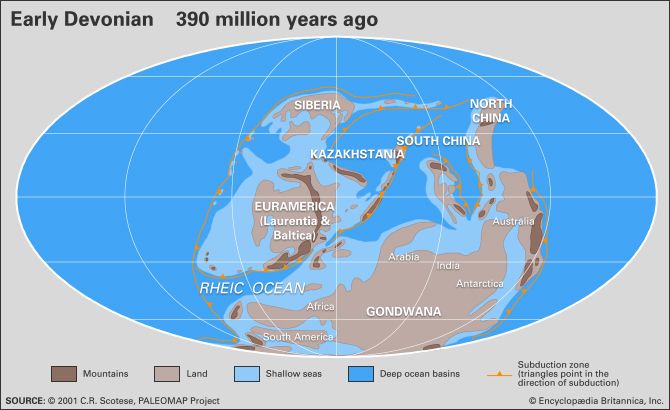
Cystiphyllum is an extinct genus of solitary horn corals characterized by their distinct hornlike shape. These organisms are found as fossils within marine rock formations dating back to the Silurian Period and the Devonian Period1.1
As members of the order Rugosa, these corals were sensitive to their environment, making their fossils valuable indicators for scientists studying ancient ecosystems. Because of their specific presence in the geologic record, such corals are often used as index fossils to help correlate different rock units across various locations.12
What are rugose corals?
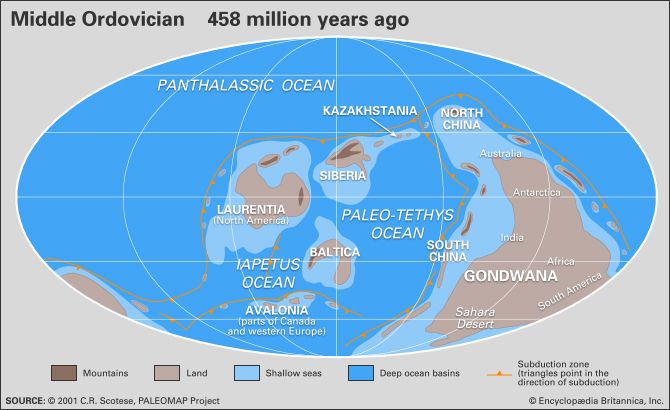
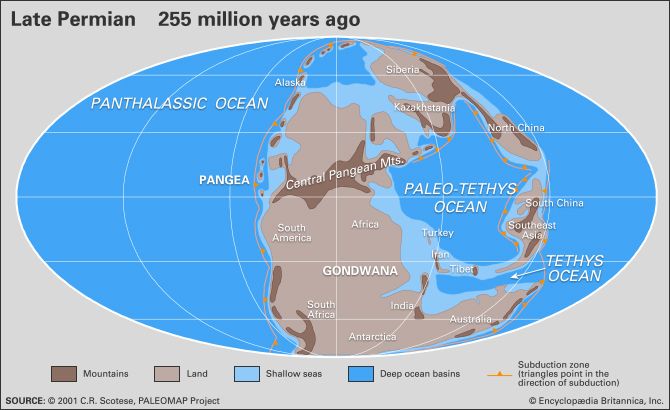
Rugose corals, commonly known as horn corals, are an extinct order of corals that first appeared in the Ordovician Period approximately 488 million years ago. They persisted throughout the Paleozoic Era until their extinction at the end of the Permian Period.23
These organisms are named for the distinct hornlike shape of the individual structures built by the coral animal. They existed in both solitary and colonial forms. Because of their widespread distribution and specific presence during certain intervals, they are highly significant as index fossils, allowing geologists to correlate rock units across different regions. Furthermore, the growth patterns of some horn corals have been studied as biological clocks to estimate the length of days and years during the distant past.2
How do fossils help scientists understand ancient environments?
Fossils serve as vital indicators for scientists to reconstruct the environments of the distant past. By analyzing the types of organisms preserved in sedimentary rock, researchers can infer the specific conditions—such as climate, water depth, and temperature—that existed when those organisms were alive.4
For example, certain species of coral are known to thrive only in warm, shallow waters. When fossils of these corals are discovered in regions that are currently polar, it provides strong evidence that the Earth’s crust has shifted position over time, moving those landmasses from warmer latitudes. Similarly, microfossils found in boreholes are analyzed to determine the depositional environment of underlying rock layers, which helps geologists evaluate the potential for natural resources like oil and gas.45
Beyond environmental reconstruction, fossils are essential for stratigraphy, allowing scientists to assign relative ages to rock strata based on the unique assemblages of life-forms they contain. Through the study of paleoclimatology, these biological records help explain long-term climate variations and the evolution of life on Earth.467
What are index fossils and why are they important?
An index fossil is any plant or animal preserved in the Earth’s rock record that serves as a marker for a specific span of geologic time or a particular environment.11
To be considered a useful index fossil, an organism should ideally possess the following characteristics:
- Short temporal range: The species existed for only a brief moment in geologic history, allowing for precise dating.115
- Wide geographic distribution: The organism was cosmopolitan, meaning it can be found in many different regions, which helps in correlating separated rock outcrops.115
- Abundance: The fossilized remains are common enough that discovery is highly probable.115
- Distinctive appearance: The fossil is easily recognizable, which prevents misidentification.115
Index fossils are fundamental to stratigraphy because they provide the basis for defining boundaries in the geologic time scale and for the correlation of strata across different locations. By applying the principle of faunal succession, geologists can determine the relative age of fossiliferous rock based on the unique assemblages of life-forms they contain.115
Sources
- Cystiphyllum — Encyclopædia Britannica
- horn coral — Encyclopædia Britannica
- Triassic Period - Permian-Triassic extinctions — Encyclopædia Britannica
- fossil record — Encyclopædia Britannica
- dating - Principles and techniques — Encyclopædia Britannica
- Cambrian Period - Fauna — Encyclopædia Britannica
- geology - Micropaleontology — Encyclopædia Britannica
- paleoclimatology — Merriam-Webster
- Earth sciences - Micropaleontology — Encyclopædia Britannica
- Paleoclimatology — Encyclopædia Britannica
- index fossil — Encyclopædia Britannica
Published on · 3 min read