Dakhin Shahbazpur Island
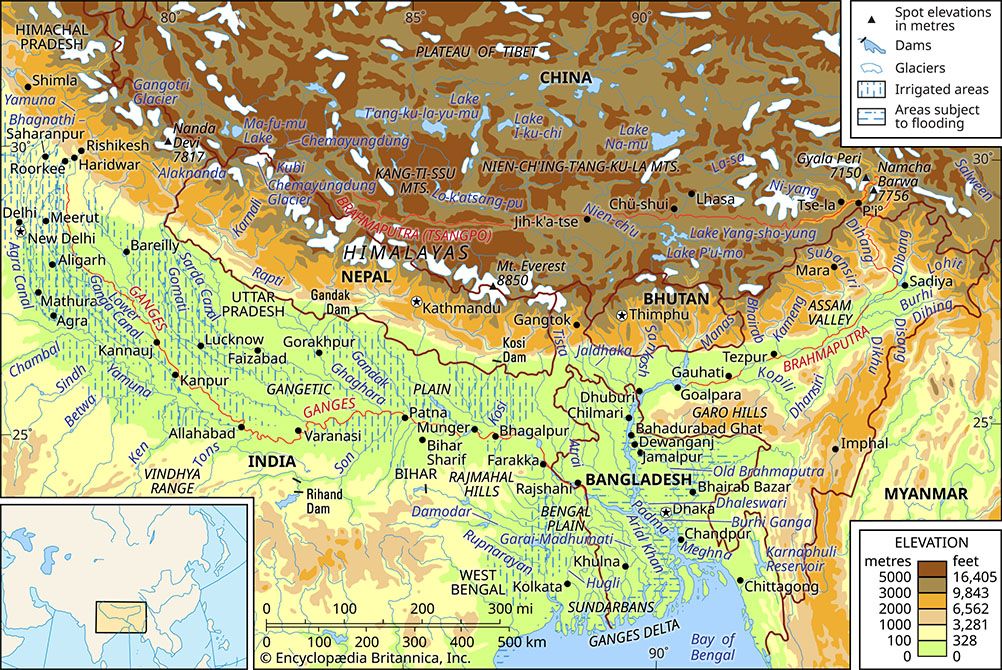
Dakhin Shahbazpur Island is an island situated in the Meghna River estuary in south-central Bangladesh. Measuring approximately 43 miles long and 10–15 miles…
What is Dakhin Shahbazpur Island?
Dakhin Shahbazpur Island is an island situated in the Meghna River estuary in south-central Bangladesh. Measuring approximately 43 miles long and 10–15 miles wide, it is formed by silt deposits from the river. The island is bordered by the Shahbazpur River to the east, separating it from the Hatia Islands, and the Tetulia River to the west, which separates it from the mainland.
The island’s geography is significantly influenced by the spring tide—known as a bore—which frequently floods its creeks and watercourses. Additionally, the region is highly vulnerable to severe cyclones and storm surges. Despite these environmental challenges, the island maintains connectivity to the mainland through regular boat services.1
How do river deltas form?
A delta forms when a river delivers sediment to a standing body of water—such as an ocean or lake—faster than marine processes like waves and currents can remove it. This accumulation of silt, sand, and clay creates a depositional plain at the river’s mouth.234
The formation process typically results in three distinct physiographic zones:
- Upper Delta Plain: The most landward section, located above the highest tidal level. It is formed entirely by riverine processes and is characterized by channels, marshes, and swamps.53
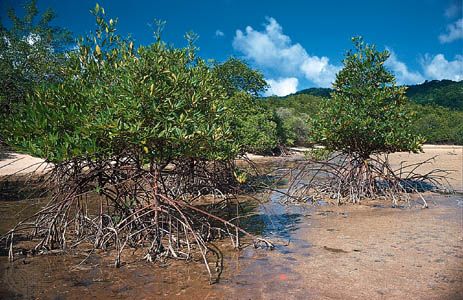
- Lower Delta Plain: The middle zone, which is periodically covered by tidal water. Its features, such as mangrove swamps and tidal flats, result from the interaction of both river and marine forces.53
- Subaqueous Delta: The seaward portion located below sea level. It forms a topographic bulge on the continental shelf where sediment-laden water loses its transporting power.53
The specific shape and structure of a delta depend on a balance between sediment supply from the drainage basin and the energy of the shoreline, including tidal range and wave action.43
What causes a tidal bore?
A tidal bore occurs when an incoming tide is forced into a narrow river or estuary that experiences a large tidal range. This phenomenon is triggered during spring tides—and the tides immediately preceding and following them—when the volume of water entering the channel is exceptionally high.6
The formation relies on specific physical conditions:
- Channel Confinement: The incoming tide must be restricted to a narrow channel, which concentrates the water’s energy.6
- Momentum and Wave Formation: As the tide rushes upstream, it creates a well-defined front of one or more waves. This wave travels faster than the water particles behind it, effectively collecting the still or outward-flowing freshwater in front and forcing it to reverse direction.6
- Surface Elevation: The water surface behind the wave front rises higher than the water in front, creating a “wall of water” that moves upstream at speeds two to three times faster than a normal tidal current.6
Why are coastal areas in Bangladesh prone to cyclones?
Coastal areas in Bangladesh are highly prone to cyclones primarily due to the region’s geography and the climate of the Bay of Bengal.
The vulnerability of the region is driven by several key factors:
- Seasonal Climate Patterns: The Bay of Bengal experiences intense tropical storms during the spring (April–May) and fall (October–November), which are the periods immediately preceding and following the monsoon rains.78
- Storm Surges: The deadliest aspect of these cyclones is the storm surge, an elevation of sea level caused by strong winds piling water toward the coast. Because Bangladesh is low-lying, these surges—which can reach heights of up to 6 meters (20 feet)—can penetrate deep inland, causing catastrophic flooding and loss of life.98
- Geographic Vulnerability: The funnel-like shape of the Bay of Bengal and the low-lying nature of the Ganges River delta make the region particularly susceptible to the massive volumes of water and high-speed winds generated by these storms.798
These conditions, combined with high population density in coastal areas, have historically resulted in significant casualties during major storm events.98
Sources
- Dakhin Shahbazpur Island — Encyclopædia Britannica
- river - Morphology of deltas — Encyclopædia Britannica
- river - Deltas — Encyclopædia Britannica
- river - Deposits and stratigraphy — Encyclopædia Britannica
- delta — Encyclopædia Britannica
- tidal bore — Encyclopædia Britannica
- Bay of Bengal - Climate — Encyclopædia Britannica
- tropical cyclone - Rainfall — Encyclopædia Britannica
- tropical cyclone - The storm surge — Encyclopædia Britannica
- Bangladesh - Climate — Encyclopædia Britannica
- Climate - Effects of tropical cyclones on ocean waters — Encyclopædia Britannica
- Climate - Conditions associated with cyclone formation — Encyclopædia Britannica
Published on · 3 min read