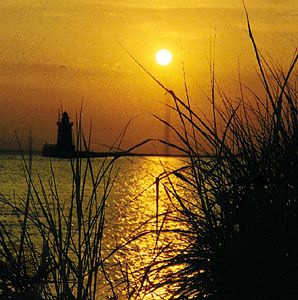
Delaware Bay
Delaware Bay is an inlet of the North Atlantic Ocean located on the east coast of the United States, forming a portion of the border between New Jersey and…
What is Delaware Bay?
Delaware Bay is an inlet of the North Atlantic Ocean located on the east coast of the United States, forming a portion of the border between New Jersey and Delaware.12
The bay extends 52 miles (84 km) southeastward from the junction of the Delaware River and Alloway Creek to its entrance, which spans 12 miles (19 km) between Cape May, New Jersey, and Cape Henlopen, Delaware. The surrounding landscape is primarily characterized by marshy lowlands.1
As an essential component of the Atlantic Intracoastal Waterway, the bay serves as a vital maritime link. It facilitates commercial access to Philadelphia via a dredged channel in the Delaware River, which is 32 feet deep and 600 feet wide. The name “Delaware” was applied to the bay as early as 1610, eventually extending to the surrounding land and the state itself.134
How does the Delaware River impact the ecology of the bay?
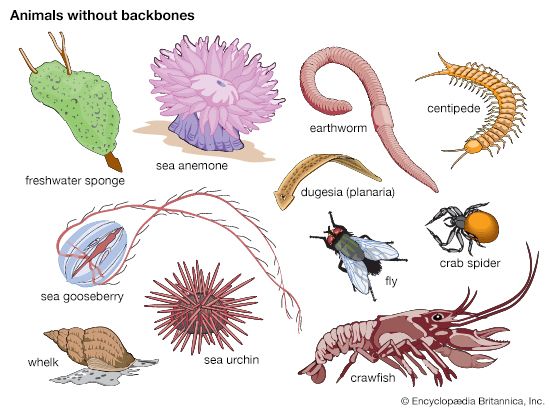
The Delaware River plays a critical role in shaping the ecology of Delaware Bay, primarily by transforming into a broad, sluggish estuary characterized by extensive marshy lowlands along its banks. This transition zone creates a highly productive environment that supports diverse populations of invertebrate animals, including shellfish like oysters and mussels, as well as shrimp and crabs.125
These wetlands serve as essential nursery grounds, providing abundant food and protection for juvenile fish species before they migrate to the open ocean. Furthermore, the river acts as a migratory corridor for species such as salmon and eels, which move between fresh and salt water to spawn or mature.5
Recognizing the ecological sensitivity of these habitats, the state of Delaware enacted the Coastal Zone Act in 1971 to protect the wetlands along the river and bay from industrial encroachment, ensuring the preservation of these vital natural areas.6
What role did the Delaware Bay play in early American trade?
Delaware Bay served as a vital maritime gateway for early American trade, primarily by providing essential access to the Delaware River and the growing commercial centers located along its banks, most notably Philadelphia.11
The bay’s strategic importance was recognized early, as it facilitated the movement of goods and settlers into the region. By the 17th century, European powers, including the Dutch and Swedes, established settlements such as Lewes and Fort Christina to engage in trade, including the lucrative beaver fur trade with Native Americans. Later, William Penn specifically sought control over the Delaware region to ensure his colony of Pennsylvania maintained direct access to the ocean, which was critical for the colony’s economic development.2
To enhance trade efficiency, infrastructure projects were developed to connect the bay to other major waterways. Canals were constructed to link the Delaware River with the Raritan River and Chesapeake Bay, significantly shortening shipping routes and bolstering regional commerce.13
What are some of the major cities located along the Delaware River?
Several major cities and communities are situated along the banks of the Delaware River, serving as key hubs for commerce and industry throughout the region’s history. These include:
- Port Jervis, New York: Located in the upper reaches of the river’s course.2
- Easton, Pennsylvania: Situated where the river enters a hilly region, flanked by cliffs and hills.2
- Trenton, New Jersey: The capital of New Jersey, which marks the point where the river meets the tidewater.2
- Philadelphia, Pennsylvania: A major historical and commercial center located at the confluence of the Delaware and Schuylkill rivers.28
- Camden, New Jersey: Positioned across the river from Philadelphia.2
- Chester, Pennsylvania: An early settlement that once served as the provincial capital of Pennsylvania.29
- Wilmington, Delaware: A significant industrial and trade center that grew rapidly due to its access to the river and its proximity to other major cities.210
These cities have historically relied on the river for transportation, trade, and industrial power, with infrastructure like dredged channels and canals facilitating their economic development over the centuries.2810
Sources
- Delaware Bay — Encyclopædia Britannica
- Delaware River — Encyclopædia Britannica
- Delaware - The colony of Delaware — Encyclopædia Britannica
- Delaware Bay — Merriam-Webster
- estuary - Primary productivity — Encyclopædia Britannica
- Delaware - Industry of Delaware — Encyclopædia Britannica
- Delaware - Relief — Encyclopædia Britannica
- Philadelphia - Foundation and early settlement — Encyclopædia Britannica
- Delaware - Economic development in the 19th century — Encyclopædia Britannica
- Schuylkill River — Encyclopædia Britannica
- Delaware — Encyclopædia Britannica
Published on · 3 min read