Dibatag
The dibatag (Ammodorcas clarkei) is a rare antelope native to the Horn of Africa. While the provided information does not assign it a specific formal…
What is the conservation status of the dibatag, and what threats does it face?
The dibatag (Ammodorcas clarkei) is a rare antelope native to the Horn of Africa. While the provided information does not assign it a specific formal conservation category, it notes that the species is vulnerable to extinction due to the significant attrition of its habitat.1
The dibatag faces several severe threats:
- Habitat Loss and Degradation: Its historical range has shrunk drastically from approximately 200,000 square km to perhaps 10,000 square km. This is largely due to habitat degradation caused by excessive livestock grazing.1
- Political Instability: Decades of unrest in the Ogaden region of Ethiopia virtually eliminated the species from the northern part of its range.1
- Human Activity: In Somalia, the species has been decimated by overhunting and drought. Furthermore, the dibatag currently receives no protection within any formal reserves.1
Because there are no individuals in captivity and population densities remain very low, the species remains in a precarious state.1
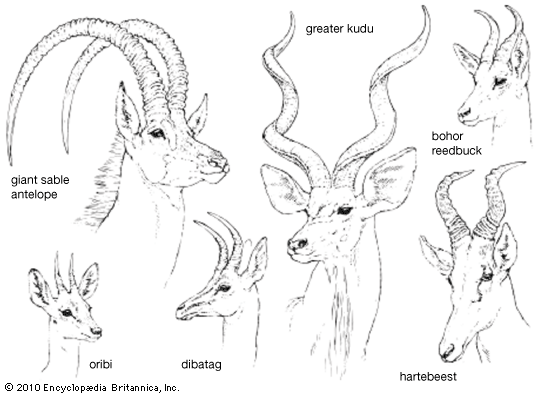
What is a dibatag and where is it primarily found?
The dibatag (Ammodorcas clarkei), also known as Clarke’s gazelle, is a rare antelope belonging to the gazelle tribe within the family Bovidae.12
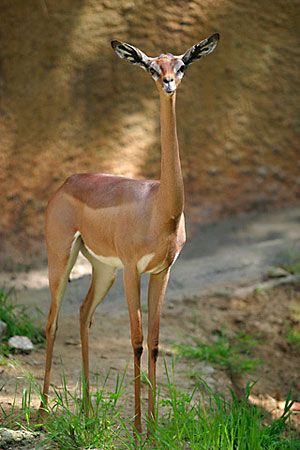
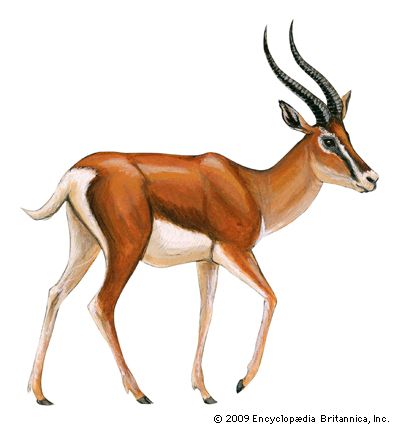
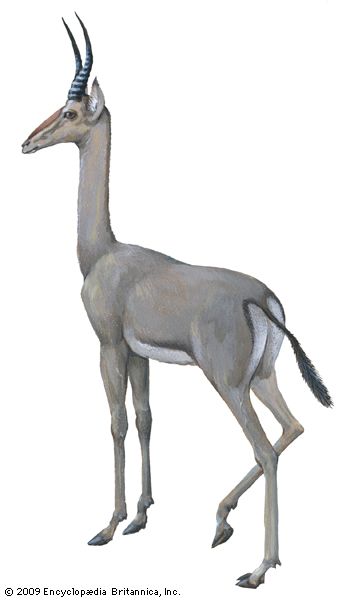
Physically, the dibatag is characterized by its long legs and neck, a narrow snout, and a grayish-brown coat with distinct white markings. It stands roughly 80–88 cm tall and is notable for its black tail, which it holds erect when fleeing. Only males possess horns, which are short and curve forward.1
The species is indigenous to the Horn of Africa. Its primary range is located in the arid and semiarid lowlands of Ethiopia, specifically the Ogaden region, and parts of Somalia. The dibatag prefers waterless thornbush habitats dominated by Acacia and Commiphora trees, where it browses selectively on foliage.1
How does the dibatag adapt to its habitat in the Horn of Africa?
The dibatag (Ammodorcas clarkei) is highly specialized for survival in the arid, waterless thornbush environments of the Horn of Africa. Its physical and behavioral adaptations allow it to thrive in these challenging landscapes:
- Feeding Specialization: The dibatag possesses a narrow, pointed snout, which enables it to be a highly selective browser. It primarily feeds on the green foliage, buds, and shoots of evergreen trees and shrubs, such as Acacia and Commiphora. During rainy periods, it supplements this diet with herbs and sprouting grass.1
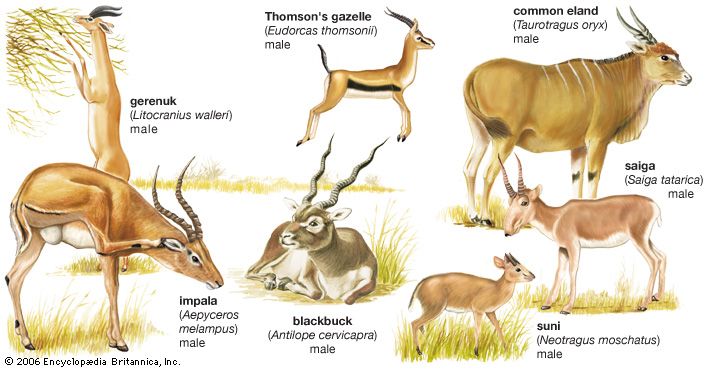
- Foraging Reach: Similar to the gerenuk, the dibatag is capable of standing on its hind legs to reach higher foliage that is inaccessible to other ground-dwelling herbivores.1
- Alertness: Local hunters consider the dibatag to be exceptionally alert and elusive, a trait that helps it avoid predators in its sparse habitat.1
- Social Structure: To minimize competition for limited resources, the species maintains very low population densities and typically lives in small groups, often as singles or pairs.1
What are the main predators of the dibatag in its natural habitat?
The provided search results do not contain specific information regarding the natural predators of the dibatag. While the article notes that the species is considered exceptionally alert and elusive by local hunters, it does not detail which wild animals prey upon it in its habitat.
Sources
- dibatag — Encyclopædia Britannica
- dibatag — Merriam-Webster
Published on · 2 min read