East Australian Current
The East Australian Current plays a significant role in the dispersal and distribution of marine life rather than directly dictating the active…
How does the East Australian Current influence fish migration patterns?
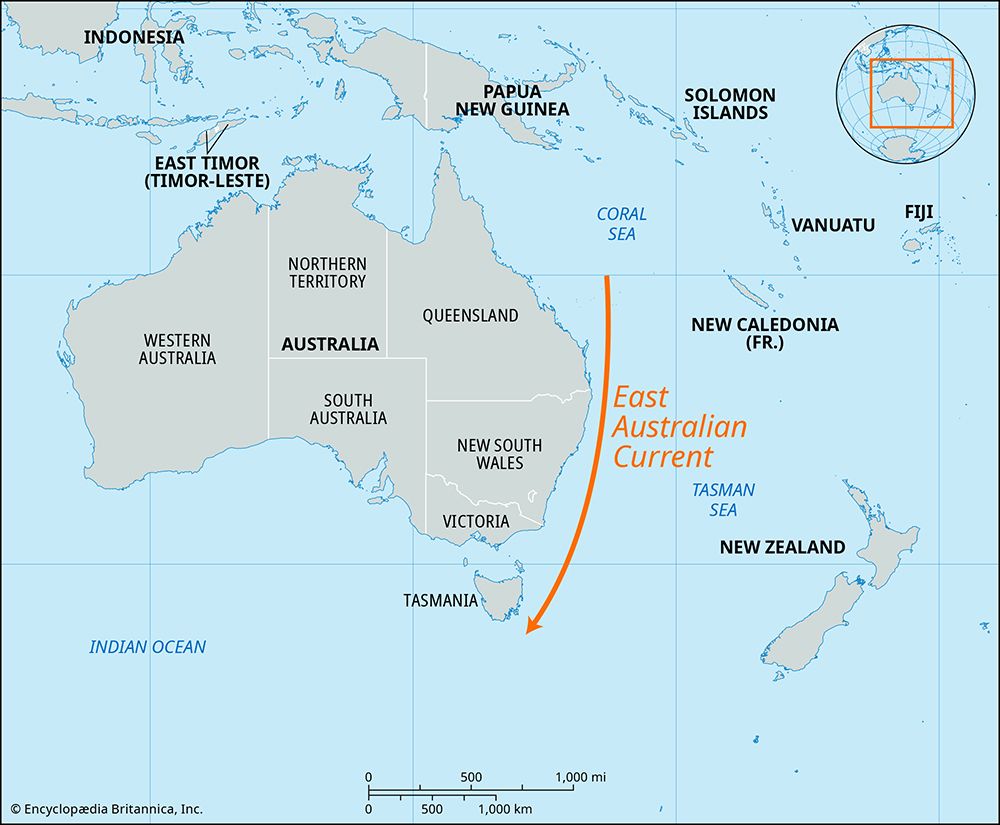
The East Australian Current plays a significant role in the dispersal and distribution of marine life rather than directly dictating the active, long-distance migratory paths of adult fish.
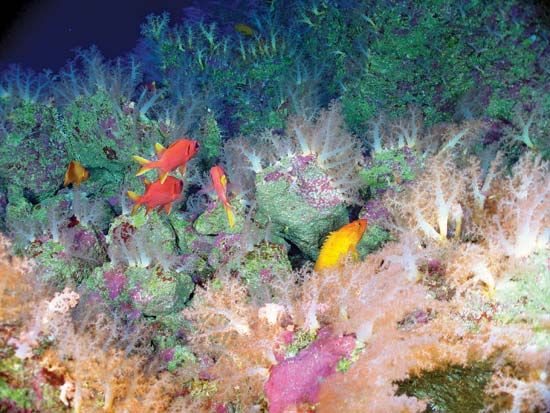
Its primary influence on fish populations occurs during the larval phase. Many marine organisms, including various species of fish, possess a bipartite life cycle where they spend their early development as planktonic larvae. The East Australian Current acts as a transport mechanism, carrying these larvae over great distances. This process is ecologically vital, as it facilitates the relocation of tropical fish larvae to higher latitudes, effectively providing a tropical infusion to cold temperate coral reefs.12
While adult fish often undertake horizontal migrations for feeding or reproduction, these movements are typically driven by biological needs and environmental cues—such as water chemistry, the Sun, or the Earth’s magnetic field—rather than passive reliance on the current.3
What is the average speed and volume of water transported by the East Australian Current?
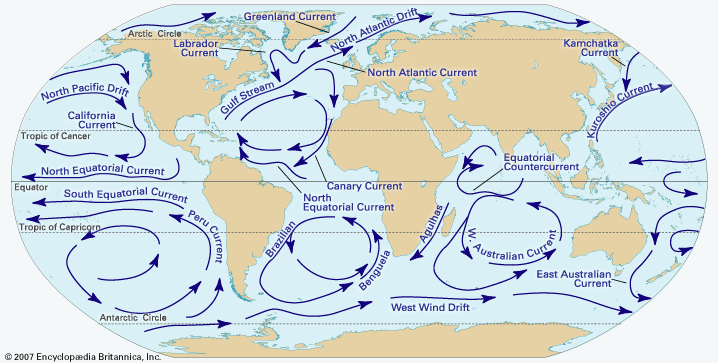
The East Australian Current is a western boundary current that flows along the east coast of Australia. While the provided search results do not specify a single average speed for the current, they note that as a western boundary current, it is part of a system where such flows can reach speeds of 2 to 4 meters (about 7 to 13 feet) per second, though the East Australian Current is characterized as relatively weak compared to others like the Gulf Stream or the Agulhas Current.15
Regarding its volume, the East Australian Current transports approximately 1,100 million cubic feet (30 million cubic meters) of water per second, reaching depths greater than 3,300 feet (1,000 meters).1
What role does the East Australian Current play in climate patterns and weather systems?
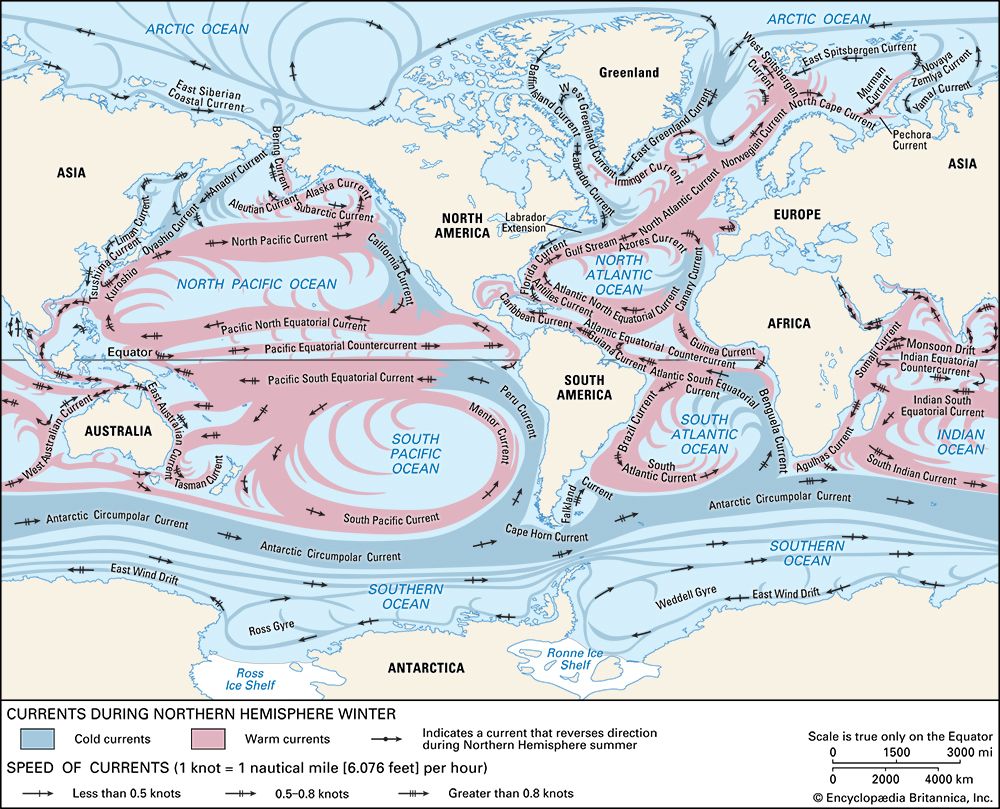
The East Australian Current functions as a western boundary current within the South Pacific subtropical gyre, playing a vital role in the global redistribution of heat. By transporting warm water from low latitudes toward the poles, it helps regulate the thermal balance of the ocean and the atmosphere.1
Generally, ocean currents like the East Australian Current influence regional climate by bringing warmth and increased humidity to the coastal areas they touch. As a western boundary current, it acts as a conduit for moving excess heat away from the tropics, which can moderate temperatures in the adjacent coastal regions of eastern Australia.61
While the current itself is a key component of regional circulation, it is also linked to broader climate phenomena. For instance, the South Pacific experiences periodic anomalies such as El Niño, which involve shifts in ocean currents and atmospheric patterns. These events can significantly alter precipitation, agriculture, and weather systems across the Pacific basin, demonstrating how interconnected oceanic flows are to global climate stability.7
What is the history of the discovery and mapping of the East Australian Current?
The provided search results do not contain information regarding the specific history of the discovery and mapping of the East Australian Current. While the sources detail the current’s physical characteristics, its role as a western boundary current, and its place within the South Pacific subtropical gyre, they do not document the timeline or the individuals involved in its initial identification or scientific mapping.
Sorry, the Britannica knowledge base does not contain this information.
Sources
- East Australian Current — Encyclopædia Britannica
- Marine ecosystem - Ocean currents — Encyclopædia Britannica
- Marine ecosystem - Distribution and dispersal — Encyclopædia Britannica
- Marine ecosystem - Migrations of marine organisms — Encyclopædia Britannica
- subtropical gyre — Encyclopædia Britannica
- Equatorial current — Encyclopædia Britannica
- Pacific Ocean - Surface currents — Encyclopædia Britannica
Published on · 3 min read