Ediacara Fauna
Ediacara fauna are primarily preserved as impressions of soft-bodied organisms in sandstone or shale. This extraordinary preservation is generally attributed…
How are Ediacara fossils preserved, and what challenges do scientists face in studying them?
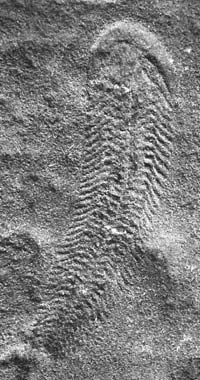
Ediacara fauna are primarily preserved as impressions of soft-bodied organisms in sandstone or shale. This extraordinary preservation is generally attributed to rapid burial and protection by smothering sediment, which captured the delicate forms of these organisms before they could decay.12
Scientists face several significant challenges in studying these fossils:
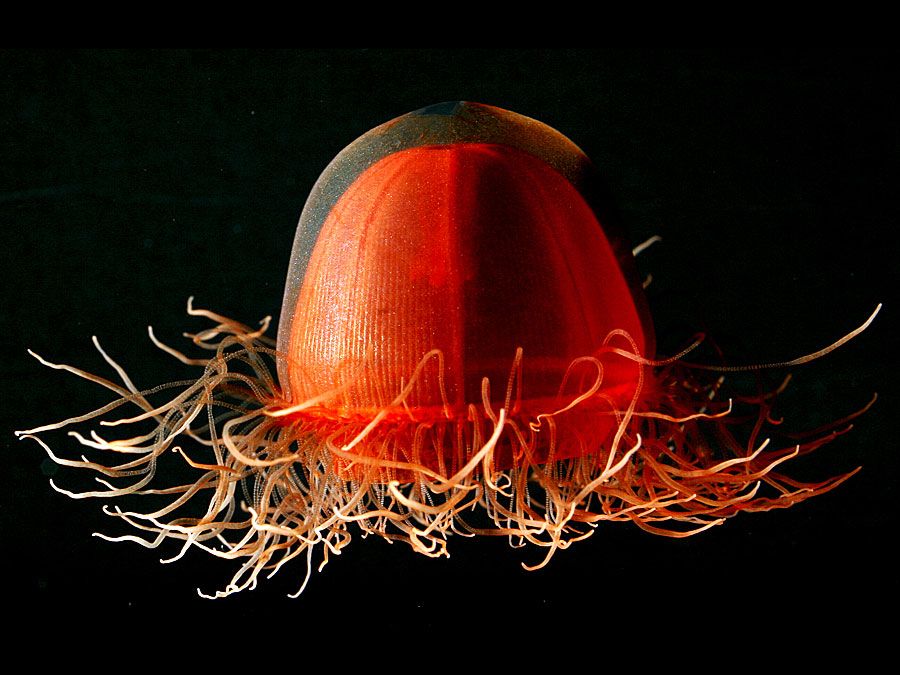
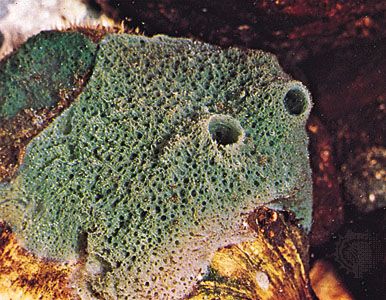
- Taxonomic Uncertainty: Placing these organisms into higher taxonomic levels remains controversial because many critical diagnostic features are not evident in the fossil impressions. While some resemble modern jellyfish, worms, or sponges, others appear unlike any known modern life-forms.213
- Incomplete Records: Global changes in sea level during the Precambrian-Cambrian transition created time gaps in the sedimentary record, leading to an absence or serious incompleteness of transitional data in many areas.2
- Interpretation of Evolution: The evolutionary relationship between Ediacaran organisms and later Cambrian life is debated, with ongoing discussions regarding whether these fauna were entirely replaced or if some lineages persisted into the Cambrian.412
What is the relationship between Ediacara fauna and the Cambrian Explosion?
The Ediacara fauna and the Cambrian explosion represent two pivotal, consecutive stages in the early evolution of complex life. The Ediacara fauna, which flourished during the Ediacaran Period (approximately 635 to 541 million years ago), consisted of unique, soft-bodied metazoans that predated the rapid diversification of life-forms known as the Cambrian explosion.13
The relationship between these two groups is characterized by both biological and geological transitions:
- Evolutionary Precursors: The Ediacara fauna demonstrated that complex, multicellular life had already achieved significant evolutionary development before the Cambrian. These organisms, which required atmospheric oxygen for growth, are often viewed as the precursors to the skeletal organisms that emerged at the start of the Phanerozoic Eon.3
- The Transition: While it was once believed that the Ediacara fauna went entirely extinct before the Cambrian, recent discoveries indicate some overlap, with a few Ediacara-type organisms persisting into the Cambrian. The transition is marked by the advent of biomineralization, where organisms began developing hard body parts like calcium carbonate shells, which fossilize more readily than the soft tissues of the Ediacaran period.325
- Environmental Context: Both events were influenced by rising oxygen levels in the oceans and atmosphere, which provided the necessary conditions for the emergence and subsequent rapid diversification of major animal phyla.16
What is the Ediacara fauna and when did it exist?
The Ediacara fauna refers to a unique assemblage of soft-bodied, multicellular organisms (metazoans) that represent some of the earliest evidence of complex life on Earth. These organisms were typically preserved as impressions in sandstone and shale, appearing in various forms such as circular discs, amorphous blobs, and plantlike fronds.124
Regarding their timeline, the Ediacara fauna primarily existed during the Ediacaran Period, which spanned from approximately 635 million to 541 million years ago. While they were traditionally thought to be unique to this period, research indicates they first appeared more than 600 million years ago, and some evidence suggests that certain Ediacara-type organisms may have persisted into the early Cambrian Period. They are named after the Ediacara Hills in South Australia, where a significant collection of these fossils was first discovered in 1946.124
What are some of the controversies or debates surrounding the classification of Ediacara organisms?
The classification and historical understanding of the Ediacara fauna have been subjects of significant scientific debate, as researchers work to place these ancient organisms within the tree of life and the broader timeline of evolution.41
Key areas of controversy and debate include:
- Biological Classification: While these organisms are often compared to modern jellyfish, worms, sponges, and sea pens, their exact biological nature remains a matter of discussion. Because they were soft-bodied and lacked the skeletal structures common in later life-forms, determining whether they were true invertebrate metazoans or represented a distinct, extinct evolutionary experiment is a central challenge.241
- Temporal Range: Traditionally, scientists believed the Ediacara fauna were unique to the Ediacaran Period, appearing and going extinct within that specific window. However, this view has been challenged by findings of Ediacara-type organisms in Cambrian sediments, as well as evidence of metazoan-like fossils and chemical markers in rocks dating back as far as 760 million years, suggesting they were not the first metazoans.41
- Skeletal Development: While the Ediacara fauna are defined by their soft bodies, some studies have reported the presence of fossils with potential skeletal structures—composed of chitin or biomineralized material—within Ediacaran-age rocks. This complicates the traditional narrative that the development of skeletons was a strictly Cambrian innovation.41
- Extinction Causes: The reasons for the decline of the Ediacara fauna are debated. While early theories suggested they were outcompeted or grazed upon by emerging skeletal animals, more recent research emphasizes the potential role of environmental shifts, such as changes in sea level.1
Sources
- Ediacaran Period — Encyclopædia Britannica
- Ediacara fauna — Encyclopædia Britannica
- Cambrian Period - Fossil record of the Precambrian-Cambrian transition — Encyclopædia Britannica
- Precambrian - Ediacaran fossils — Encyclopædia Britannica
- Precambrian — Encyclopædia Britannica
- Cambrian Period: Top Questions — Encyclopædia Britannica
- A Journey Through Time Since the Precambrian - Cambrian Period: 541 million to 485.4 million years ago — Encyclopædia Britannica
Published on · 4 min read