Estuary
An estuary is a partly enclosed coastal body of water where river water mixes with seawater, creating an environment defined primarily by salinity boundaries…
What are the physical characteristics that define an estuary?
An estuary is a partly enclosed coastal body of water where river water mixes with seawater, creating an environment defined primarily by salinity boundaries rather than fixed geographic ones. These areas are characterized by the measurable dilution of salt water with fresh water.1
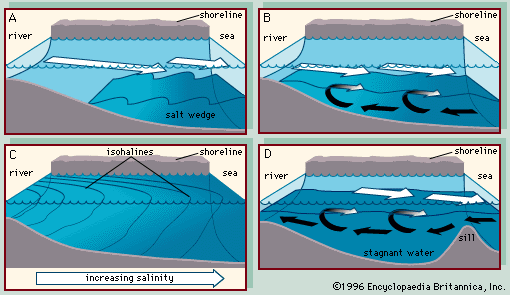
Physically, estuaries are often classified by their water circulation and mixing patterns:
- Salt-wedge estuaries: Dominated by river discharge with minimal mixing; fresh water flows over a distinct, wedge-shaped layer of denser salt water.23
- Partially mixed estuaries: Increased tidal turbulence creates a less distinct boundary, causing significant mixing between the two water types.24
- Vertically homogeneous estuaries: Strong tidal currents produce total mixing, resulting in constant salinity throughout the water column.2
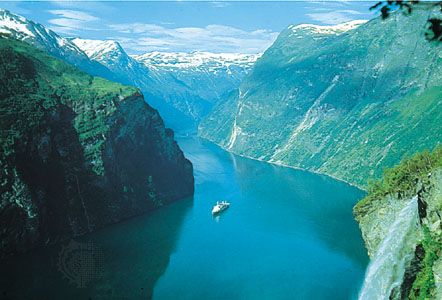
Geologically, most modern estuaries are “drowned valleys” formed by rising sea levels following the last glacial period, which flooded river valleys or glacial gorges like fjords. Others are formed by tectonic activity or by deposition where barrier islands and spits enclose coastal waters.52
How do climate change and sea-level rise impact estuaries?
Climate change and sea-level rise significantly alter the physical and ecological stability of estuaries, which are sensitive coastal environments defined by the delicate balance between fresh water and seawater.78
Impacts of Sea-Level Rise
As global temperatures rise, thermal expansion and melting ice sheets cause sea levels to increase, forcing estuarine environments to migrate inland. This process creates several critical challenges:793
- Saltwater Intrusion: Rising seas push salt water further upstream into freshwater supplies and groundwater aquifers. This contamination can render water sources unusable for drinking or irrigation and damage agricultural land.7
- Inundation and Habitat Loss: Increased flooding and high tides inundate low-lying coastal communities and wetlands. While some wetlands may naturally migrate inland to adapt, this is often blocked by human infrastructure or steep topography, leading to a net loss of vital habitats.7210
- Erosion: Higher sea levels and more frequent storm surges accelerate coastal erosion, physically reshaping the estuarine landscape.72
Impacts of Climate Change
Climate change exacerbates these issues through shifts in weather patterns and water cycles:
- Altered River Flow: Droughts reduce river discharge, which lowers water levels and allows salt water to penetrate deeper into the estuary. Conversely, extreme rainfall can increase nutrient runoff from agricultural lands, leading to excessive [algal blooms] that deplete oxygen and create “dead zones” where aquatic life cannot survive.711
- Increased Storm Intensity: Climate change is linked to more frequent and intense tropical cyclones, which produce severe storm surges that push salt water far inland, causing widespread contamination and physical damage to coastal ecosystems.79
What role do estuaries play in the water cycle and nutrient cycling?
Estuaries serve as critical transition zones that significantly influence both the water cycle and the movement of nutrients within coastal ecosystems.
Role in the Water Cycle
Estuaries act as the interface where riverine freshwater meets and mixes with seawater. This interaction is governed by tidal and river flow, which dictates the salinity gradient and the physical movement of water. In many estuaries, the circulation pattern—particularly in salt-wedge systems—creates a dynamic exchange where surface freshwater flows toward the sea while deeper, denser salt water moves upstream to compensate for entrained water. This constant movement facilitates the transition of water between continental drainage systems and the open ocean.1263
Nutrient Cycling
Estuaries are highly efficient at trapping and recycling nutrients, which fuels their status as some of the most productive environments on Earth. This process occurs through several mechanisms:133
- Nutrient Pumping: The characteristic circulation of estuaries acts as a pump, drawing nutrient-rich bottom waters—laden with decomposed organic matter—up into the water column, where it stimulates phytoplankton growth.3
- Sediment Trapping: Organic and inorganic particles carried by rivers tend to flocculate and settle when they encounter salt water. These sediments provide a nutrient-rich substrate for salt marshes, mangrove forests, and sea grasses.3
- Decomposition: As organic matter, including dead organisms and fecal pellets, sinks and decomposes, it continuously replenishes the nutrient supply, supporting a complex food web that includes invertebrate animals and fish.133
Unfortunately, this same trapping mechanism can also retain human-introduced pollutants, making these vital nutrient-cycling hubs vulnerable to environmental contamination.14
How do tides affect the environment within an estuary?
Tides are a fundamental force in estuaries, acting as a primary driver of physical, chemical, and biological processes. Their influence is observed through several key mechanisms:
Physical Dynamics and Sedimentation
Tidal currents are essential for transporting sediment and shaping the estuarine landscape. In constricted areas like inlets, tidal currents can reach high speeds, moving large quantities of sand and silt. The interaction between river flow and tidal currents dictates the distribution of these sediments; for instance, strong tidal ranges can sweep fine-grained materials from channels onto marginal tidal flats. Additionally, the rise and fall of the tide redistributes wave energy, altering the shoreline and determining the zones where erosion and deposition occur.165
Mixing and Nutrient Cycling
Tides facilitate the mixing of fresh river water and saline marine water. In partially mixed estuaries, tidal turbulence promotes this exchange, while in salt-wedge systems, the tide helps drive a “nutrient pump.” This circulation brings nutrient-rich bottom waters to the surface, stimulating the growth of phytoplankton and supporting complex food webs.413
Ecological Impact
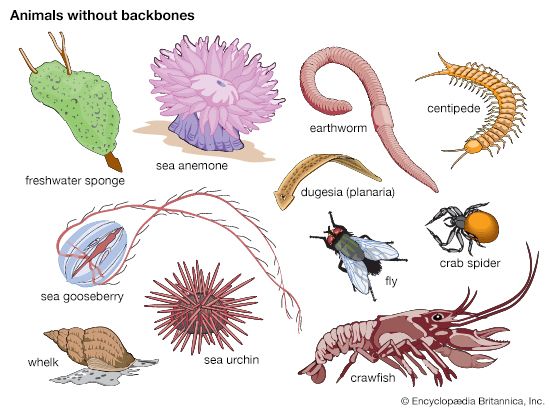
The intertidal zone, defined by the alternating submergence and exposure caused by tides, creates a highly variable environment in terms of temperature, salinity, and acidity. This dynamic setting supports diverse communities, including burrowing mollusks, worms, and crustaceans in muddy areas, as well as salt marshes and mangrove forests that thrive in the nutrient-rich sediments deposited by tidal action.613
Sources
- estuary — Encyclopædia Britannica
- estuary - Geology and geomorphology — Encyclopædia Britannica
- river - Origin and classification — Encyclopædia Britannica
- coastal landforms - Tides — Encyclopædia Britannica
- estuary - Partially mixed estuaries — Encyclopædia Britannica
- estuary - Salt wedge estuaries — Encyclopædia Britannica
- saltwater intrusion — Encyclopædia Britannica
- sea level rise: Top Questions — Encyclopædia Britannica
- ocean warming — Encyclopædia Britannica
- conservation - Pollution — Encyclopædia Britannica
- Wetland - Effects of climate change — Encyclopædia Britannica
- estuary - Primary productivity — Encyclopædia Britannica
- river - Sedimentation in estuaries — Encyclopædia Britannica
- river - Estuaries — Encyclopædia Britannica
- estuary - Commercial importance — Encyclopædia Britannica
- tidal flat — Encyclopædia Britannica
- littoral zone — Encyclopædia Britannica
- ecological disturbance - Disturbance and biodiversity in intertidal zones — Encyclopædia Britannica
Published on · 4 min read