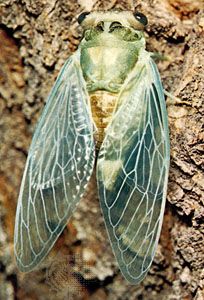
Froghopper
Froghoppers, also known as spittlebugs, primarily function as herbivores within their ecosystems. Their nymphs are notable for producing a protective, frothy…
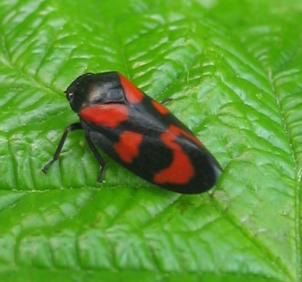
What role do froghoppers play in their ecosystem?
Froghoppers, also known as spittlebugs, primarily function as herbivores within their ecosystems. Their nymphs are notable for producing a protective, frothy substance called spittle, which shields them from desiccation and predators.12
In terms of their ecological impact, froghoppers are significant plant feeders. Many species feed extensively on various plants, including clover, alfalfa, grasses, and trees like willow and pine. While they are a natural part of the food web, their feeding habits can have substantial negative effects on vegetation; for instance, some species cause severe stunting in crops, leading to significant agricultural losses. Additionally, some African species occur in such large numbers that their secreted spittle can drip from tree branches like rain, creating a localized environmental effect.1
While they are primarily known as pests to plants, they serve as a food source for various predators within their habitats.
What impact do froghoppers have on plants and agriculture?
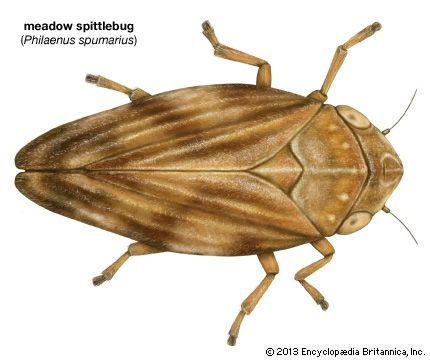
Froghoppers, commonly known as spittlebugs, significantly impact plants and agriculture primarily through their feeding habits. As sap-sucking insects, they extract nutrients directly from their host plants, which can lead to severe physiological stress and damage.14
The agricultural consequences of these infestations include:
- Crop Stunting: Species such as the meadow spittlebug feed extensively on clover and alfalfa. This feeding can cause severe stunting, potentially resulting in yield losses of up to 50 percent.14
- General Plant Damage: Beyond stunting, froghoppers can weaken various plants, including grasses, weeds, and trees such as willow and pine, making them serious agricultural and ornamental pests.14
- Disease Transmission: While less common than in some other sap-sucking insects, certain froghopper species act as vectors for plant diseases, including specific viruses that affect crops like peaches.4
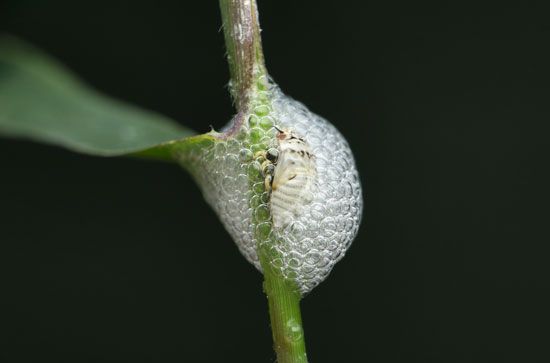
The nymphs are easily identified by the protective, frothy spittle masses they create on plant stems, which shield them from predators and desiccation. In some regions, these populations can become so dense that their secretions drip from trees like rain.12
How do froghoppers produce and use their ‘spittle’ for protection?
Froghopper nymphs produce their characteristic spittle through a specialized biological process. The fluid is voided from the insect’s anus after being mixed with a mucilaginous substance secreted by epidermal glands located on the seventh and eighth abdominal segments.12
To create the frothy consistency, the nymph introduces air bubbles into this mixture using its caudal appendages. A special valve on the abdomen also assists in the formation of the bubbles. While producing this substance, the nymph typically rests head-downward on the plant stem.21
This spittle serves two critical protective functions:
- Defense against predators: The mass acts as a physical shield, hiding the nymph from potential enemies.1
- Prevention of desiccation: The froth creates a humid microenvironment that prevents the nymph from drying out.1
Once formed, the spittle is remarkably durable and is not easily dislodged, even during heavy rainfall. It is important to note that only the immature nymphs produce this substance; adult froghoppers do not.2
What is a froghopper and why is it called by that name?
A froghopper, also known as a spittlebug, is a small insect—typically less than 1.5 cm long—belonging to the family Cercopidae and related groups like Aphrophoridae and Clastopteridae.1
The name “froghopper” is derived from two primary characteristics:
- Appearance: Many species, such as the meadow spittlebug, possess a physical build that is considered froglike.1
- Locomotion: These insects are powerful leapers, utilizing a form of saltation (hopping) to move, much like a frog.16
Beyond their movement and appearance, these insects are well-known for their nymph stage, during which they produce a protective, frothy substance called spittle. This substance is created by mixing fluid secreted from the anus with abdominal gland secretions and air bubbles, shielding the developing insect from predators and desiccation.1
Sources
- froghopper — Encyclopædia Britannica
- homopteran - Spittle — Encyclopædia Britannica
- heteropteran - Food habits — Encyclopædia Britannica
- homopteran - Importance — Encyclopædia Britannica
- meadow spittlebug — Merriam-Webster
- froghopper — Merriam-Webster
- Locomotion - Saltation — Encyclopædia Britannica
Published on · 3 min read