Giant Squid
The largest known specimen of a giant squid measured approximately 13 meters (43 feet) in total length, including its tentacles. While these elusive…
How large can giant squids grow, and what is their average size?
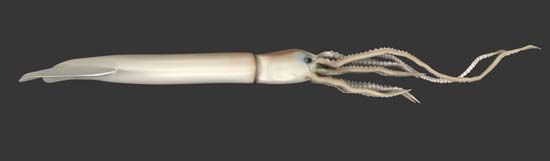
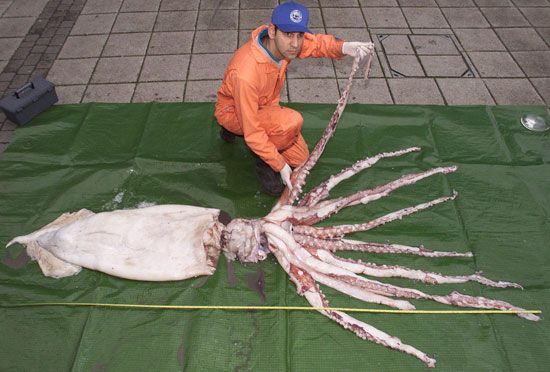
The largest known specimen of a giant squid measured approximately 13 meters (43 feet) in total length, including its tentacles. While these elusive cephalopods have been estimated to reach weights of up to a ton (907 kg or 2,000 pounds), much of our understanding remains limited because they are rarely observed in their natural deep-sea habitat.12
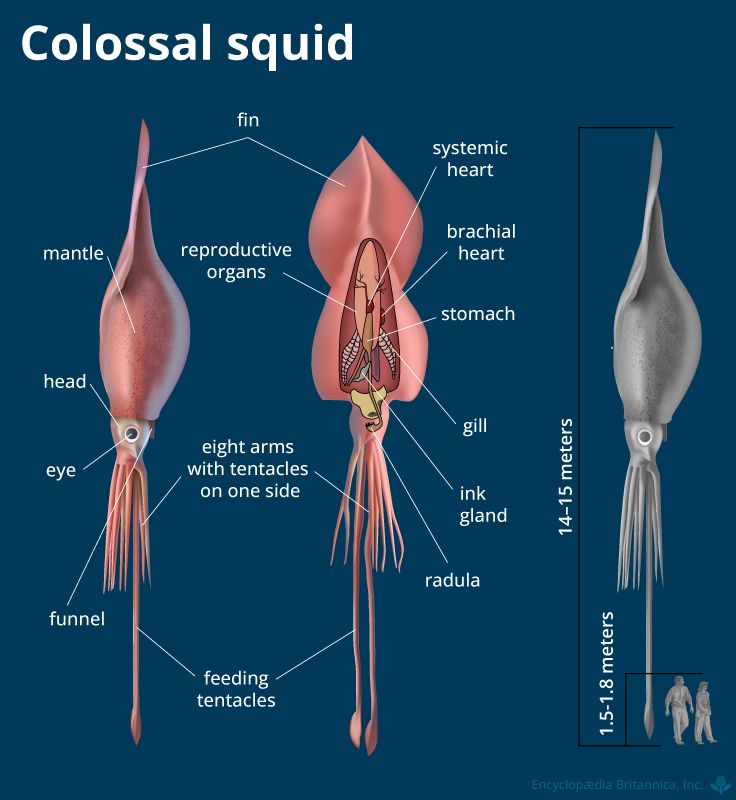
Scientific documentation of these animals has historically relied on carcasses found at sea or washed ashore, as living adults were not captured on film until the early 21st century. Because of the difficulty in studying them, there is no established “average” size for the species; most recorded data comes from individual, often incomplete, specimens. Furthermore, the giant squid is frequently compared to the colossal squid, which is considered more robust and heavier, leading to ongoing scientific debate regarding which species is truly the largest.12
How do giant squids use bioluminescence, and what purpose does it serve?
Many species of squid utilize bioluminescence—a chemical process that produces heatless light—to aid in their survival and defense within the deep sea. This light is typically generated through internal biochemical reactions, though some species harbor symbiotic luminous bacteria.567
The purposes of this bioluminescence include:
- Defense: When threatened, many squids secrete a luminous cloud to confuse predators, allowing the squid to escape.56
- Predation: Some species possess complex light organs, or photophores, that may be used to attract prey.68
- Communication and Recognition: Light organs are often arranged in specific patterns that may serve as signals for species or sex recognition.68
- Camouflage: In some deep-sea organisms, light organs on the ventral surfaces are used to match the intensity of sunlight penetrating from above, effectively concealing the animal’s shadow from predators lurking below.6
These light organs can be highly sophisticated, often featuring lenses, reflectors, and color filters to control the intensity and direction of the light.7
Where are giant squids typically found in the ocean, and what is their habitat like?
Giant squids (genus Architeuthis) are elusive creatures that inhabit deep regions of temperate to subtropical marine waters across the globe. While they are widespread, their habitat is largely inaccessible to humans, which has historically made them difficult to study.1
Scientific observations, including photographic and video documentation, have typically placed these animals at depths of approximately 900 meters (2,950 feet) beneath the ocean surface. This environment is characterized by extreme pressure and darkness, far below the photic zone where sunlight penetrates.10111
Because they live in such remote, deep-sea environments, giant squids are rarely observed in their natural state. Much of our understanding of their presence in these waters is derived from the remains of squids found in the stomachs of sperm whales, which are known predators of the species. Due to the vastness and inaccessibility of their deep-ocean habitat, the International Union for Conservation of Nature classifies the giant squid as a species of least concern, as they are considered less susceptible to direct human impact.101
How have giant squids been depicted in literature and popular culture throughout history?
Throughout history, the giant squid has served as a primary inspiration for the sea monster archetype in literature and folklore. Because these elusive cephalopods were rarely seen alive, their occasional appearance as carcasses or fragmented remains fueled centuries of mariner tales and myths.141
Folklore and Mythology
The legendary kraken of Scandinavian and Norwegian lore is widely believed to be rooted in sightings of giant squids and octopi. In 1752, Danish historian Erik Pontoppidan described the kraken as a massive, arm-filled beast, cementing its place in maritime tradition. Many accounts of sea serpents are also thought to be misidentified giant squids, as their long, trailing tentacles and cylindrical bodies align with historical descriptions of these monsters.1415
Literature and Art
- Poetry: Alfred, Lord Tennyson’s 1871 poem “The Kraken” famously depicts the creature as an ancient, slumbering entity in the “abysmal sea.”14
- Narrative: The titanic struggle between giant squids and sperm whales has become a staple of maritime art and literature, notably appearing in Frank T. Bullen’s The Cruise of the Cachalot (1898).10
- Exhibits: This dramatic predator-prey relationship is further immortalized in popular culture through displays like the gargantuan diorama at the American Museum of Natural History.10
Sources
- How Big Is the Giant Squid? — Encyclopædia Britannica
- Which is bigger: Sperm whale or colossal squid? — Encyclopædia Britannica
- giant squid: Top Questions — Encyclopædia Britannica
- Sexual dimorphism — Encyclopædia Britannica
- Bioluminescence: Top Questions — Encyclopædia Britannica
- Marine bioluminescence — Encyclopædia Britannica
- Bioluminescence - The role of bioluminescence in behavior — Encyclopædia Britannica
- Bioluminescence - The range and variety of bioluminescent organisms — Encyclopædia Britannica
- squid — Encyclopædia Britannica
- giant squid — Encyclopædia Britannica
- colossal squid: Top Questions — Encyclopædia Britannica
- colossal squid — Encyclopædia Britannica
- Marine ecosystem - Migrations of marine organisms — Encyclopædia Britannica
- kraken — Encyclopædia Britannica
- sea serpent — Encyclopædia Britannica
Published on · 3 min read